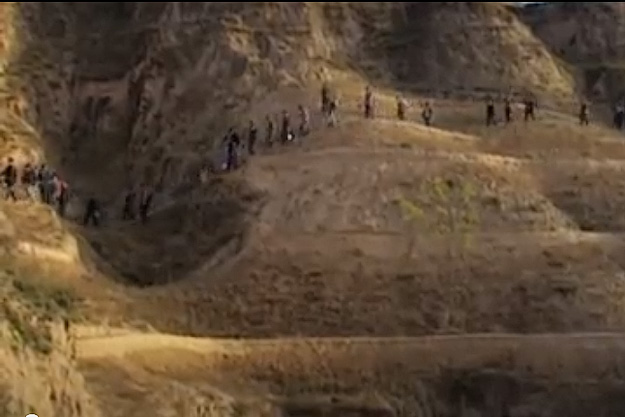
Efforts to improve the situation of indigenous peoples through restoration of the environment is one of the most intriguing stories to emerge from travel. One of the organizations doing important work in this field, the Environmental Educational Media Project, produced the documentary Hope In A Changing Climate, which promotes the enormous potential of restoration. Screened at the COP 15 climate change summit in Copenhagen last December and subsequently aired by the BBC, the film follows soil scientist John D. Liu, who for the past 15 years has been documenting changes on China’s remote Loess Plateau, where the local people have been transforming a barren plateau into a green and fertile one, reducing the effect of climate change. Liu explains:
“On the plateau, researchers realized that progressive degradation of the environment trapped the local population into a life of subsistence farming. It’s a process that has occurred across the globe, where poor agricultural communities find themselves overusing their land in order to survive, depleting its fertility and further impoverishing themselves. One thing that became apparent early on is the connection between damaged environments and human poverty. In many parts of the world there’s been a vicious cycle: continuous use of the land has led to subsistence agriculture and generation by generation, this has further degraded the soils.”
Shot on location in China, Rwanda and Ethiopia, Hope in a Changing Climate is a truly uplifting story of how ecosystem restoration helps stabilize climate, reduce poverty, and support sustainable agriculture.
During my travels, some places capture my heart more than others. Zimbabwe was one of those places. I met so many wonderful people who were gracious and smiling despite suffering unbearable economic woes and political suppression. Finally, I am happy to report that my friends in Zimbabwe, who keep me apprised of current events, tell me that things are starting to improve. But before things got better, they got very, very bad.
By the end of 2008, inflation had skyrocketed to 231,000,000%, unemployment reached 80%, and the Zimbabwean dollar was basically worthless. Violence ratcheted up during the 2008 presidential election, with despot Robert Mugabe using every means at his disposal to stay in power. Although the consensus is that Morgan Tsvangirai actually won the election, Mugabe refused to give up the office and mounted a brutal campaign of violence against the opposition that left more than 30 people dead and hundreds wounded. As if life weren’t unbearable enough in Zimbabwe, a cholera epidemic broke out in August 2008, killing at least 565 people and infecting another 12,000. Fortunately, world opinion turned against Mugabe, ultimately forcing him to consent to a power sharing agreement with Tsvangirai.
Just last week, my friend Victor Sibanda, who lives in Victoria Falls in the southern part of the country, emailed an update on the current situation:

Victor "Veneto" Sibanda
“We recently had the COMESA Summit here in Victoria Falls and we had our roads revamped and the pot holes on the roads that had become so big to be called ‘dish holes’ were sealed and that has been the positive thing that our town has benefited since the unity government. We are very grateful for the development. Among other things that are beginning to change face are the foot ware and clothing shops that were restock a few days before the Summit began.
Supermarkets are restocking and the prices are now packed in South African Rand and this makes the items affordable such that we have stopped going to the neighbouring countries for shopping and are now supporting the local shops. Other cities and towns are still cheaper than Victoria Falls as what seems as tradition but strange enough there are still challenges in the money making system. Salaries are ranging from $30-$150 per month from domestic to professional level respectively and this still makes buying bread at $1.00 a challenge. This may Read the rest of this entry »
A few days ago I received an email from my friend, Victor Sibanda, who lives in Victoria Falls, Zimbabwe. There is so much bad news coming out of Zimbabwe these days that it surprised me to learn Victor has started his own tour hosting business. I was encouraged by his news; it indicates there is still some small sense of normalcy in this devastated country.
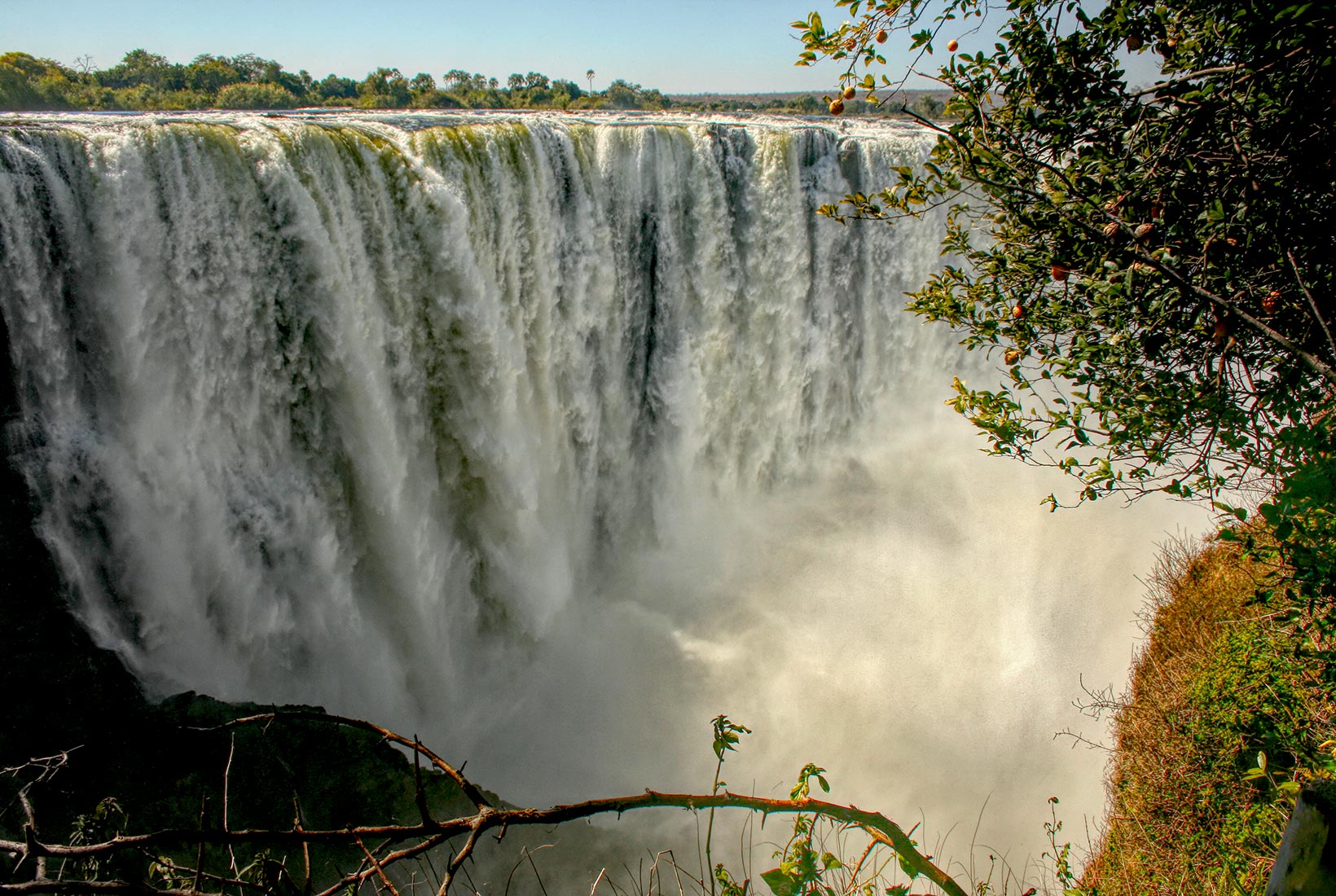
I met Victor last year when I backpacked around the world for six months. I spent about a month and a half in Africa and realized my childhood dream of going on safari. The other destination I had always dreamed of seeing was Victoria Falls, so when I planned my safari, I also booked a side trip to Zimbabwe. All the arrangements had to be made prior to leaving the U.S. because the tour operators and hotels will no longer accept the local currency, as it is virtually worthless. Consider the following:
- The regime is surviving by printing money. The German firm Giesecke & Devrient holds the contract for printing Zimbabwe’s currency and they have been delivering bank notes at a rate of Z$170 trillion each week. Last month Giesecke & Devrient decided they would no longer print bank notes for Zimbabwe, bowing to pressure from the German government.
- John Robertson, a respected Zimbabwean economist, estimated inflation in July 2008 to be forty to fifty million percent.
- An egg costs $50 billion Zimbabwean dollars and withdrawals from ATM’s are limited to a maximum of Z$100, about the cost of a loaf of bread.
- On August 1, 2008, the government devalued the Zimbabwean dollar, making Z$10 billion worth ZW$1
- Shops can only cash checks if the customer writes double the amount, because the cost will go up by the time the check has cleared.
- Most credit card companies will instantly cancel any card used in Zimbabwe
At the time I booked and paid for my trip, the situation in Zim was not yet dangerous, but by the time I was scheduled to to visit, the situation had deteriorated. I contacted the company that had handled my reservations and asked their advice, explaining that I would rather lose my money than put my life at risk. The tour operator assured me Read the rest of this entry »
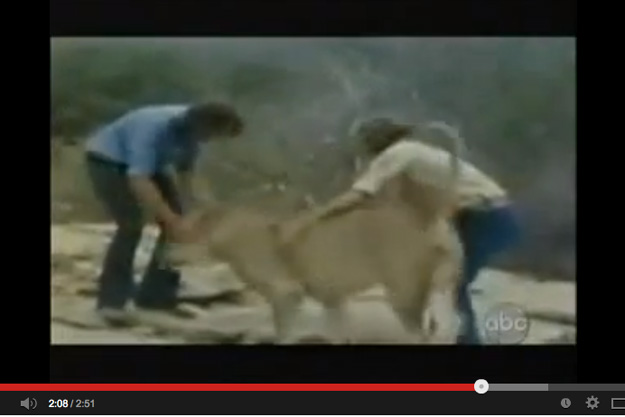
In 1969, John Rendall and Ace Berg rescued a lion from a cramped cage in Harrods Department Store, where it was offered for sale. The lion soon grew too big for their small apartment and they reintroduced him to Africa. A year later they wanted to visit their former pet in his natural habitat, but they were told he was now the head of a large pride and was entirely wild. They went in search of him anyway. Watch the amazing video below to see what happened:
It seems a simple thing, crossing a street. But my idea of how to get across a busy street in the U.S., whether on foot or in a vehicle, is significantly different from methods employed to cross streets in other places in the world. For example, take a look at this video showing a busy street in India:
As I traveled around the world I was intrigued by the various means employed to cross a street. On my very first morning in Saigon, Vietnam I spotted a bakery across the street from my hotel. I stood at the curb for 15 minutes, waiting for a break in the monstrous traffic but the vehicles just kept coming. Just as I was about to give up, a local man stepped off the curb, walked out into the midst of the traffic, and slowly crossed the street as the vehicles weaved and darted around him. Eventually, I got up the nerve to try it and stepped out into the stream of traffic. Read the rest of this entry »
In 2002, five million of the 13 million residents of Malawi, a predominantly rural African country the size of Pennsylvania, were starving. Over the past 20 years, the World Bank and a number of rich countries that Malawi depends upon for aid (including the U.S.), pressured this tiny landlocked country to eliminate fertilizer and seed subsidies for its populace, even though the United States and Europe extensively subsidized their own farmers. Desperate to feed their families, landowners could not afford to let their land lie fallow, so they planted without fertilizer, further stressing an already depleted soil. Over time, their depleted lands yielded less and less food and the farmers fell deeper into poverty. By 2005, the country’s corn production was only 2.5 billion metric tons – the lowest in a decade.
The World Bank and Malawi’s donor countries, in their infinite wisdom, encouraged Malawi to eliminate fertilizer subsidies entirely and adhere, instead, to free market policies. The theory was that Malawi’s farmers should shift to growing cash crops for export and use the foreign exchange earnings to import food. I’m no genius, but I don’t see the sense in growing cash crops for export in a country where the people can’t even feed themselves. That doesn’t even take into consideration the fact that Malawi lacks the necessary infrastructure, funds, and trained workforce required to effect the movement of such crops, much less the ability to control the corruption that would undoubtedly skim a large chunk of the profits from such a venture.
Fortunately, Malawi’s president, Bingu wa Mutharika, decided to follow what the West practiced rather than what it preached. He reinstated Read the rest of this entry »
I have arrived in Zurich, Switzerland, following a nine-hour, overnight flight from Tanzania. Today is a day of walking and resting – but in the meantime I have uploaded all the Tanzania and Zanzibar photos to the photo library. If you’d like to take a look, just click on the above tab labeled ‘Photos’ and follow Read the rest of this entry »
As I leave Africa and wing my way toward Switzerland, I have been thinking about the three words I will assign to each of the African countries I have visited. I have decided not to do this for Zambia, for I only spent a couple hours in this country and then only in the Victoria Falls East Cataract National Park, so I don’t feel that I had adequate exposure to the country to really get a sense of it. However, the following are the words I have chosen for the rest of the African countries I visited: Read the rest of this entry »
For the past five days I’ve been staying at the Sunset Bungalows on the northern tip of the island of Zanzibar, near the village of Nungwi. Initially, things did not go smoothly.
On my first day I had lunch at the resort’s restaurant on the beach and tried to charge the meal to my room, intending to pay the entire bill when I checked out. For some reason they did not want me to do this, but the waiter was unable to explain why. I eventually had to hunt down the general manager Read the rest of this entry »