Penang, Malaysia was good for me. It was comfortable and familiar, as if I’d been there before, and the island welcomed me with open arms. Initial plans called for me to visit Kuala Lumpur and Malacca as well, but there was so much to see and do in Penang, I reverted to the slow travel mode that I prefer and stayed on Penang for two and a half weeks to explore this fascinating island in depth. It was a good decision, not only because I was able to rest and recover from my frustrating and exhausting travel experience in China, but also because I had a rare bout with sickness in Malaysia.
I rarely get sick when traveling; I’m one of those people who can drink the water and eat from street carts all over the world and never have the tiniest adverse reaction. But about midway through my stay in Penang, I woke up one morning with a splitting headache aching muscles that felt like I’d run a marathon the previous day. It was short term; by the following day I was back to normal and I didn’t think any more about it.
During week two I started looking for a flight to Kahtmandu, Nepal and was surprised to find that the cheap seats on both Nepal Airways and Thai Airlines were sold out through mid-October. Luckily, a local travel agent was able to find me a flight on GMG Airlines. The flight left from Kuala Lumpur at 6 a.m., which meant I’d have to take a night bus from Penang to KL, wait around in the KL airport for five hours, and then suffer through a long layover in Dhaka, Bangladesh, but I judged the savings to be worth the inconvenience.
Two days before the flight I again suffered a throbbing headache and muscle aches, this time accompanied by nausea, cold sweats, diarrhea, and itchy red bumps all over my body. It finally dawned on me that I’d eaten cockles both times I’d gotten sick. There was no doubt about it, I was having a severe allergic reaction to these tiny little mollusks.
I loaded up on Imodium, trying to stop the diarrhea, and hunkered down under the covers. Despite 90 degree temperatures, my teeth chattered and shivers wracked my body. By the end of day two I was still weak but decided to attempt travel, since my plane ticket was non-refundable and non-changeable. The night bus to Kuala Lumpur and a taxi got me to the airport at 3:30 a.m. but the ticket counter wasn’t yet open, so I hunted down an open McDonalds, sipped on tea, and popped another Imodium, just to be safe.

Long line of luggage carts loaded with linens going home with Nepalese who have been working in Malaysia
By 7 a.m. more than a hundred people were in line but the check in counter had not yet opened – not a good sign for an on-time 8 a.m. takeoff. Too weak to stand for any length of time, I plunked down on the floor among the waiting passengers, all young men who were rolling large metal carts containing stacks of comforters and bedspreads. Curiosity got the better of me; I began chatting with those who could speak English and learned they were all Nepalis, working on contract in Malaysia and headed home to celebrate the high Hindu holiday of Dashain. The bedspreads and comforters, apparently a rare and pricey commodity in Nepal, were being taken home as gifts.
The check-in counter finally opened at 8 a.m. with an announcement that the flight would be delayed until 10 a.m. One of the airline officials who was hovering in the background stepped up to the counter and told Continue reading
I met Dr. Fauziah Ahmad in 2007, during my first ever round-the-world trip. We happened to be on the same city tour of Hanoi, Vietnam, and bonded when we had to fight to get a portion of our money back because the tour operator failed to deliver on promises to take us to see the Ho Chi Minh Mausoleum. We later attended a performance at the Water Puppet Theater, followed by dinner, at the end of which we exchanged contact information and she invited me to visit her in Penang, should I ever make it to Malaysia.
Over the years we’d exchanged a few emails, but hadn’t been in regular contact, so I held off contacting her until I knew for sure my arrival dates. Once I had arrived and recovered from my horrible experience in China, I emailed to let her know I was in Penang. Realizing it was short notice, I told her I’d understand if she didn’t have time to get together, but I underestimated the bonds of friendship made during travel.
The following week, Fauziah arrived at my guest house and whisked me away to her home for the night, where she set me up in her guest room and introduced me to her lovely family. But that was only the beginning; she had plans for me…
Fauziah is a geotechnical engineer specializing in soil stability, landslides, and ground improvement, and a full professor at the Universiti Sains Malaysia (Malaysia University of Science). She had timed my visit to coincide with the Hari Raya Adilfitri, one of the high Muslim Continue reading
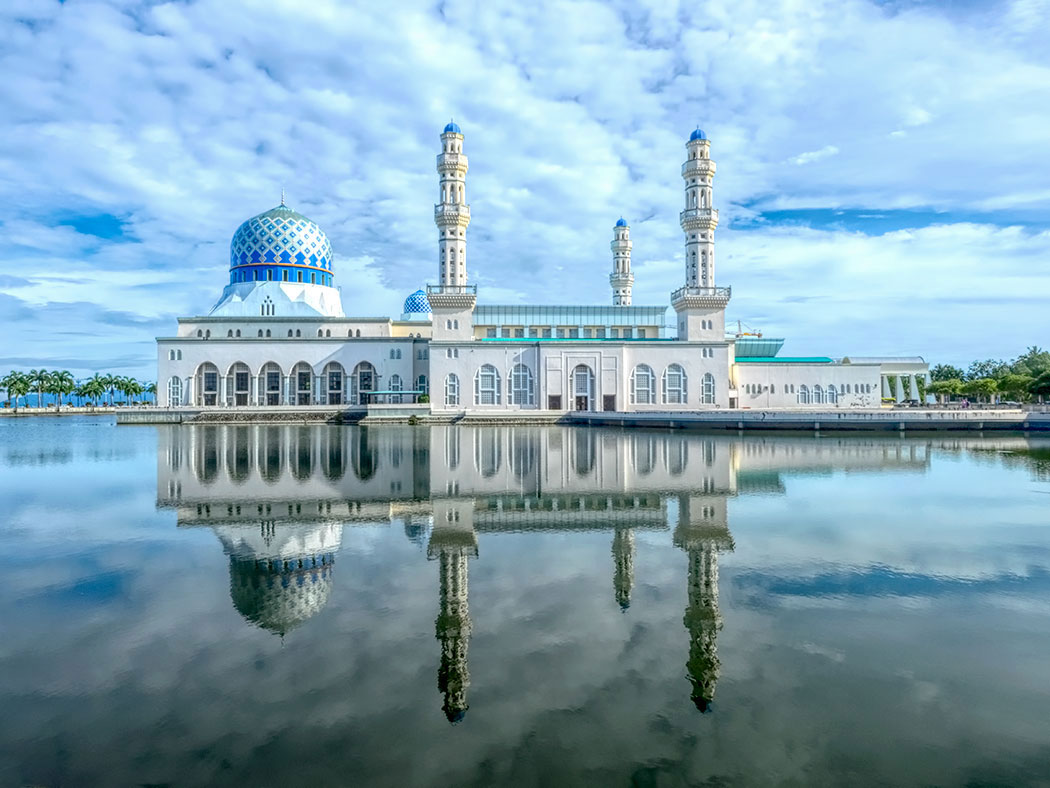
Malaysia’s State of Penang is made up of a turtle-shaped island and a large strip of land on the mainland, joined by one of the longest bridges in the world, however when tourists refer to Penang (or Pulau Pinang in Malay), they almost always mean the island portion of the State. Featuring an exotic melange of old and new: the south side of Penang is home to the country’s second largest airport, an industrial area where electronics manufacturing reigns, and the world’s only Snake Temple; while on the northwestern tip, Penang National Park lures visitors with unspoiled natural beauty of Monkey Beach, waterfalls, jungle paths, and a meromictic lake.
Can’t view the above slide show of George Town, Penang, Malaysia? Click here.
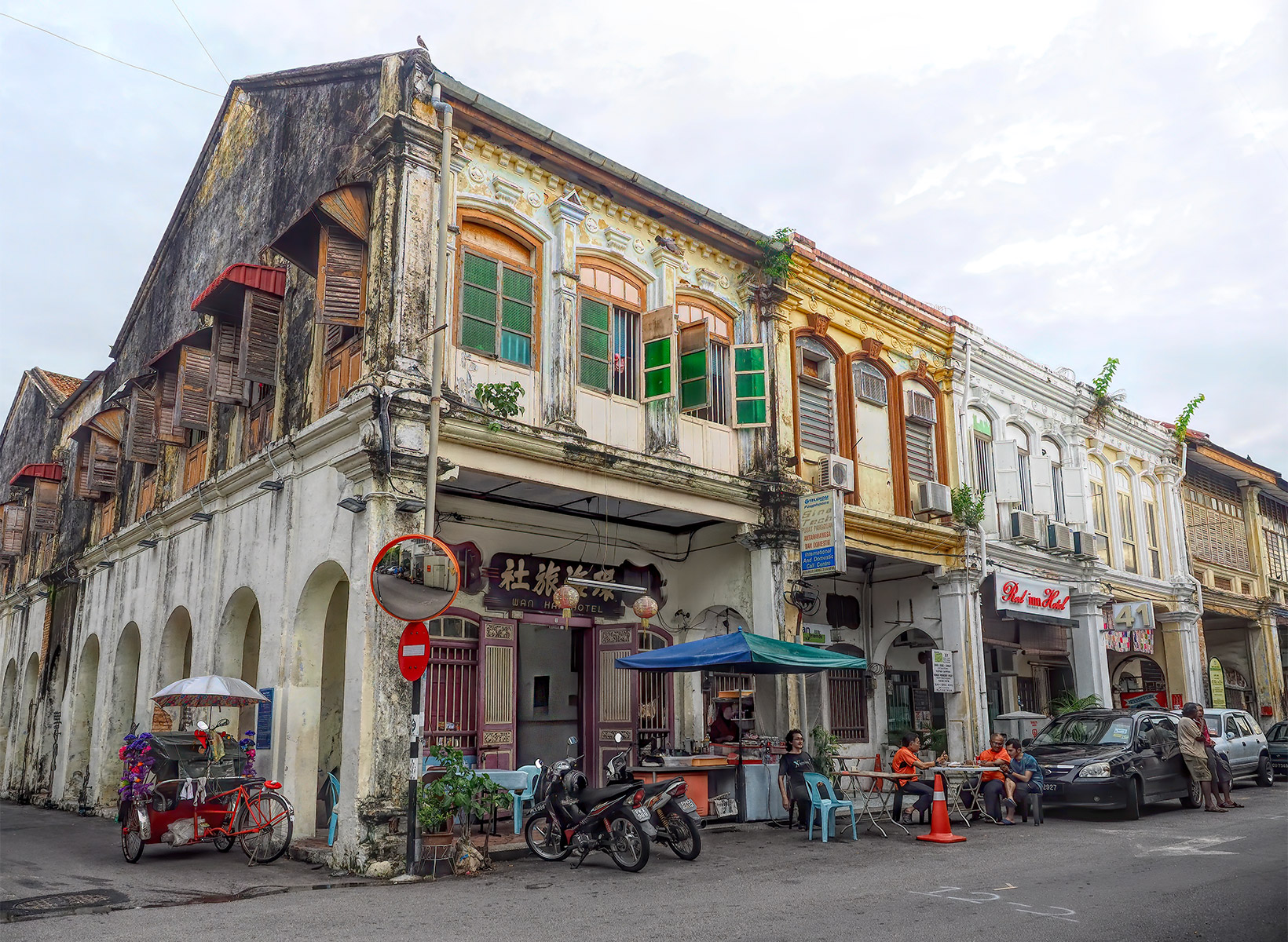
In between, on the east coast, the capital of George Town melds a bustling port with one of the largest collection of intact pre-war buildings in the whole of SE Asia, earning it the designation of UNESCO World Heritage City in 2008. The British laid out the city in a grid system designed to segregate the races and to some degree, these invisible boundaries still exist, with neighborhoods such as Little India and Chinatown. I found the historic center of George Town to be compact and easily seen on foot; surprising me every few feet with another 200-year old temple, church, mosque, clan house, market, historic government house, or bazaar. Continue reading