
After a few days in Bangkok, many head north to the cities of Chiang Mai, Chiang Rai, and Pai. These three well-known destinations offer much to see and do. But beyond the tourist track in Northern Thailand are little-known attractions just waiting to be discovered. After many years of living in Thailand, I am delighted to share a few of these unique places with you:
Stunning Rice Terraces in the Hills of Doi Inthanon Mountain
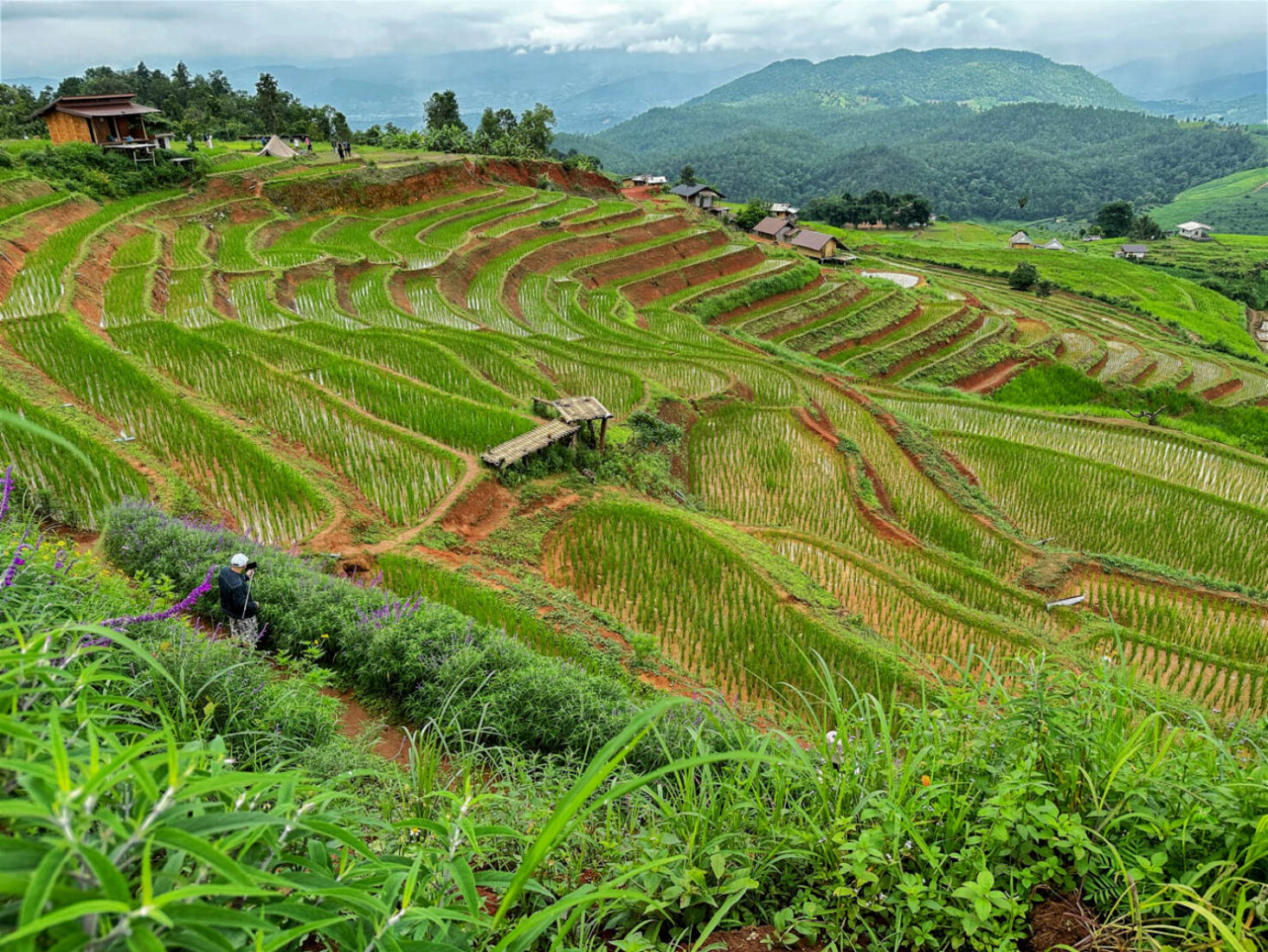
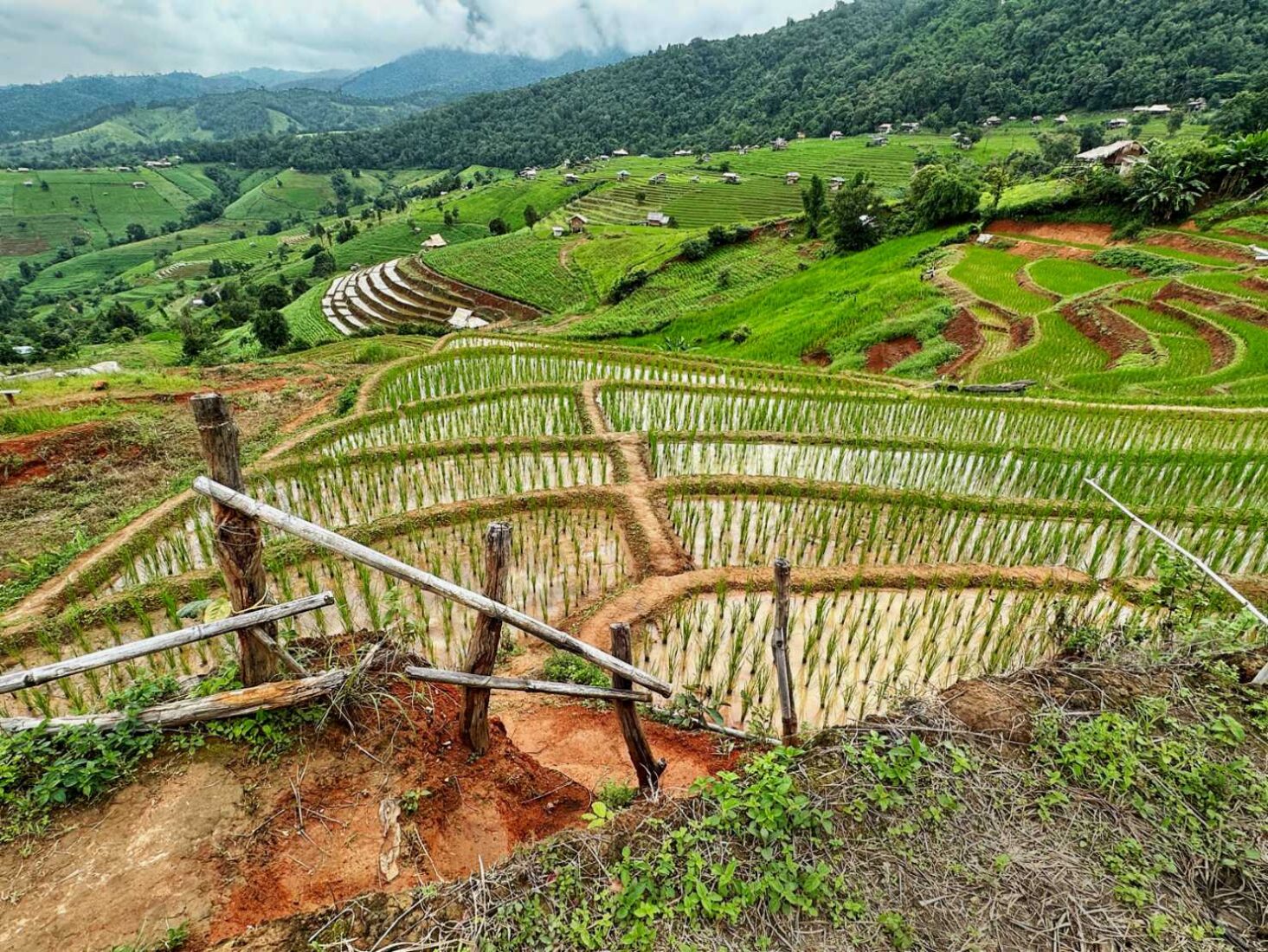
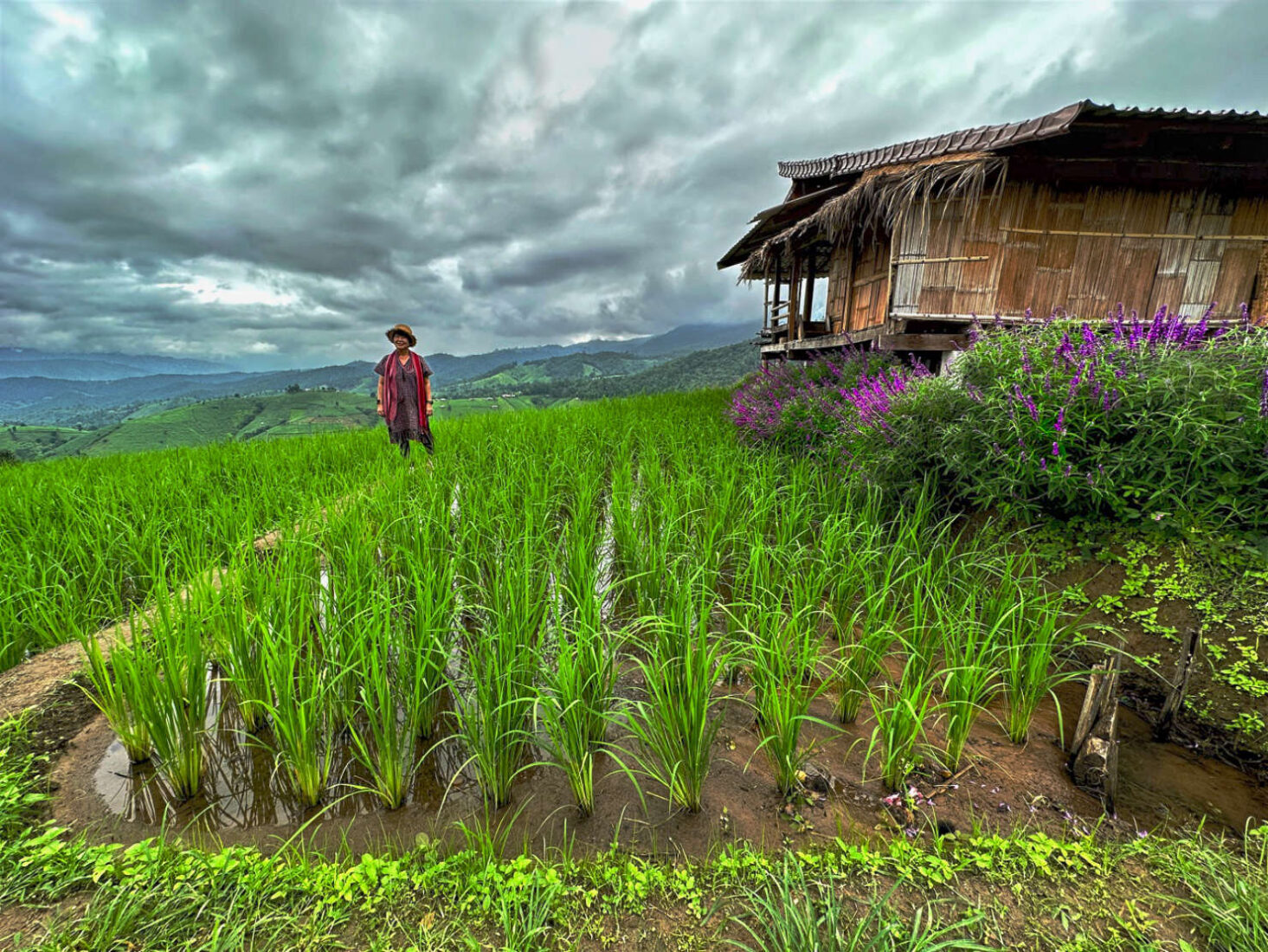
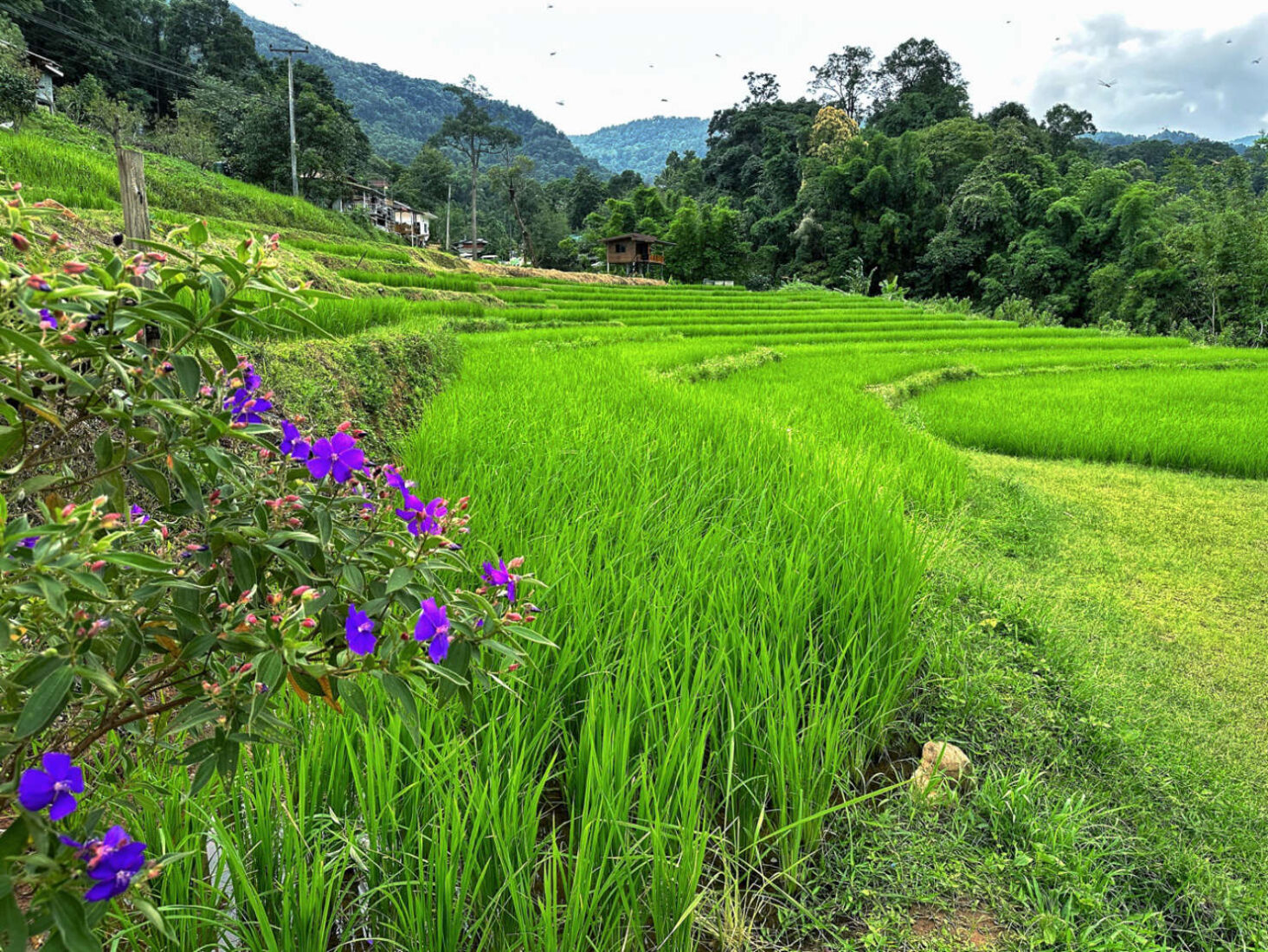
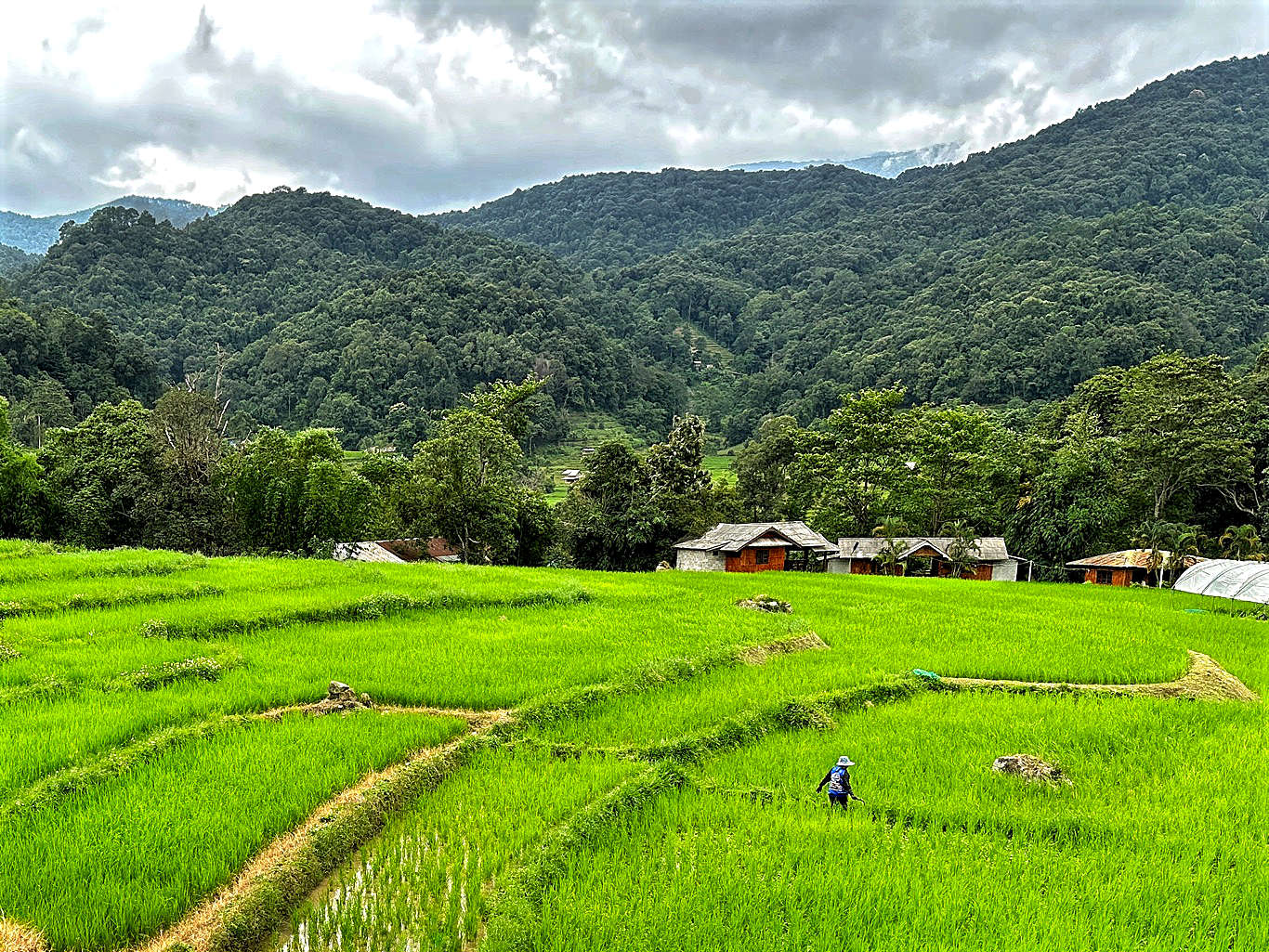
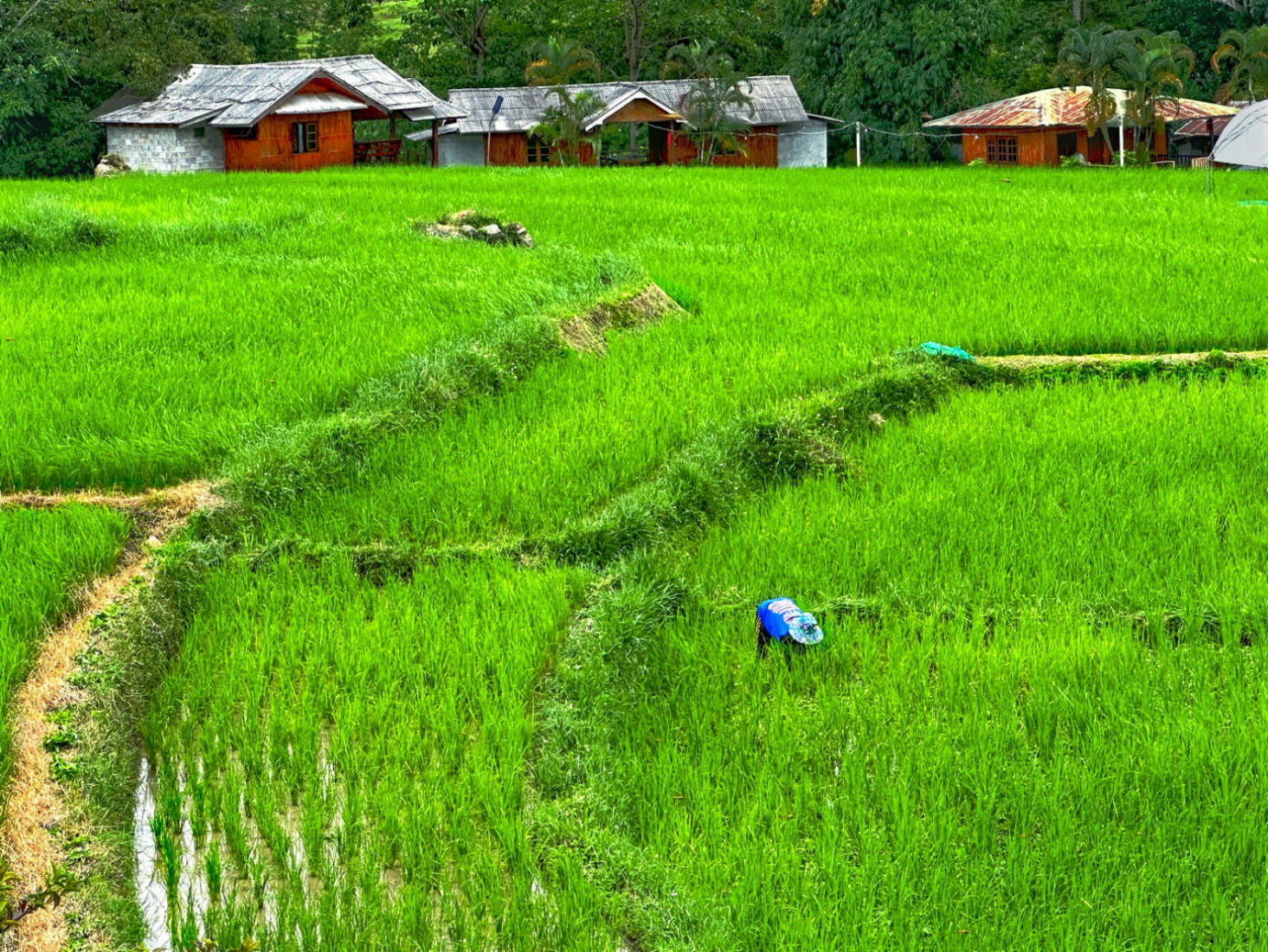
One of the most photogenic spots in the Province of Chiang Mai are the sculpted rice terraces that carpet the rolling hillsides of Doi Inthanon National Park. The best time to visit is from July through November, and each season has its own special beauty. In July and August, rice seedlings are planted in water-filled terraces that create gorgeous mirrored reflections of the sky. By September, the rice shoots have become a lush green carpet cascading down the hillsides. As the rice begins to ripen in October and November, the fields turn golden yellow.
Located a mere two to three-hour drive from the city, the rice terraces can easily be visited on a day trip. However to really experience local life, stay overnight in one of the lovely guest houses that local residents have built atop ridges overlooking the fields. A room will cost about 500 Thai Baht (about $15 USD) and usually includes breakfast. However accommodations are in demand, so be sure to book ahead. Many websites also caution that getting there requires a 4WD vehicle, as the roads can be muddy during the rainy season. However, I have made the trip in my own car without problems. Just be careful to stay on the main roads into the villages. There are several places to enjoy view these terraces, but below I share my two favorite.
Pa Pong Piang Rice Terraces
The small village of Ban Pa Pong Piang is tucked deep within the hills of Doi Inthanon Mountain, in an area known as Mae Chaem. Like many other villages in this area, this one is home to members of the Karen ethnic minority. In addition to showing off their rice fields with great pride, villagers also offer guided tours to experience their simple way of life, which often includes visits to the house of a village elder. Open 24 hours. No entrance fee. Google Maps.
Mae Klang Luang Rice Terraces and Coffee Buffet
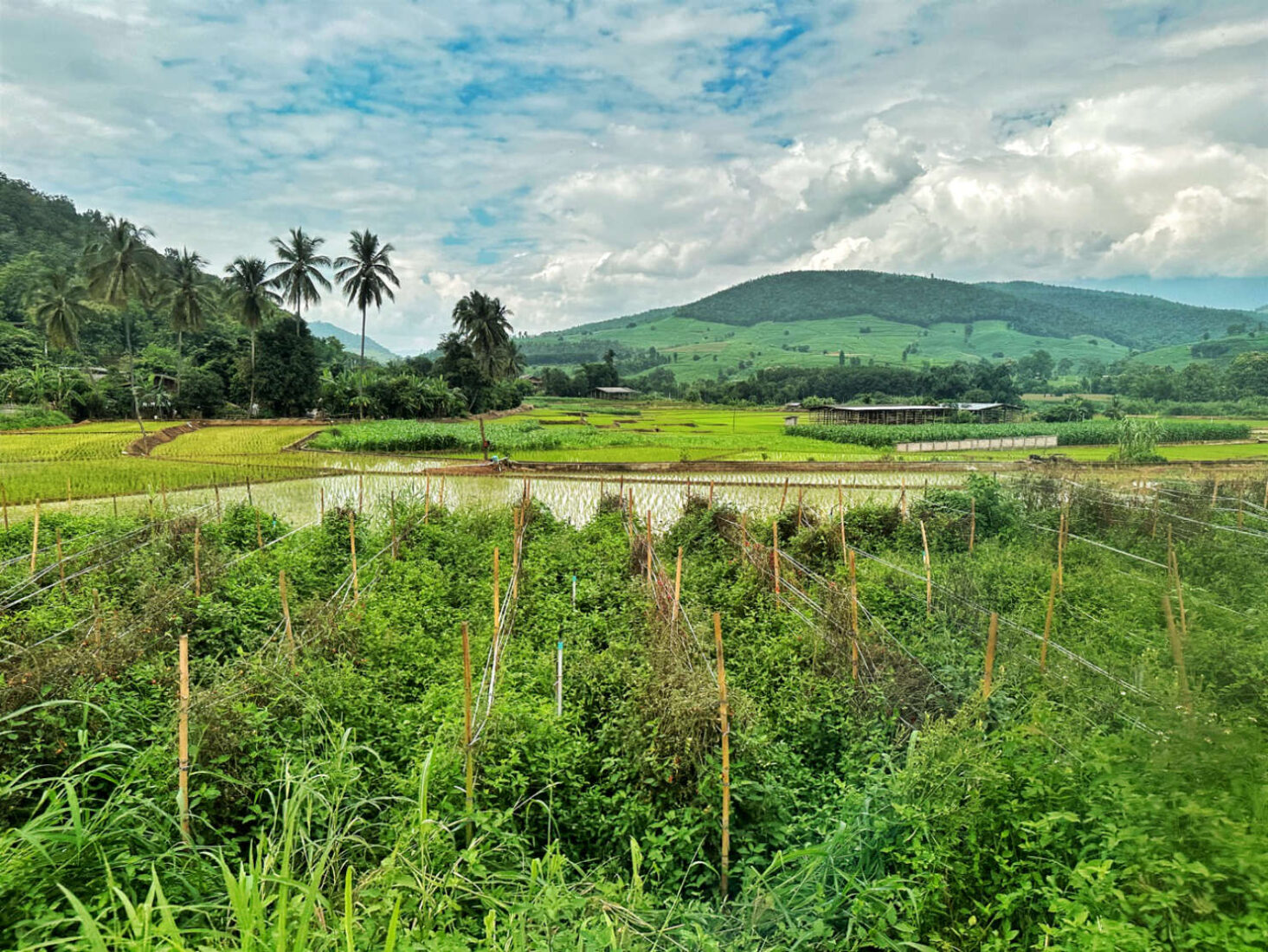
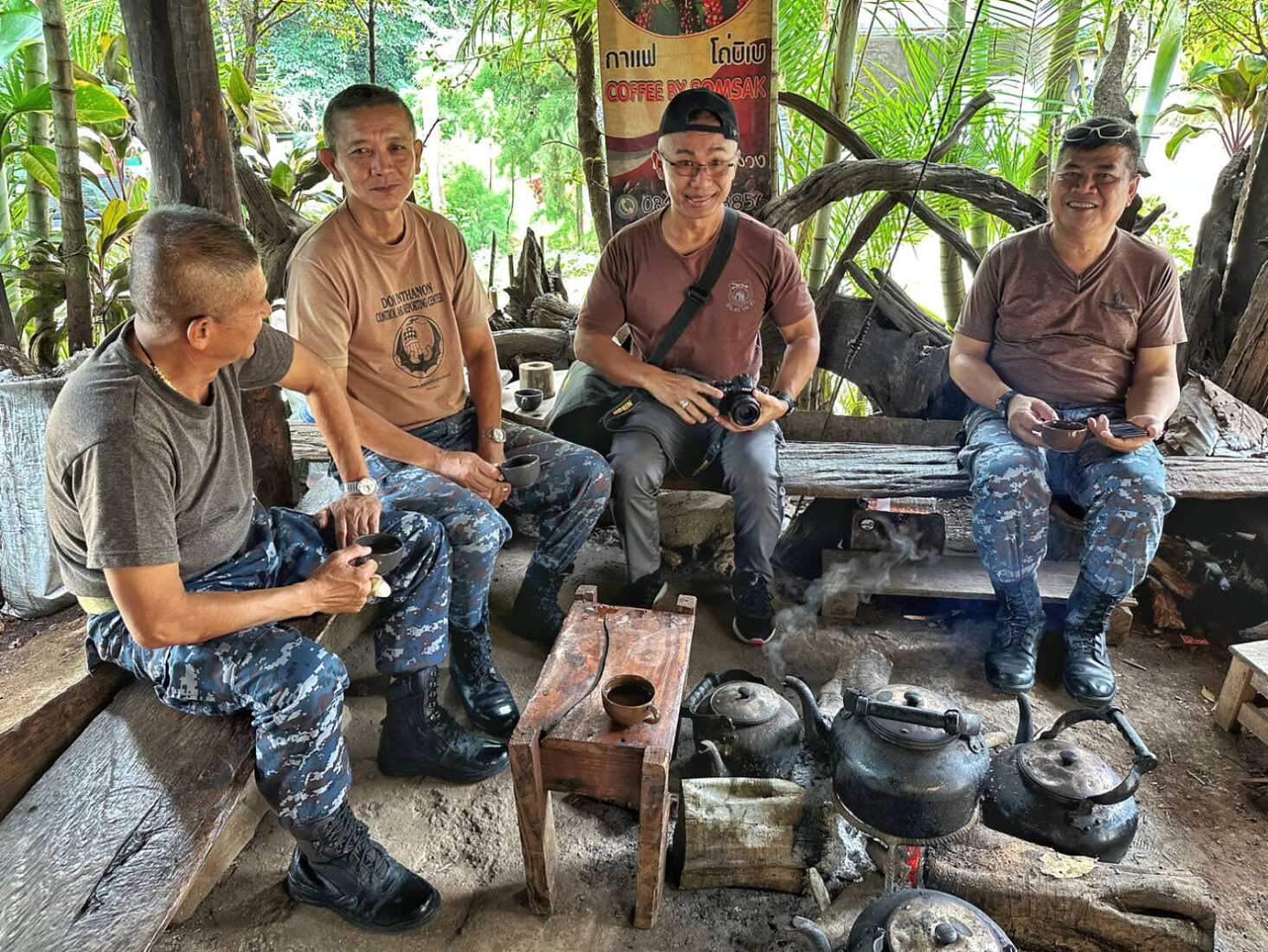
At the tiny hamlet of Mae Klang Luang, park at the top of the hill and walk a short distance down to the rice fields. On the way, be on the lookout for the village “Coffee Buffet,” a small open-air pavilion where locals brew the tea and coffee they also grow. Every visitor to the village is welcome to a free cup of their rich Arabica coffee, which is roasted and ground by hand over an open campfire. Then continue on to the rice fields, which are less mountainous here but no less lush or beautiful than those at Pa Pong Piang. Open every day from 9 a.m. to 5 p.m. No entrance fee. Google Maps.
Other Places to Visit in and Around the Doi Inthanon Mountains
Miracle Flower Castle
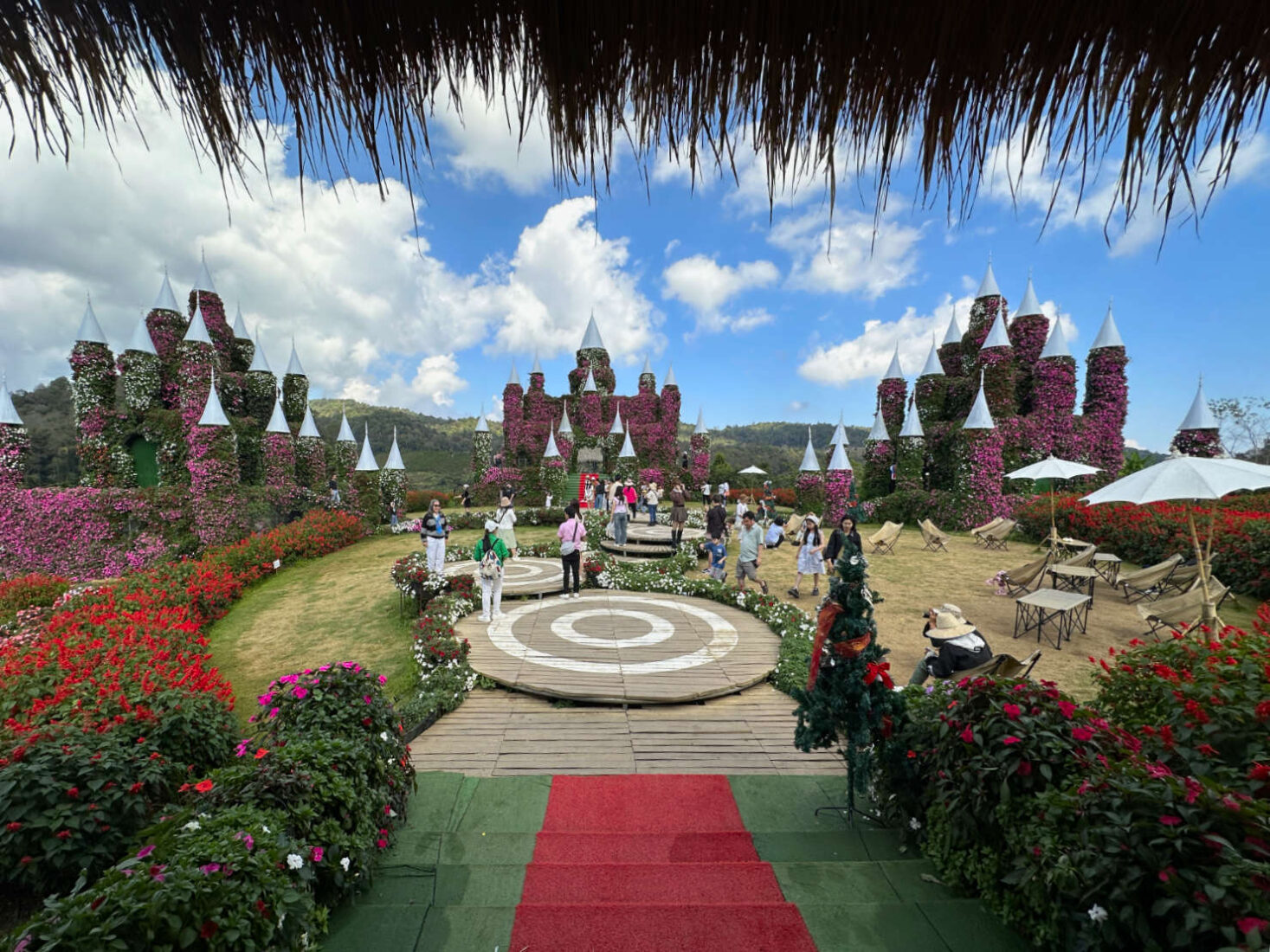
Miracle Flower Castle is located in Mae Chaem, a district in Chiang Mai Province that lies on the western side of the massive Doi Inthanon Mountain peak. It’s a quirky kind of place, a Disney-esque castle built entirely of flowers. It’s not worth a dedicated trip, but if you’re visiting the rice terraces its an easy add-on during the trip. Open from 8 a.m. to 6 p.m., seven days a week. Unfortunately, they charge foreigners quite a bit more than Thai nationals. Be prepared to pay around 200 Thai Baht (about $6 USD), unless you stop at one of the camping places in Mae Chaem, where you can buy discounted tickets. Google Maps.
Royal Project Siribhum Garden
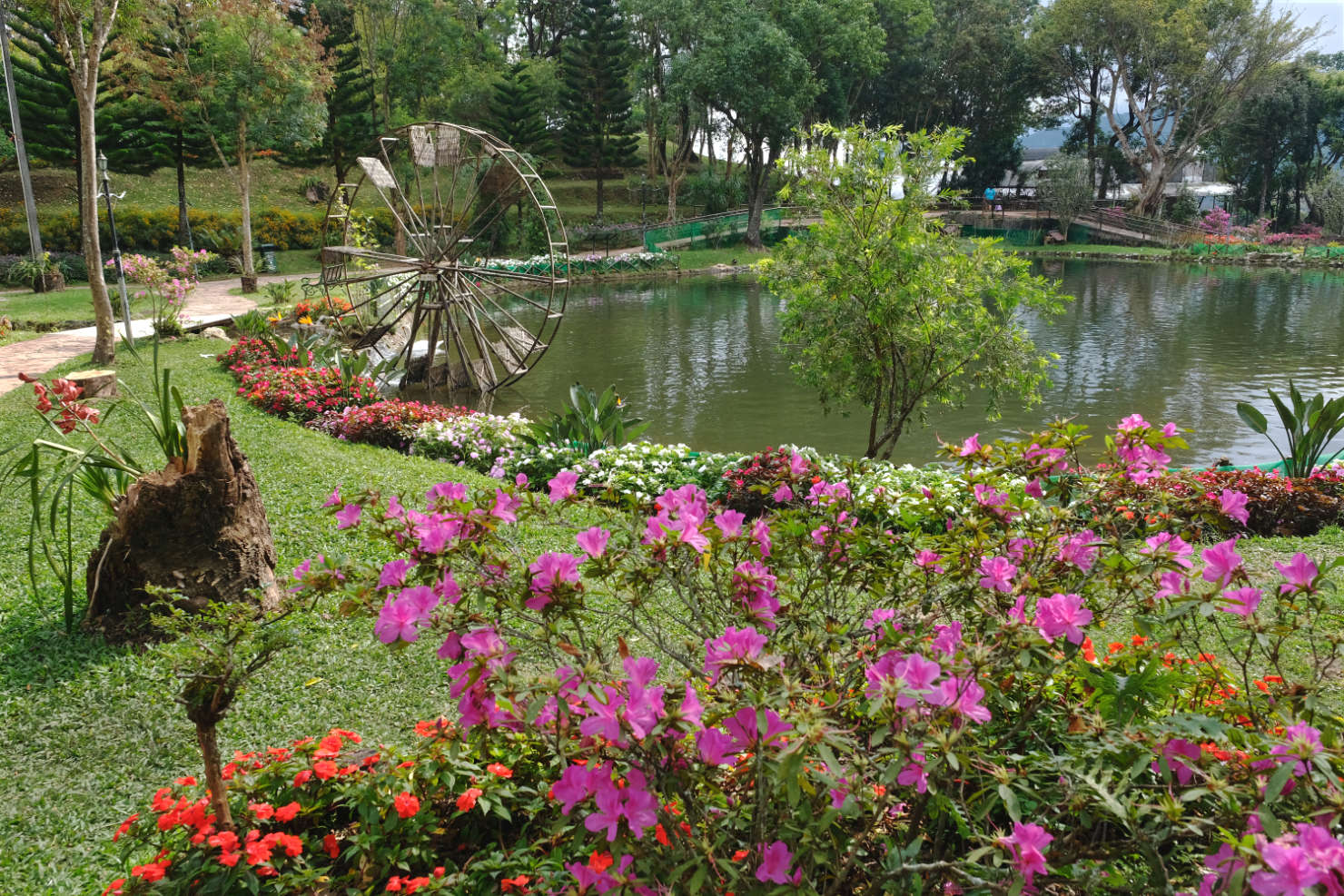
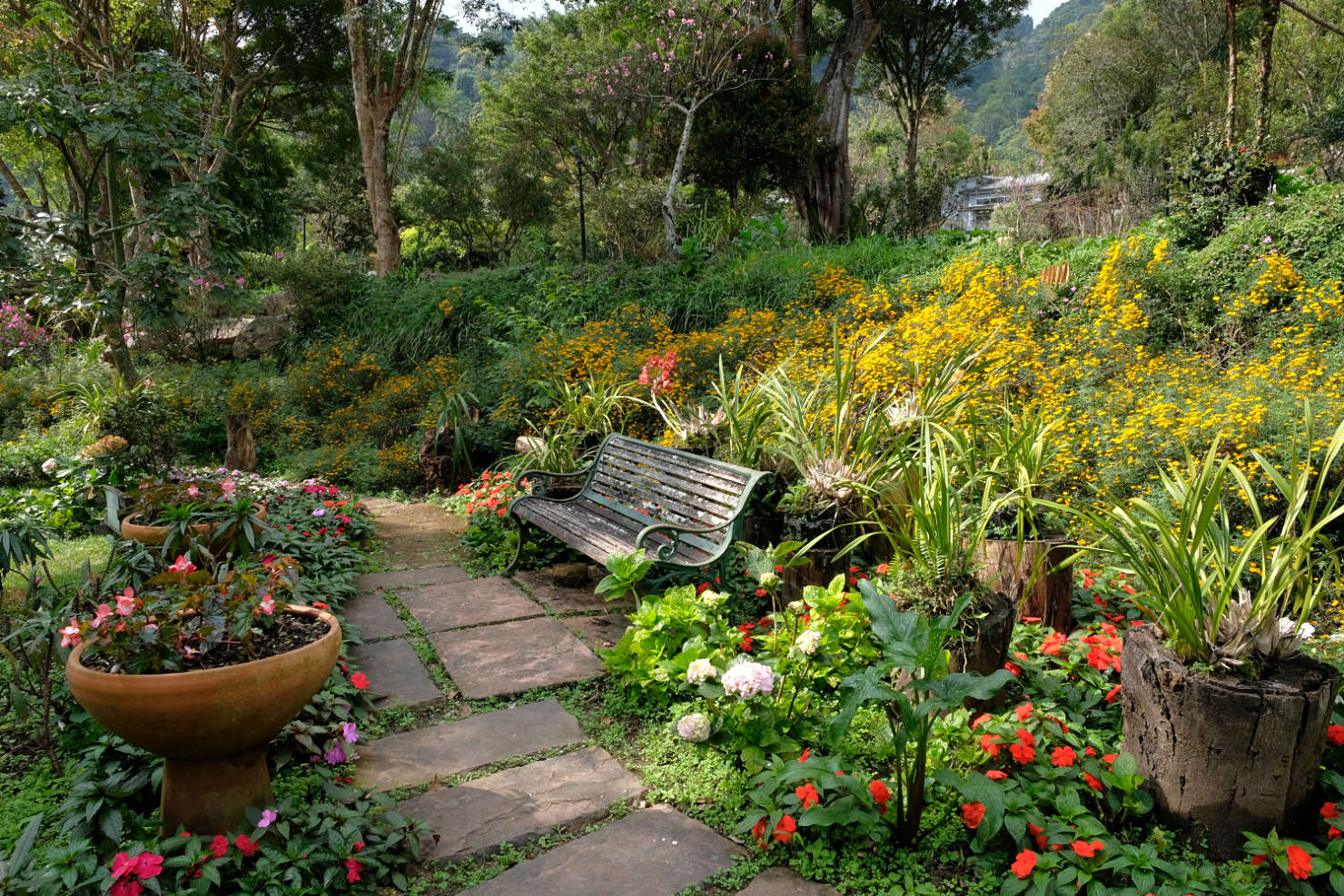
Located within the Royal Agricultural Station Inthanon at Doi Inthanon National Park in Chiang Mai Province, the Royal Project Sribhum Garden provides a cool respite during hotter midday temperatures. An easy stroll through the serene landscaped garden leads to a restaurant that focuses on farm-to-table ingredients from the Royal Project (including fresh sturgeon and trout), and the open-air restaurant offers good views of the three-story high Sribhum Waterfall. There’s also a trail leading up to the waterfall, if you’re game. Open daily from 8 a.m. to 5 p.m. The gardens and restaurant are located within the National Park, but if you tell them that you are going to Royal Project Sribhum Garden for lunch, they should wave you through for free. If they insist that you must pay (it happens with tourists sometimes), the fee is 300 Thai Baht pr person (about $9 USD). Google Maps.
Mae Klang Waterfall
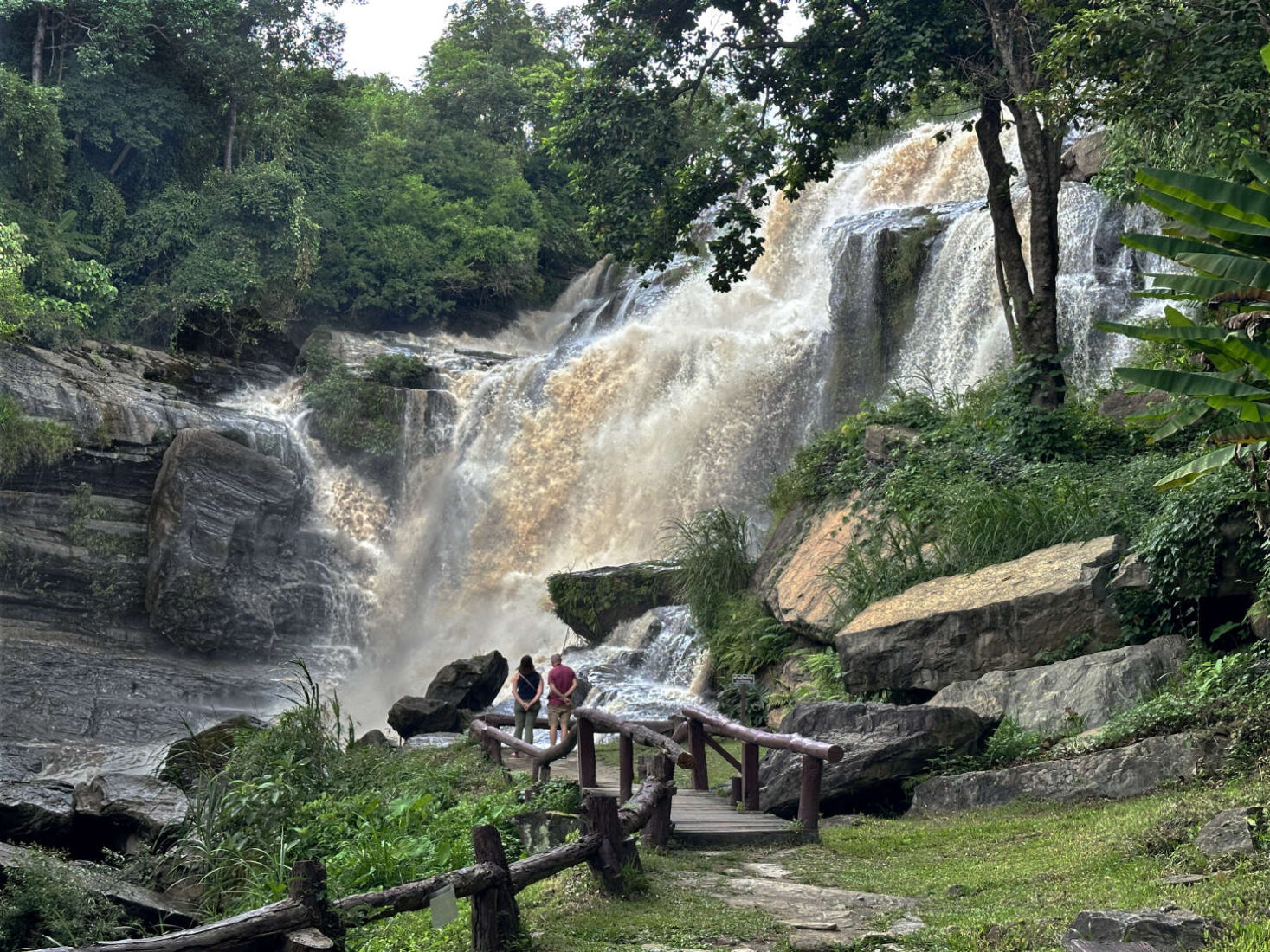
There are literally thousands of waterfalls in Thailand, but Mae Klang Waterfall is one of the best. Located at the entrance to Doi Inthanon National Park, the cascade is at the end of an easy, flat trail. The look of the falls changes dramatically throughout the year. It literally roars off the top of a rock ledge during rainy season, which is when the photo below was taken. Officially open every day from 8 a.m. to 5 p.m., although the park gates open at 6 a.m. and no one would likely stop you if you arrived earlier. The fee to enter Doi Inthanon National Park is 300 Thai Baht per person (about $9 USD) for foreigners, and it covers any and all sites you choose to visit within the park. Google Maps.
Doi Saket District
T’ai Lue Wisdom Learning Center
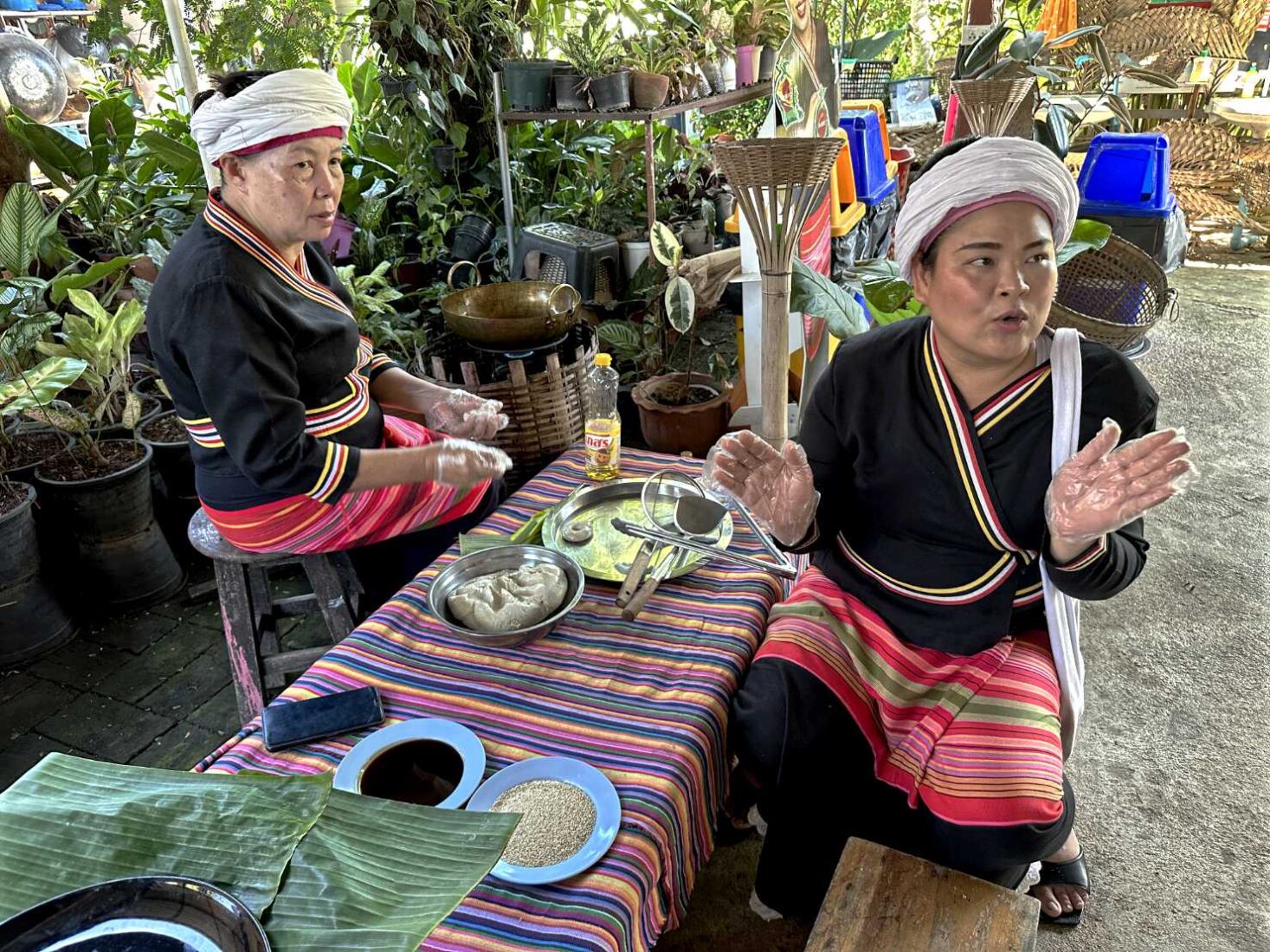
Over the centuries, the T’ai Lue people migrated to Thailand from Sipsongpanna (southeast China, in what is now Yunnan). Determined to preserve their culture and way of life, they formed tight-knit communities scattered throughout Northern Thailand. One of these communities, Ban Luang Nuea village, has built the Ban Bai Boon Lifestyle Center in order to educate others about their way of life. T’ai Lui people in ethnic dress welcome visitors with a traditional dance and a string-tying ceremony to ensure the health and well-being of their guests. Elders give a brief talk about T’ai Lue history and culture, followed by a fascinating tour of a traditional raised teak house where the family still weaves textiles on giant wooden looms. After some time wandering the village, visitors are treated to a fresh fried snack known as Khanom Wong (sometimes Khanom Wang), a small, sweet donut made from rice flour and mashed bananas (I don’t even like sweets, but they were so delicious that I begged for a second one). The Center, which is located a short drive east of Chiang Mai, has received a Silver Awards from Thailand Tourism in the category of historical and cultural tourism sites. At the time of this writing, the cost was 60 Thai Baht per person for a 30-minute visit, however It is also possible to arrange longer stays that include a visit to the local Wat (temple) and a full meal, featuring the T’ai Lue version of Phàt Thai, which is made with green beans. Call +66 (0) 81-960-9954 to confirm prices and make reservations. Open every day from 8 a.m. to 5 p.m. Google Maps.
Chiangmai Celadon
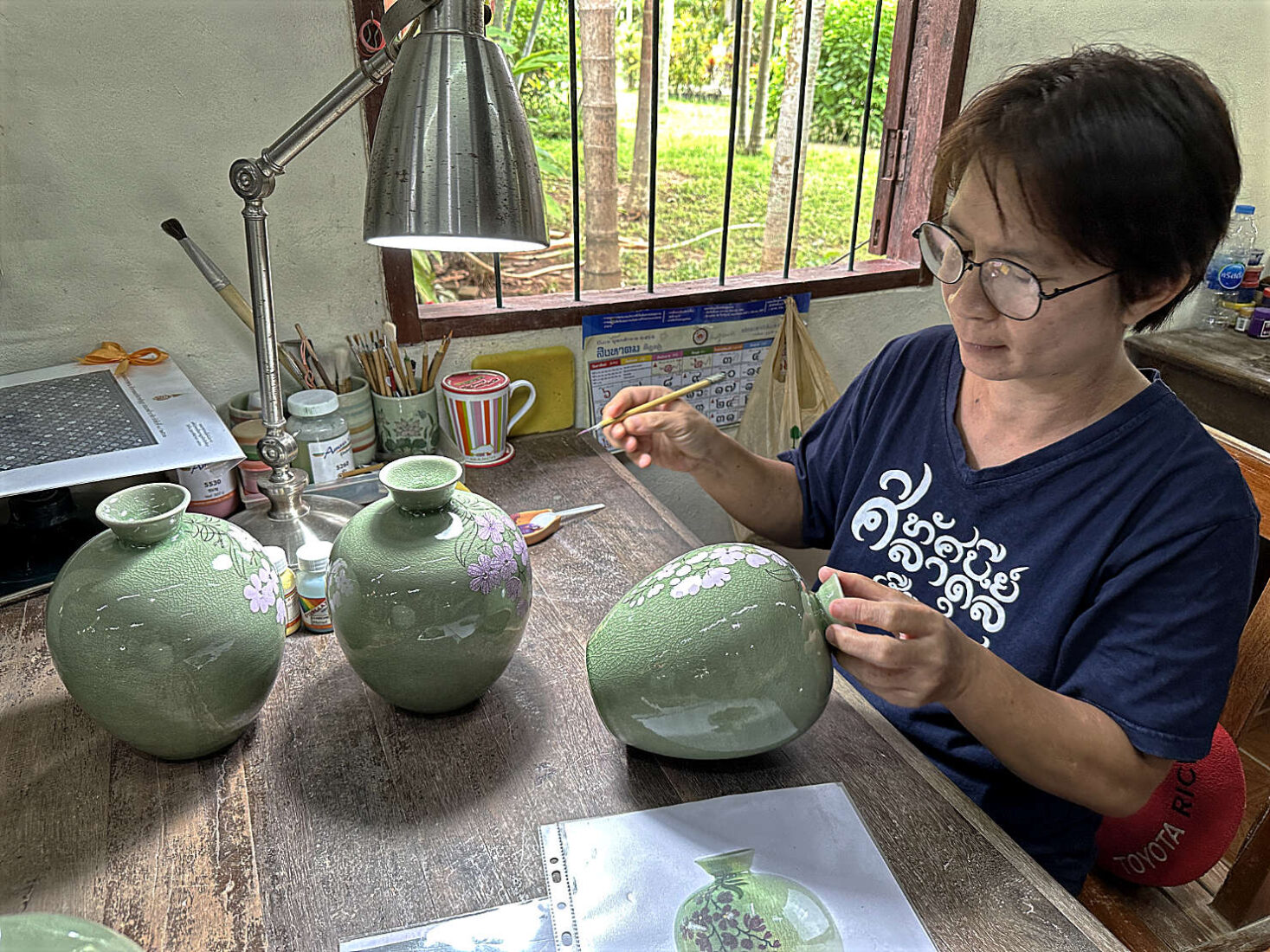
Located in the town of Doi Saket, a short drive to the east of Chiang Mai, Chiangmai Celadon is one of Thailand’s premiere manufacturers of the famous green-glazed pottery known as Celadon. Since 1989, Khun Tassanee Yaja, Owner and Managing Director, has devoted her life to working with celadon ceramic pottery. Chiang Mai Celadon is classified as a Stoneware that has been glazed with wood ashes, combined with the surface soil collected from rice paddies. Once baked, the resulting product becomes a distinctive green color that defines the Celadon style of ceramics. Khun Tassanee will be happy to arrange a tour of her property and shops, as well as a workshop where guests can paint their own piece of pottery. Open from 8 a.m. to 5 p.m. every day. No entrance fee, but inquire about the cost for tours or workshops. Google Maps.
Cham Chaa Market
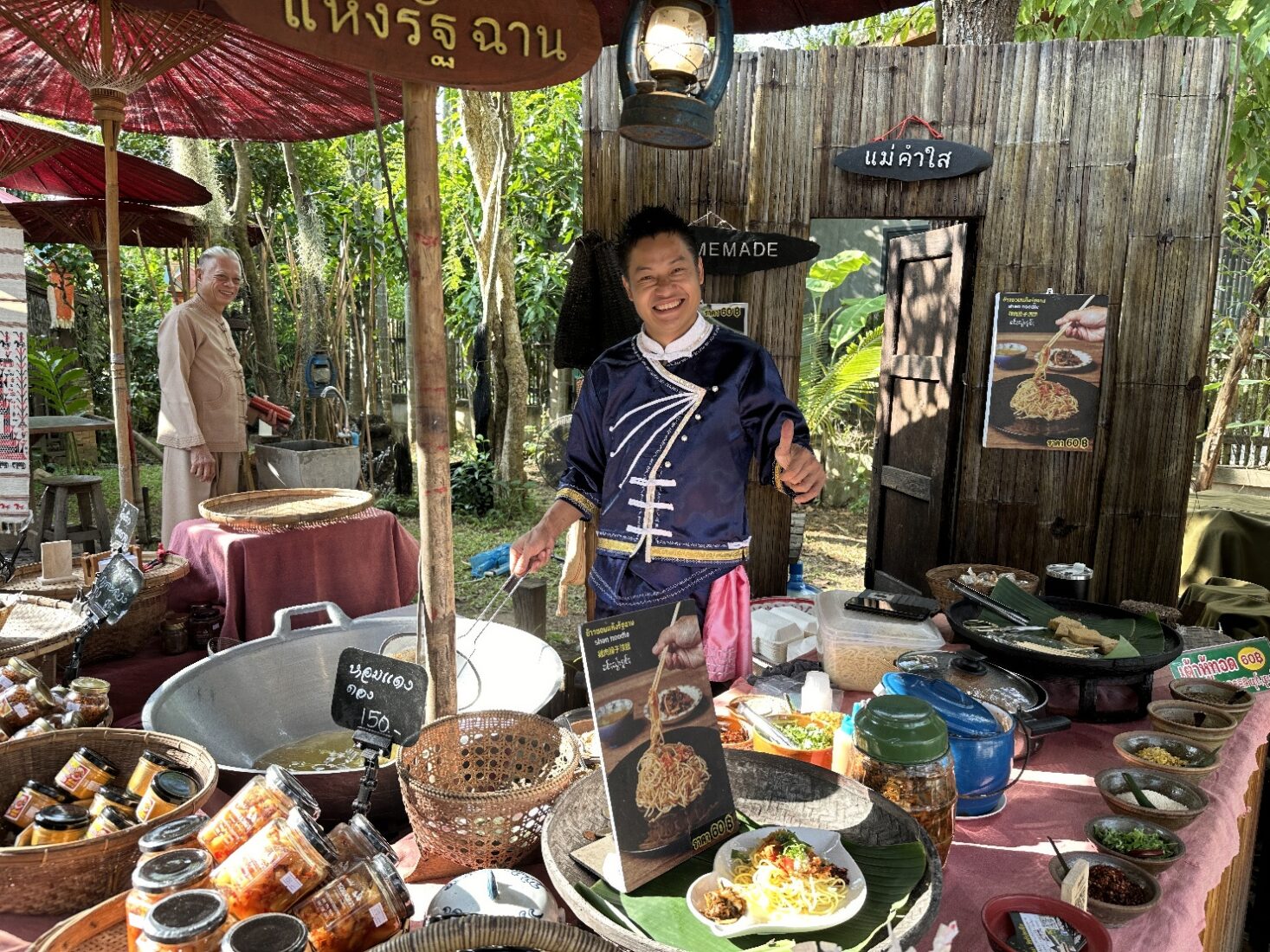
If you decide to head east toward Doi Saket on the weekend, consider stopping at Cham Chaa Market, which is on the way. This local market is laid back and much less touristy than the bigger ones in Chiang Mai. It features beautiful hand-made clothing; hand-carved wooden bowls and utensils; one-of-a-kind artworks and handicrafts; and food, food, and more food. Open on Saturday and Sunday from 9 a.m. to 4 p.m. No entrance fee and free parking. Google Maps.
Lamphun
Lamphun city, capital of Lamphun Province, is an ancient city located less than an hour’s drive south of Chiang Mai. Lamphun was founded by Queen Chama Thevi as the capital of the Haripunchai Kingdom, the last and most northerly Mon kingdom in what eventually became Thailand. The Province is famous for its fresh and dried Longan fruit (Lam Yai in Thai), beautiful hand-woven textiles and silks, and for Wat Phra That Hariphunchai Woramahawihan (commonly referred to as Wat Hariphunchai), which houses the ancient Phra That Hariphunchai relic. The Wat is open every day from 6 a.m. to 9 p.m. There is no fee to visit. Google Maps.
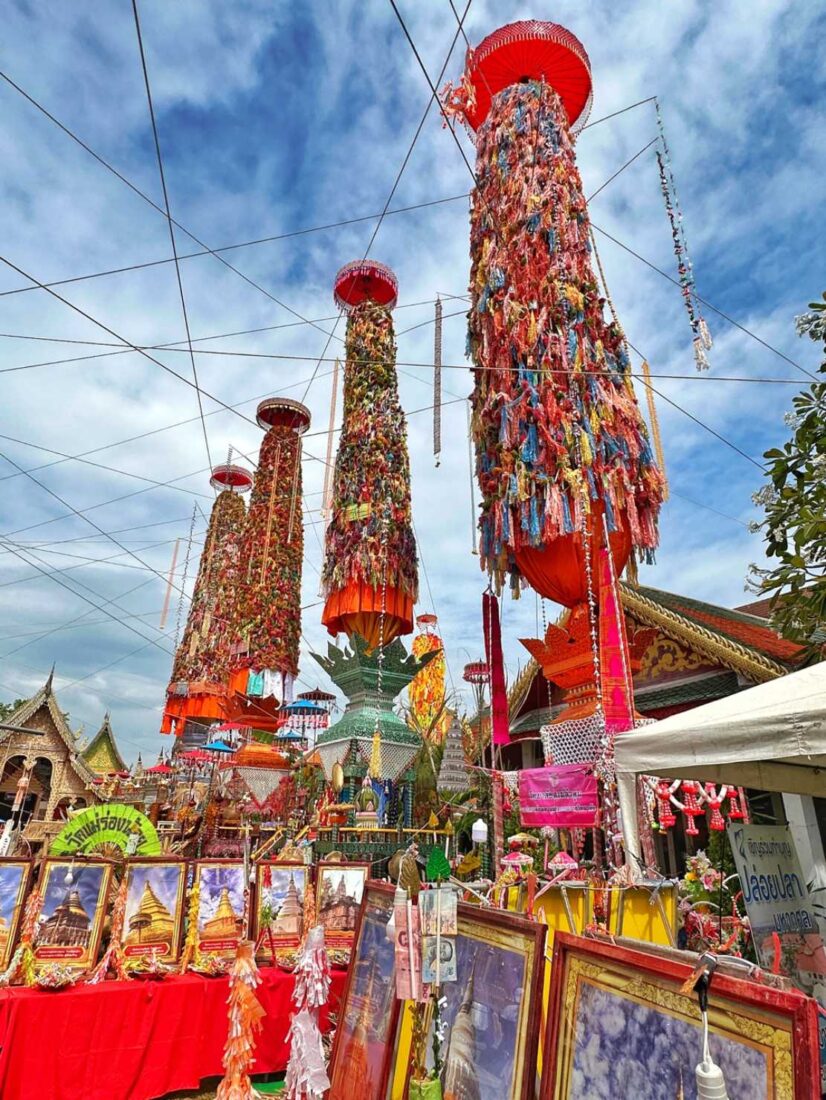
Lamphun is also known for two great festivals. During the Yee Peng celebration in November, multi-colored illuminated paper lanterns are hung over every inch of Wat Hariphunchai and extend out over the four streets that meet at the Wat. The effect is nothing less than spectacular. Even better, it is still legal to launch paper lanterns fueled by candles into the air in Lamphun (it is now outlawed in Chiang Mai). The second festival, also held at the Wat, is known as Salak Yom. Women spend weeks and months creating monolithic poles covered in gifts destined for the Wat and its monks. When complete the poles are set upright in the grounds of the Wat for people to view. This ritual allows the women to earn enough merit in this lifetime that they will not be reborn into this world of suffering.
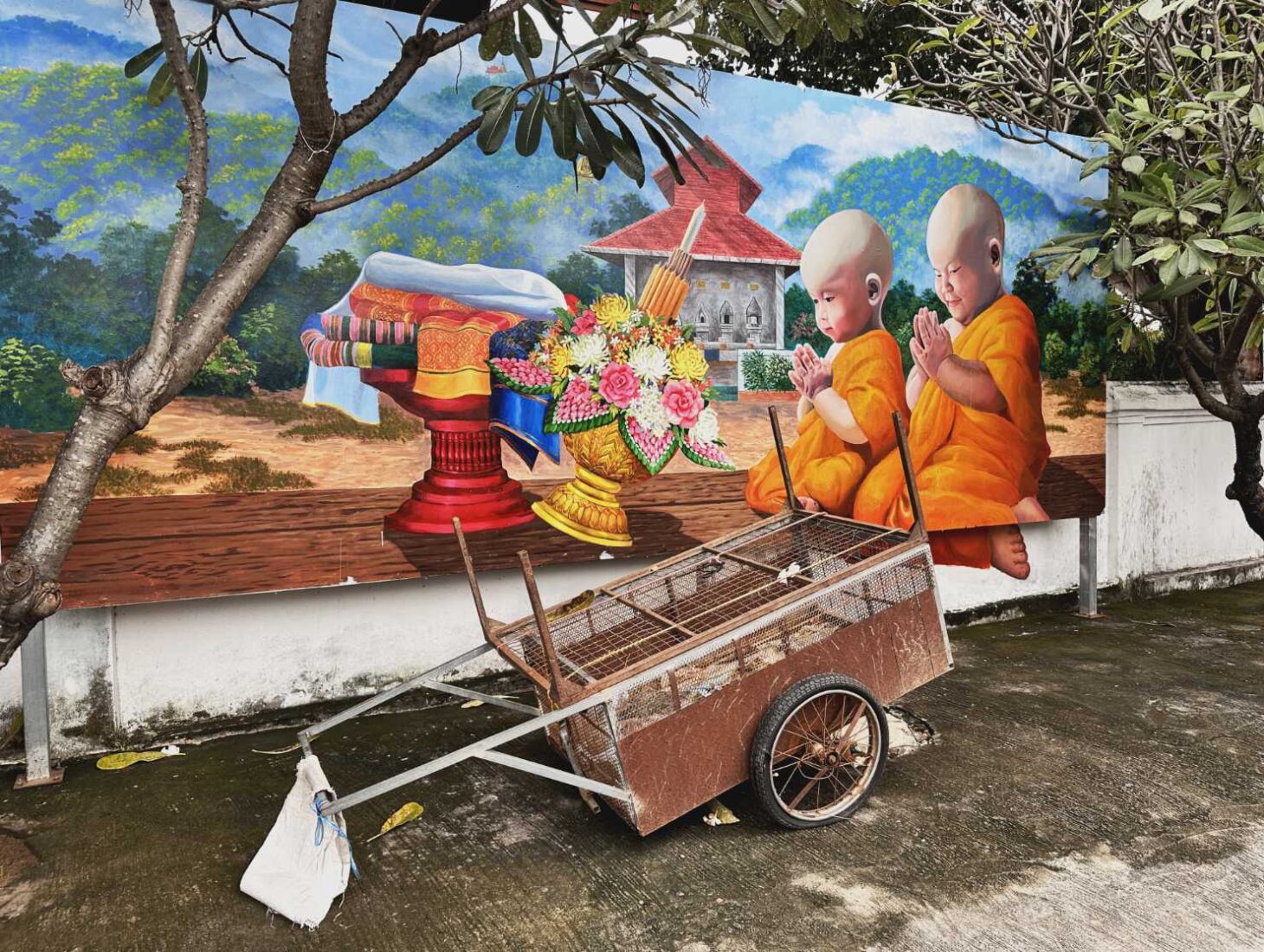
A little-known attraction in Lamphun is the Ban Wiang Yong Street Art district, which is located just across the river from Wat Hariphunchai. I stumbled across it when I crossed the river to check out the local market and began seeing giant murals everywhere. I’ve since added it to Google Maps, so it is easier for people to find. As I explored, I learned that the T’ai Lue (T’ai Yong) residents of Ban Wiang Yong community have gone to great lengths to preserve their traditions and culture in this corner of Lamphun. Not only do they continue to produce handwoven cotton and silks in unique patterns, they have preserved their wooden houses that feature Lanna-style architecture and turned their local Wat into Wat Ton Keaw Museum that Yong people use as a tool to pass their cultures on to the younger generations.
Lampang
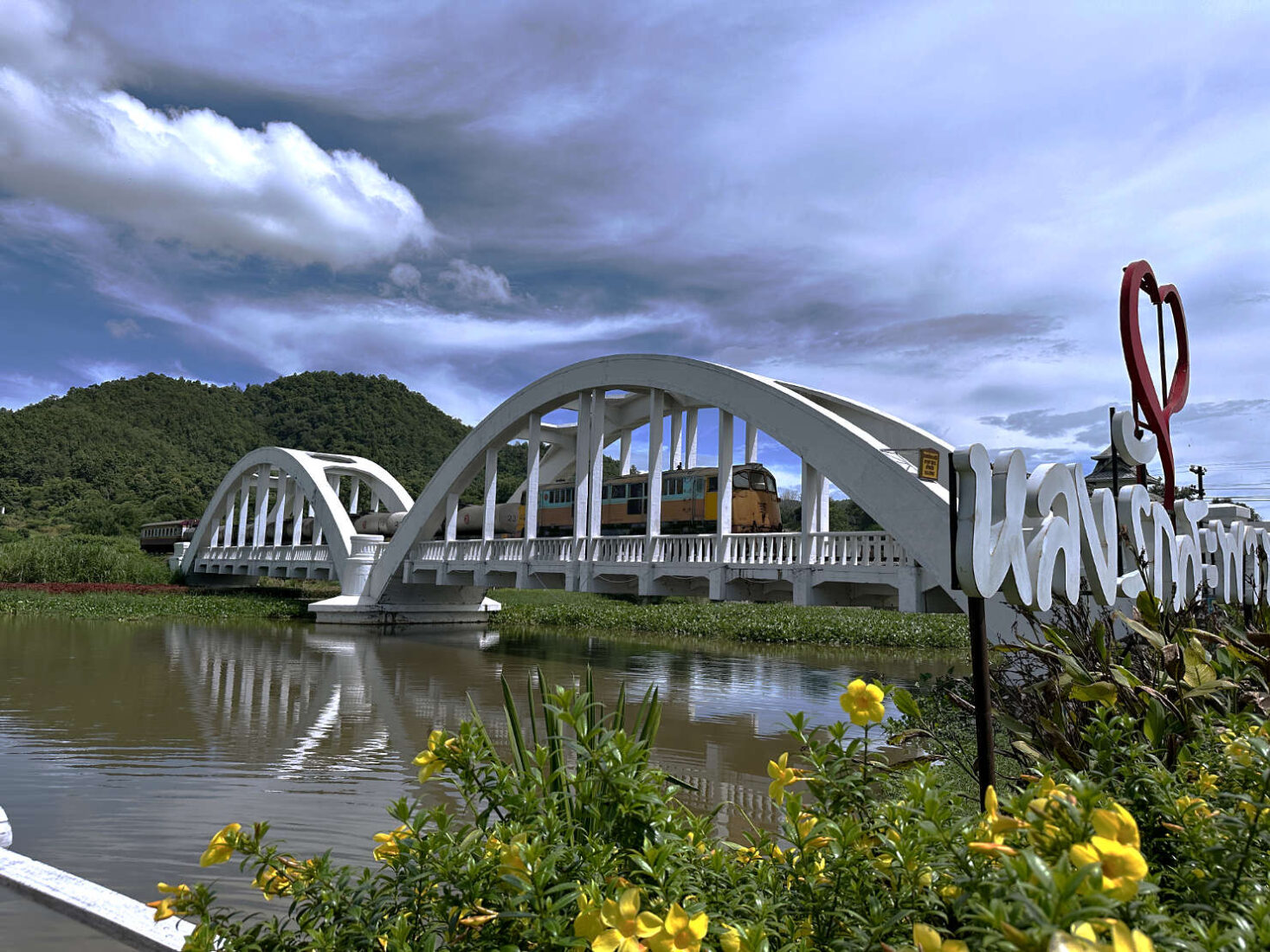
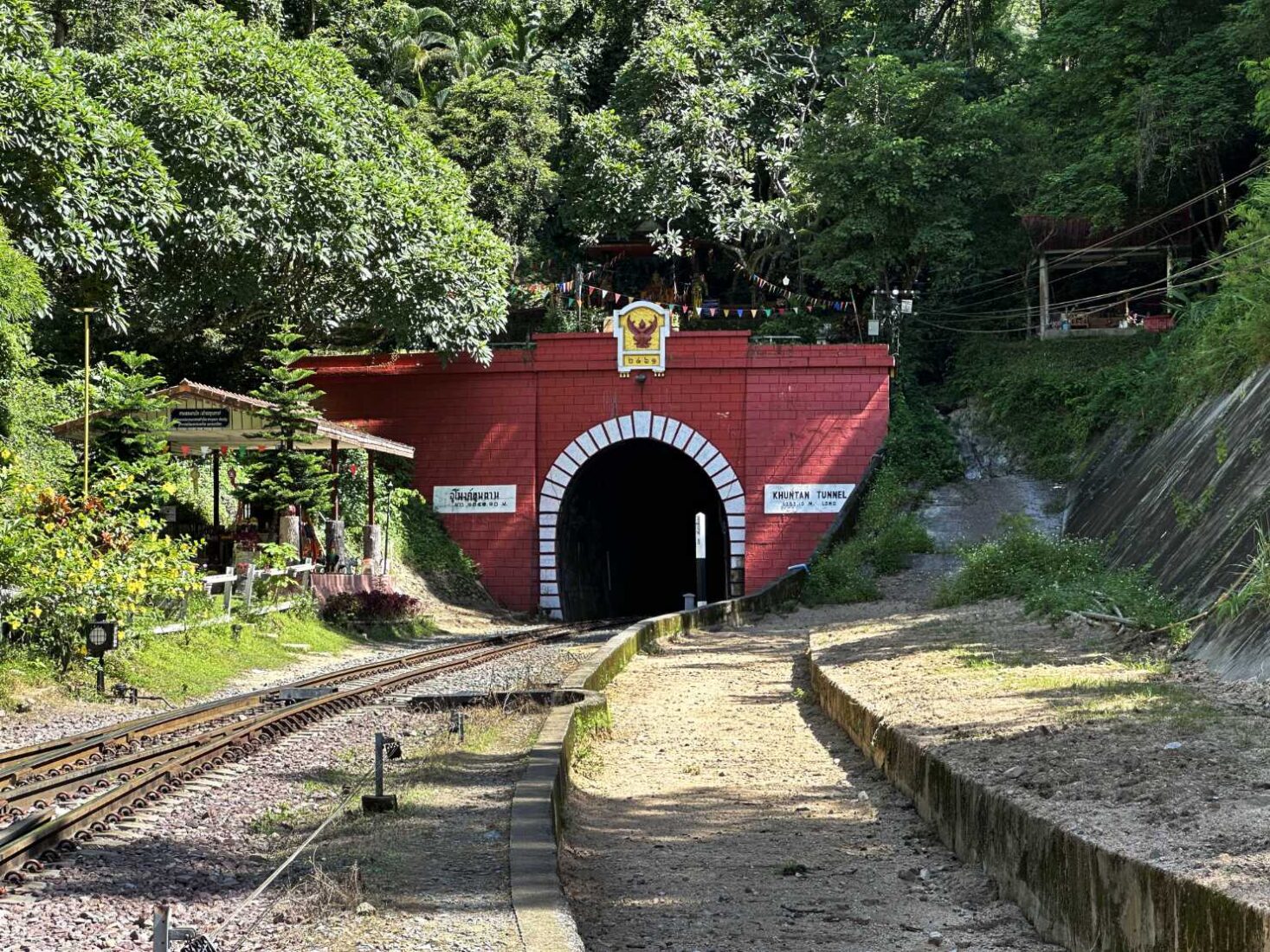
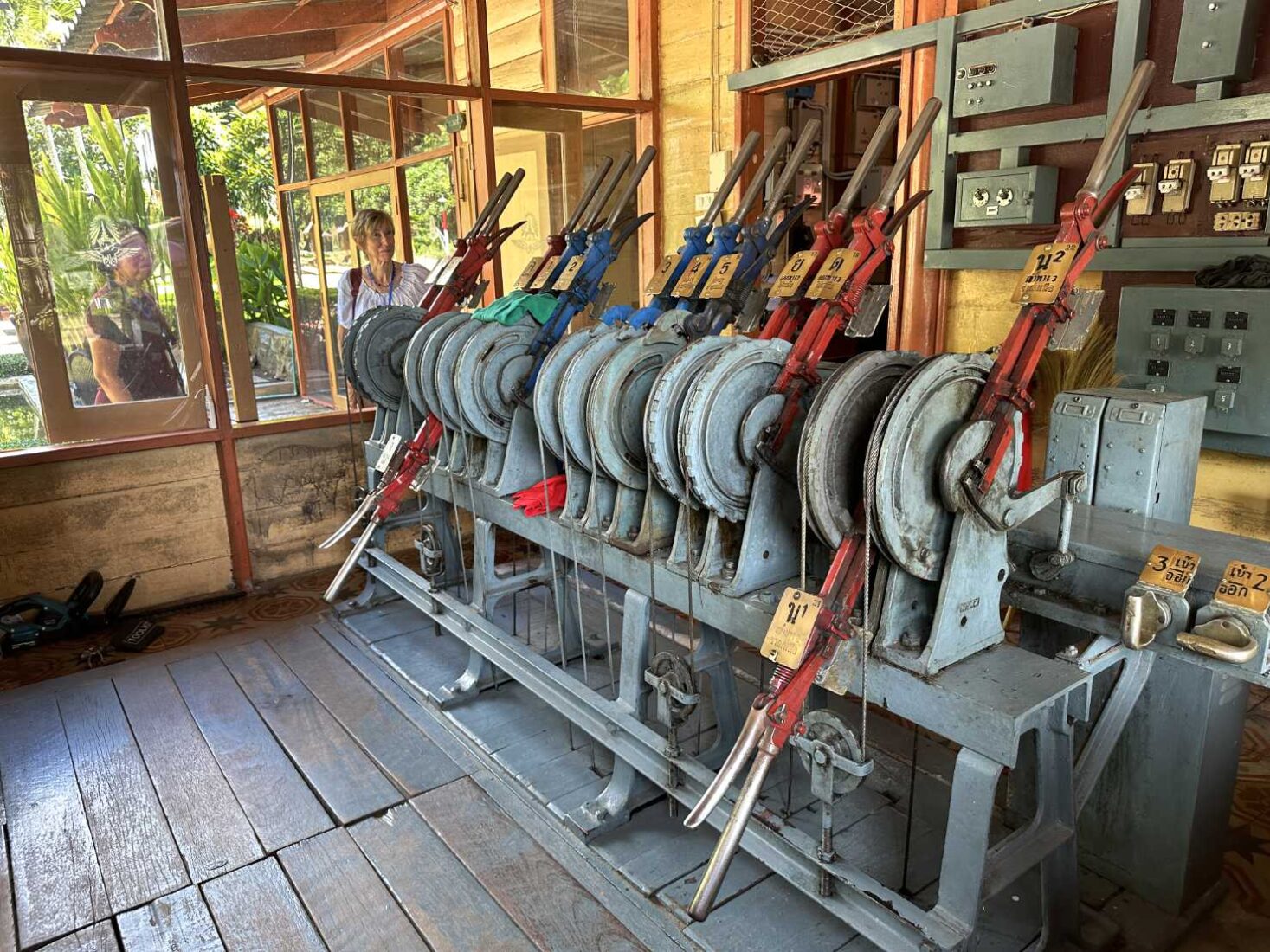
Lampang, the third largest city in Northern Thailand, makes for a fascinating two-to-three day trip. Though more of a sleepy town than a thriving metropolis today, it still offers fascinating glimpses of the late 1800s and early 1900s, when it was the center of the teak industry in Thailand. Still today, traditional teak houses from that era line the streets, and horse-drawn carriages take visitors on rides around the city. The new Railroad Park, with displays in Thai and English, provides a thorough history of the railroads that were so crucial to the development of Lampang. In fact, I highly recommend taking the morning train from Chiang Mai to Lampang (about a two-hour ride), and hiring a horse drawn carriage at the station to explore the city. Taking the train also takes visitors over the historic Champhu Railroad Bridge (Google Maps) and through the Khun Tan Tunnel (Google Maps), the construction of which finally opened up trade routes between Bangkok and Lamphun, and eventually with Chiang Mai.
Mae Rim and Mae Taeng
The smaller communities of Mae Rim and Mae Taeng are located just a few miles north of Chiang Mai. Most visitors to Chiang Mai head north to visit an Elephant Sanctuary at some point. But elephants are just the tip of the iceberg in these more remote areas. There are so many places to explore. Fabulous Coffee Shops like Mai Huean 60; Wat Pa Dara Phirom, which honors the last Lanna princess before the Lanna Kingdom merged with Siam (now Thailand); the Dara Phirom Palace Museum; the Queen Sirikit Botanic Garden; and the Mae Sa Waterfall. However, those are all fairly well-known tourist attractions, and I promised you lesser-known, more. unique destinations…so here goes.
Julia Campground
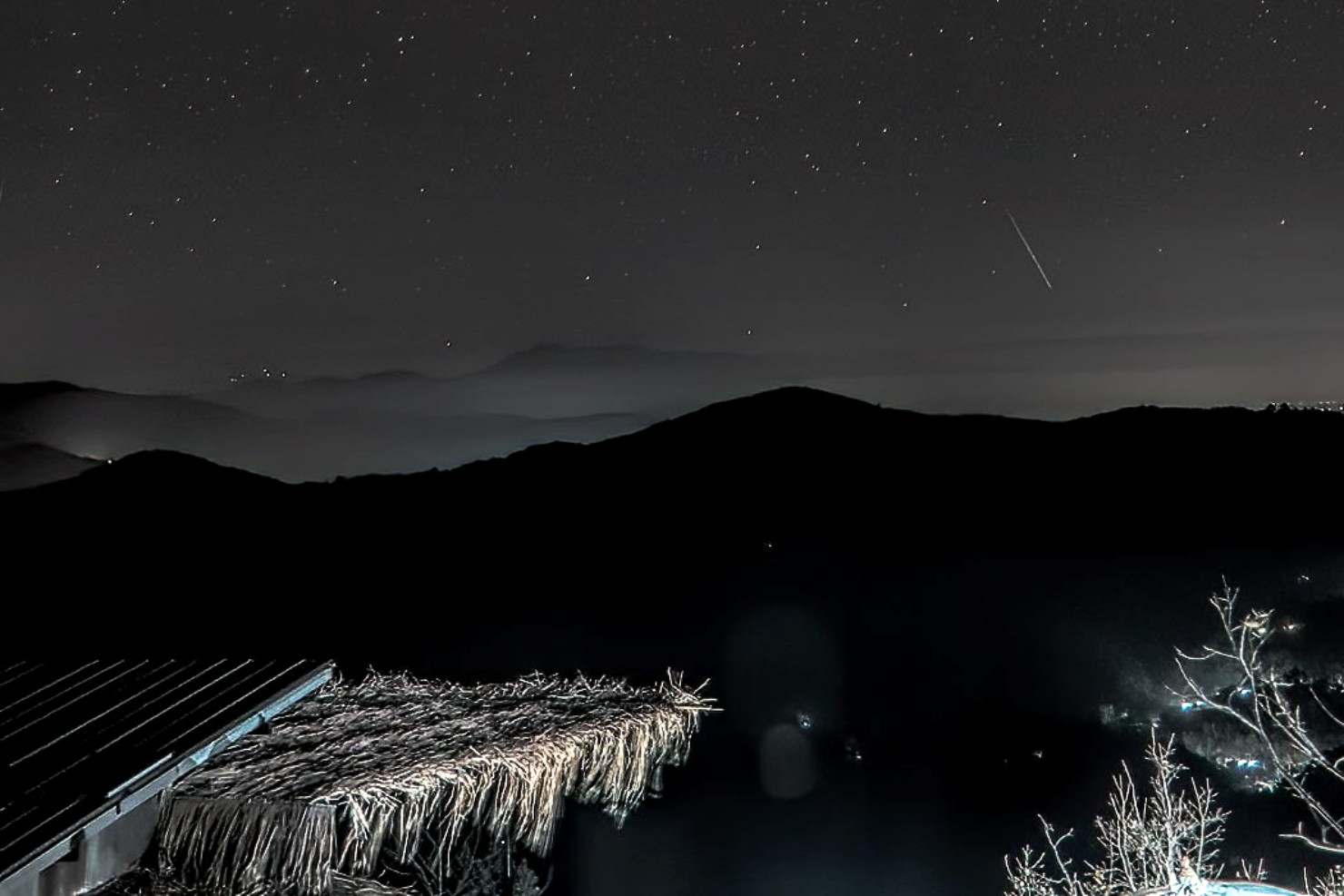
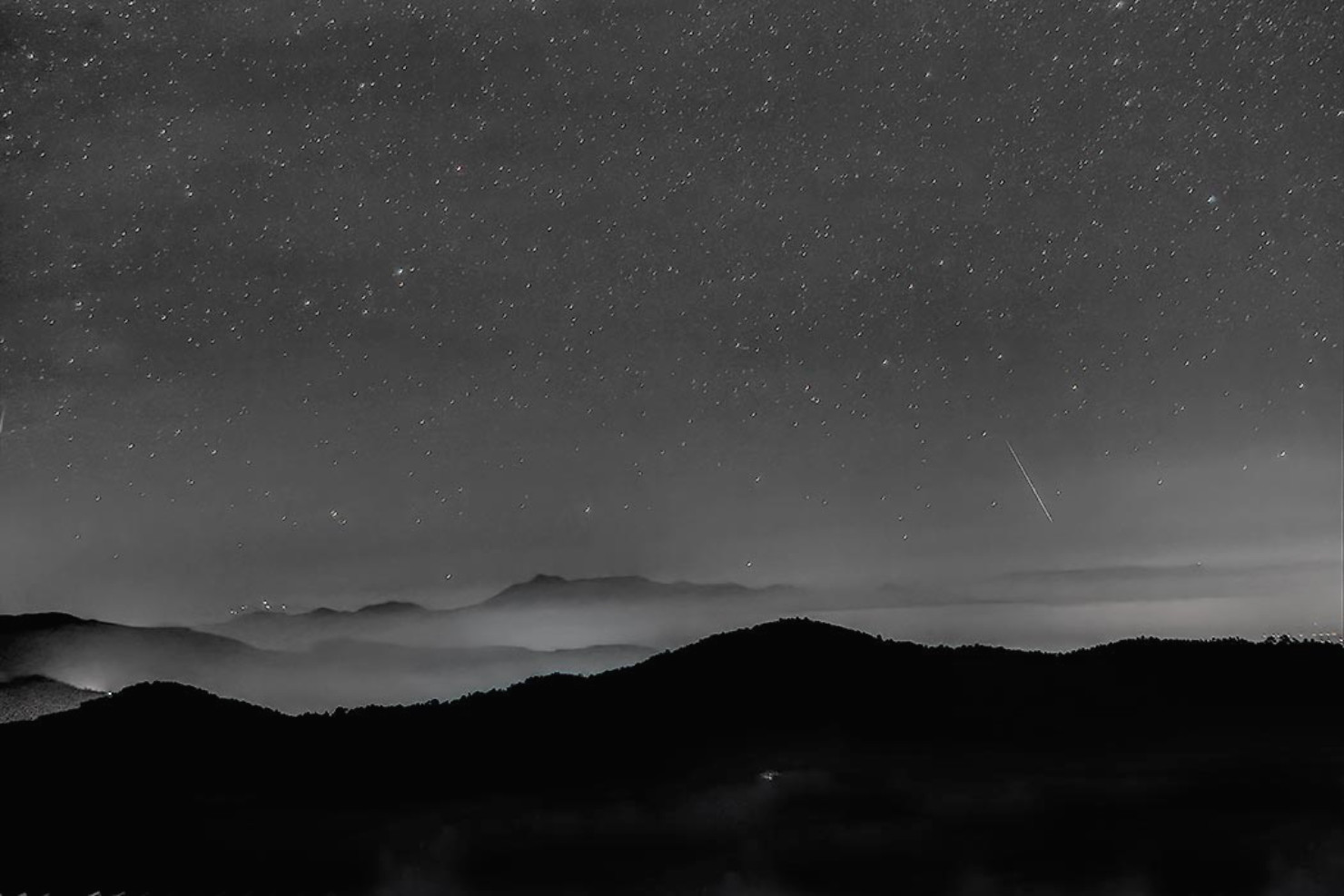
Thailand is hot most of the time. The exception is the winter months, when temps become downright chilly in the mountains. While we westerners love to escape to tropical destination in the winter, Thais want to go somewhere cold. The mountains north of Chiang Mai offer dozens of high mountain campgrounds where you can stay in a bamboo A-frame tent outfitted with a real mattress. Cook dinner in a traditional Tao Ang Lo (clay charcoal stove) on the deck of your A-frame, go to sleep under the stars, and wake up at dawn to see the talay morg, the sea of mist that has rolled into the valley, obscuring the mountains completely. It’s pure joy to eat breakfast at dawn and watch the mist rise up and out of the valley as the sun warms the air. My favorite place to do this is Julia Campground, and my favorite time to do it is during one of the annual meteor showers. My friends and I stayed up half the night, oohing and aahing over the “shooting stars” blasting their way across the night sky. But be advised that this place is not easy to find, and the owners don’t speak much English, so have Google Translate handy. And bring some small change to buy fresh vegetables from the Hmong ladies who come to the campground to sell produce from their gardens. Google Maps.
Floating Cabins and Restaurants on the Lake at Sri Lanna National Park
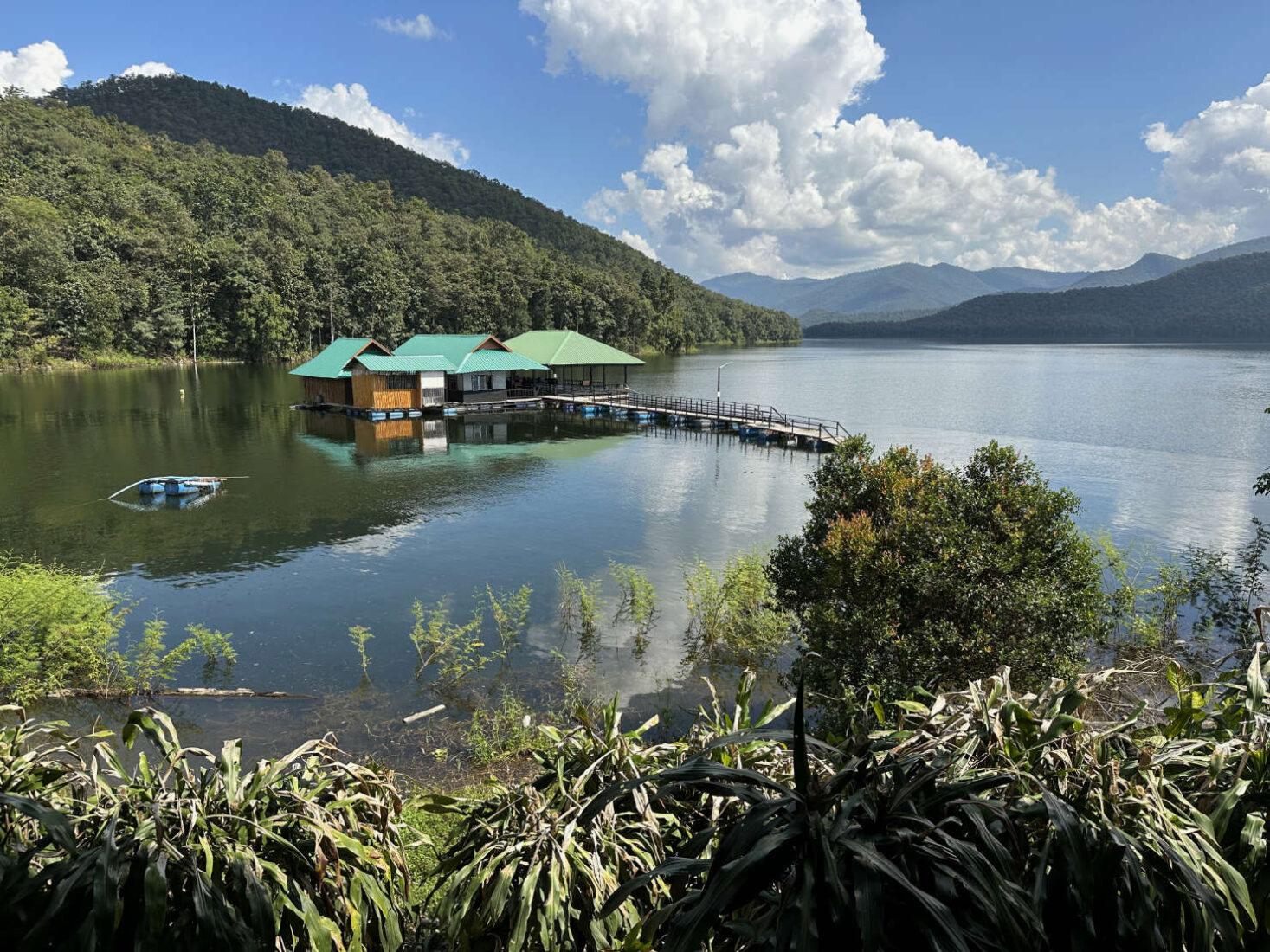
For a fun day of eating, drinking, splashing around in the water, kayaking, and paddle boating, head to Sri Lanna National Park, a short distance to the east of Mae Taeng. Just beyond the park entrance, long-tail boats wait for passengers on the shore of Mae Ngad Dam Lake. Negotiate a price to be taken to one of the floating restaurants for the day, and picked up at a pre-arranged time (we paid 1,000 Thai Baht, or about $30 USD). The sparkling blue lake is clean and surrounded by lush green forest. We decided upon Mountain Float Restaurant, which was a 15-20 minute ride each way. I was delighted to find that the restaurant had kayaks and paddle boats, and even a trampoline on the water – all free to use for patrons of the restaurant. We spent the afternoon alternately splashing around in the water or vegging inside the restaurant as we stuffed our faces. Those seeking more adventure can choose to stay in one of their floating houseboats and spend their days exploring the caves, waterfalls, and hiking trails found within this enormous National Park. Sri Lanna National Park is open from 8 a.m. to 4:30 p.m. every day. As of this writing the entrance fee 100 Thai Baht per person (about $3 USD). Google Maps.
Pai
Pai is definitely not a secret. In fact, I would rank it as one the best known destinations in Northern Thailand. Fame has made it touristy, however there are still a few places worth mentioning.
Pai Canyon
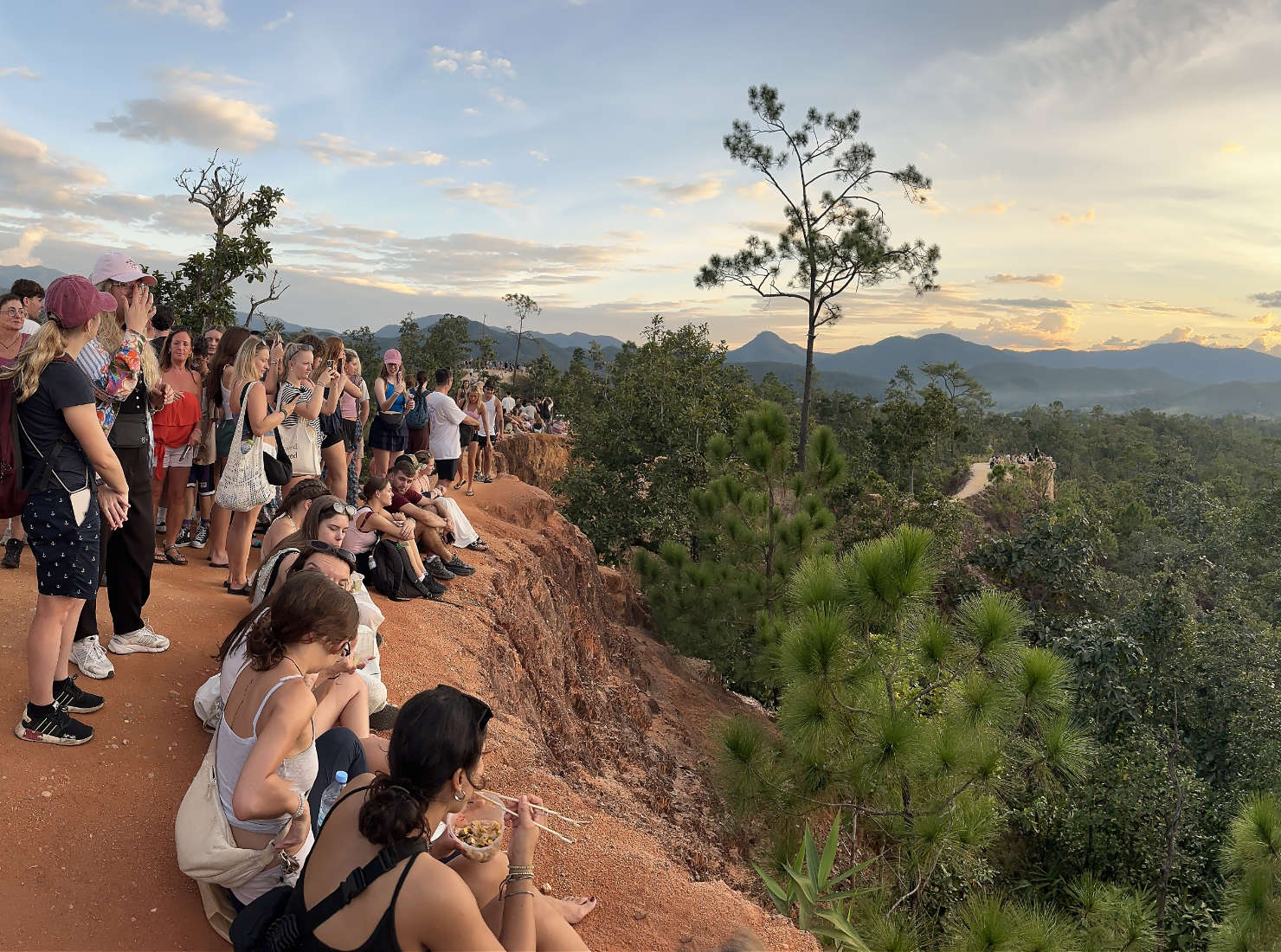
Sometimes referred to as the Grand Canyon of Pai, this geologic attraction is a dramatic natural sandstone ridge that plummets abruptly into the canyon below. It can be quite crowded at sunset (sunrise sees fewer visitors), however the panoramic views and free entry make this attraction worth a mention. There are no guardrails and it is definitely not for anyone who suffers from vertigo or is afraid of heights. Pai Canyon is located five miles south of Pai on paved roads. The climb to the top of the ridge takes about 10 minutes, and it is somewhat steep. Don’t plan to visit during the smoke season (March to mid-May), as the views will be obscured. Open from 6 a.m. to 7 p.m., seven days a week. Google Maps.
Yun Lai Viewpoint
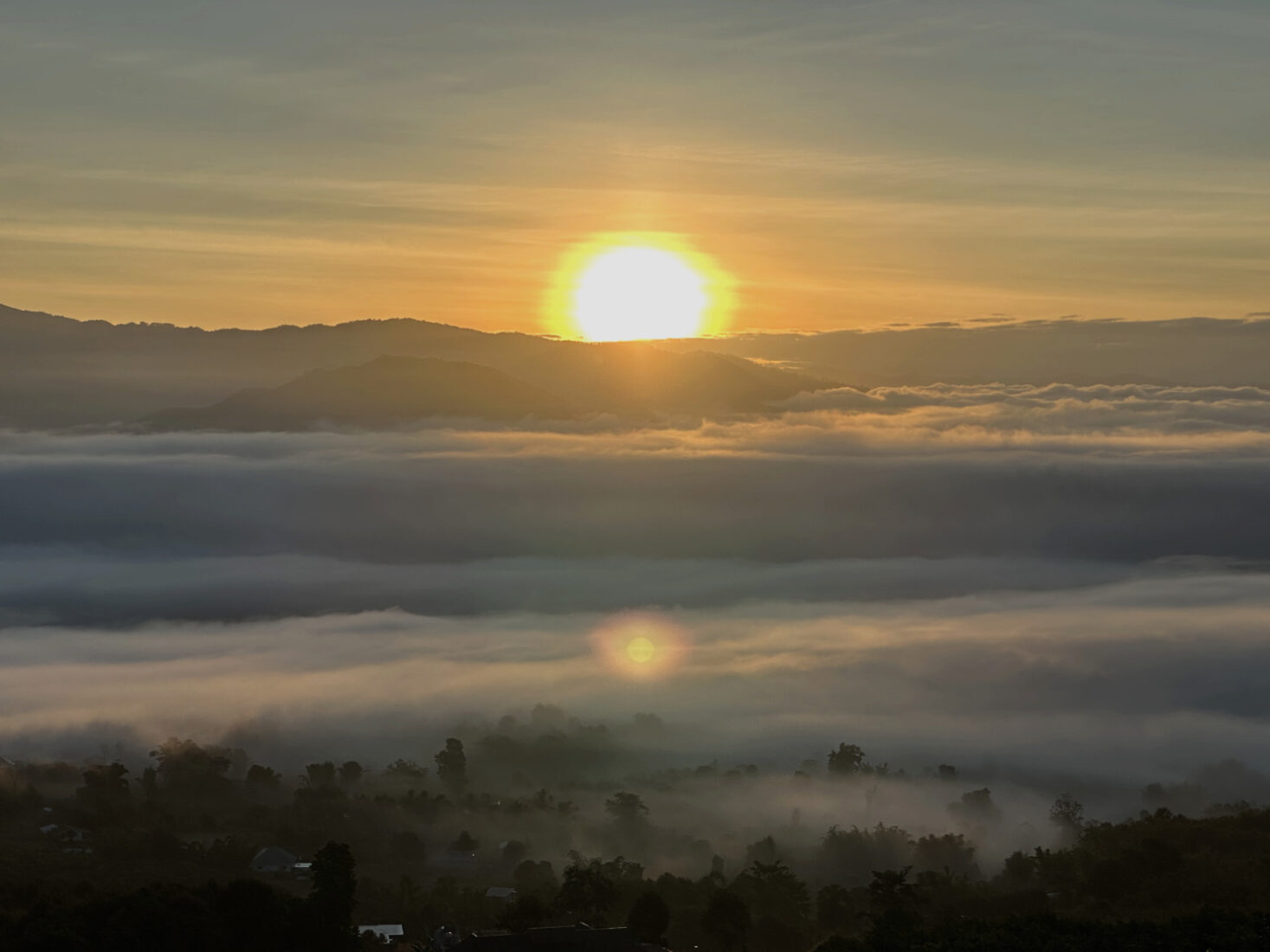
Yun Lai viewpoint is reputed to be the most stunning spot in Pai from which to watch the talay morg (sea of mist) rise out of the valley at sunrise. It’s not the easiest place to get to. An hour before dawn, our tour van took us to a staging area below the mountaintop. There, we climbed into the back of a beat-up old pickup truck and jounced up a rough road to the mountaintop viewing platform. It was still pitch black as we huddled together on a picnic bench, enjoying hot tea and snacks while waiting for the sun to emerge. At first, we were the only visitors on site, but as the sky began to lighten, more and more people streamed in. Still, the viewing platform was large, and I never felt as if the crowds were too big or noisy. I could hear a pin drop as the fiery sun crested the mountains and rose above the cloud cover. Everyone was in awe of the spectacle. Before long the fog began to dissipate, revealing the city of Pai in the valley below. Yun Lai viewpoint’s reputation is well deserved. It is a stunning place from which to watch the sunrise. While there is no entrance fee for the viewpoint, you must negotiate with the locals for transport to the top of the mountain. Most local hotels and guest houses in Pai can help you arrange this. Google Maps.
Santichon Chinese Village
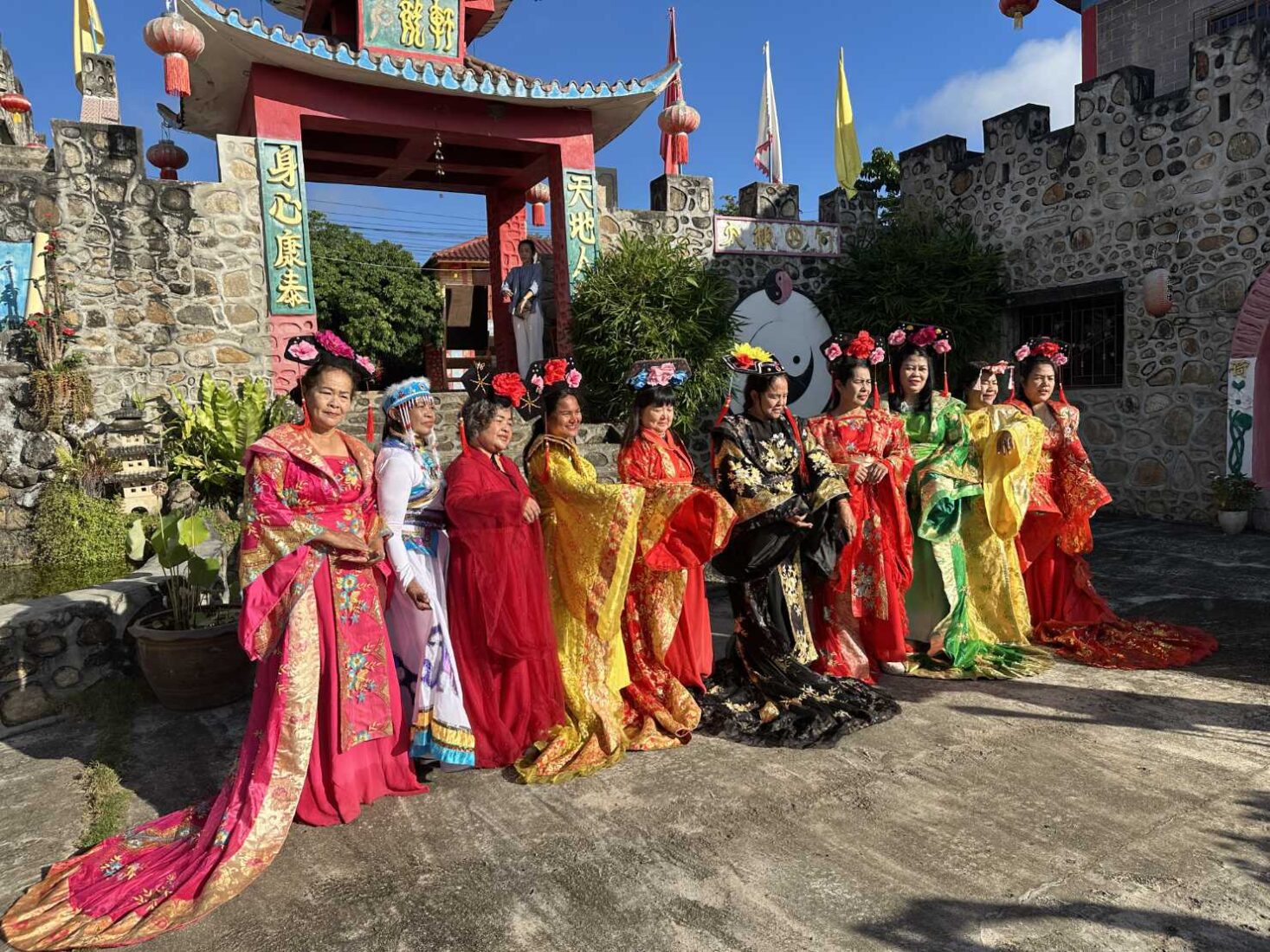
At the foot of Yun Lai viewpoint is Santichon Chinese Village, a world stuck in the past. The village was founded when Mao Zedong defeated Chiang Kai-Shek’s army and forced the Nationalists to flee to Taiwan. Unable to reenter China or make their way to Taiwan, the Chinese Nationalist soldiers who were trapped in Thailand simply stayed put. They built traditional Yunnanese mud-walled houses and erected tea houses. After discovery by tourists, foreign and Thai alike, the village morphed into more of a living museum than a place where people actually lived. Residents capitalized on the interest. They built a miniature Great Wall of China, constructed cute wooden bridges over creeks, built a hand-operated wooden ferris wheel, and opened shops where visitors could rent Chinese costumes and pose for pictures at photo spots. It’s pretty touristy, but since the village has a couple of good restaurants, it’s worth a stop after watching the sunrise, if only to see grown adults playing dress up. Santichon is open from 5 a.m. to 6 p.m. every day and there is no fee to visit. Google Maps.
Mae Hong Son Province
Drive the Mae Hong Son Loop
Further to the north lies the remote mountainous Province of Mae Hong Son. To get there, one must navigate the famous Mae Hong Son Loop, a narrow road with more than 1,800 sharp curves that slices through through thick jungle and steep mountains. Roadside stands along the way sell T-shirts that proclaim the wearer survived the drive. Fortunately, there are many interesting places to stop along the way and recover. In November and December, Mexican Sunflowers burst into bloom across the rolling hills near Khun Yuam. Thousands of people flock to the Bua Thong Flower Festival to enjoy the spectacle. The village of Khun Yuam (Google Maps) is home to the Thai-Japan Friendship Memorial Hall, a museum detailing the area’s history as a Japanese military base and hospital during the WWII occupation of Thailand by the Japanese.
Mae Hong Son City
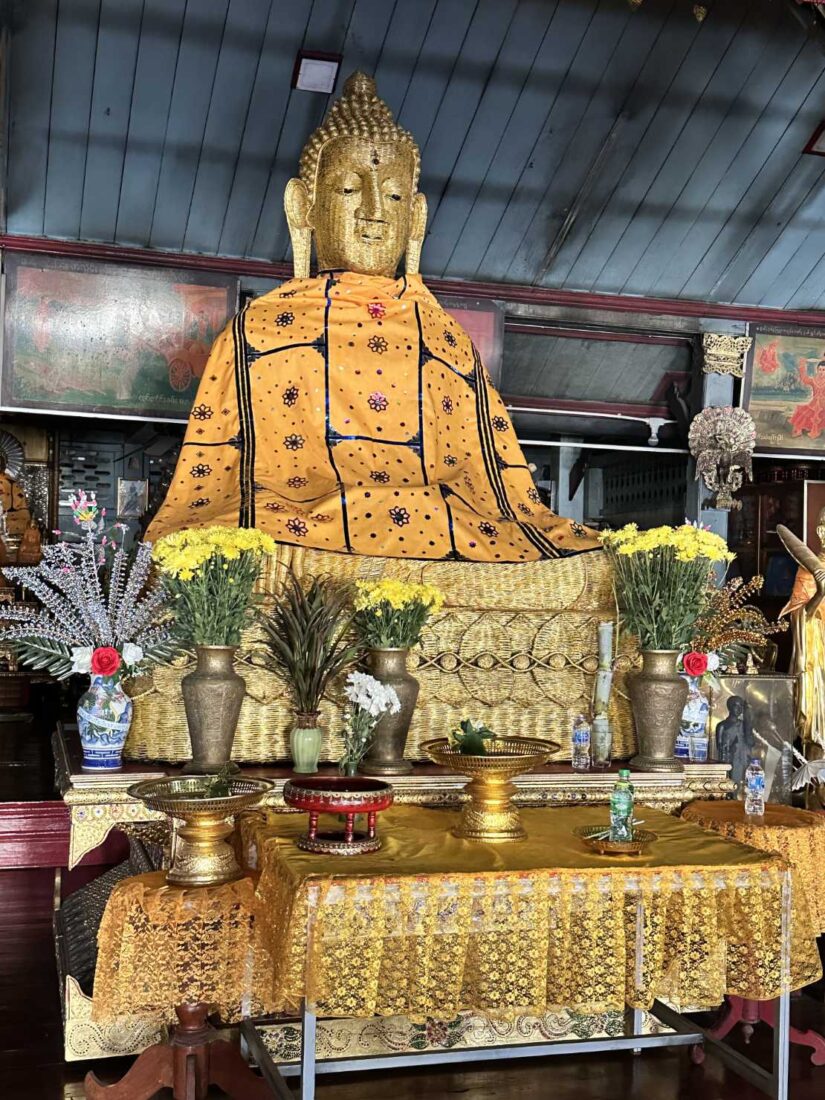
At the end of those 1,800 nausea-inducing curves is the city of Mae Hong Son (Google Maps). There are few tourists here. A stroll around the placid Nong Chong Kham Lake in the center of the city is a must, as is a stop at the twin Burmese-style temples built on the shores of the lake, Wat Wat Chong Kham and Wat Chong Klang. At the latter, be sure to check out the rare Buddha image that was woven from bamboo, rattan, and wicker fibers, then lacquered and gilded.
Hanging Leg Noodle House in Ban Ja Bo village
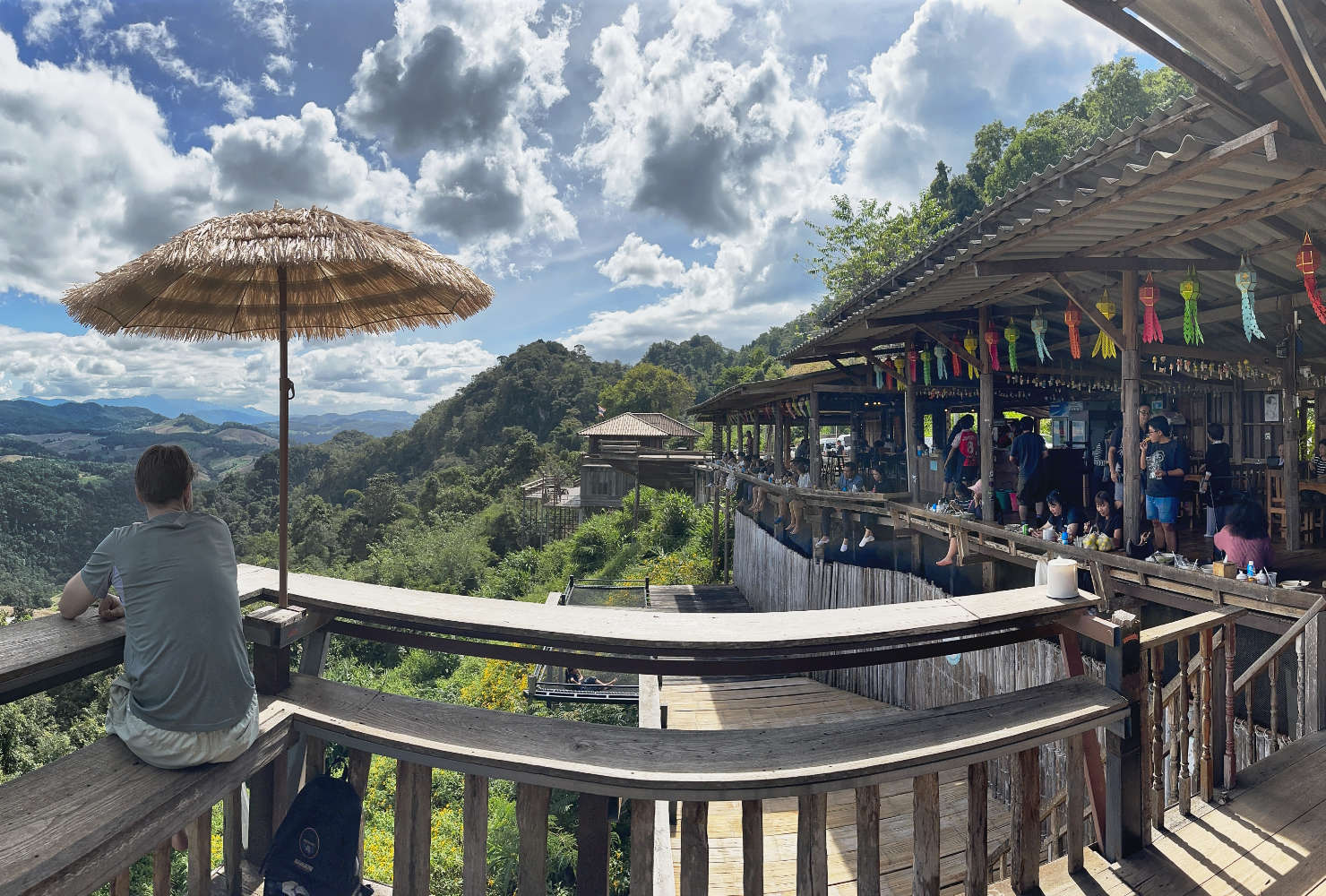
If your stomach has settled down from the curvy roads, drive north to Hanging Leg Noodle House in Ban Ja Bo village. Built atop a narrow ridge that plunges into a deep valley directly below it, the restaurant literally hangs off the mountainside. Diners sit on the wooden plank floor with their legs dangling over the abyss. Hence the name. The view is fabulous and the noodles aren’t bad either. The restaurant is open from 7 a.m. to 4 p.m., every day except Tuesday. Google Maps.
Ban Rak Thai Chinese Village
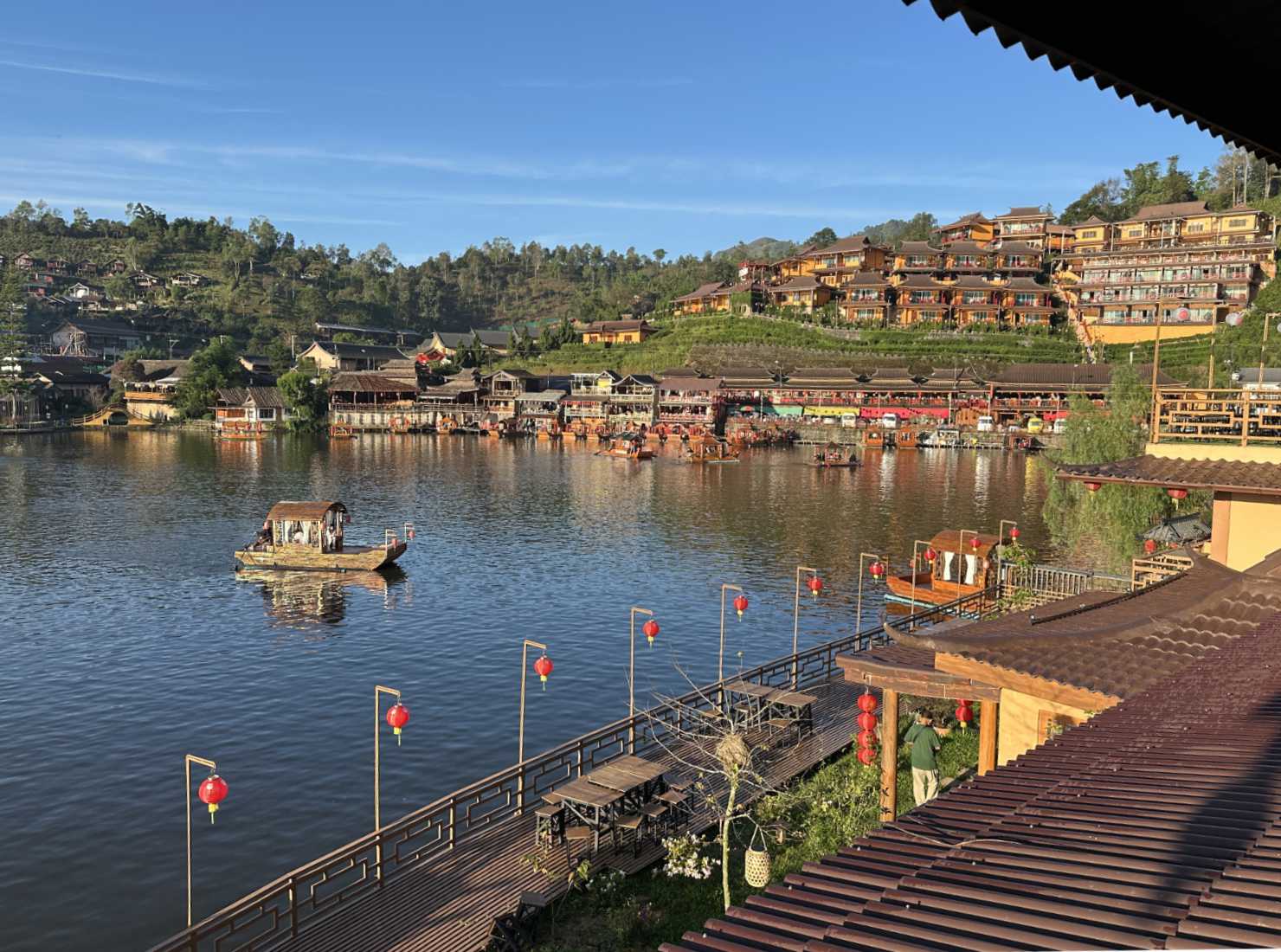
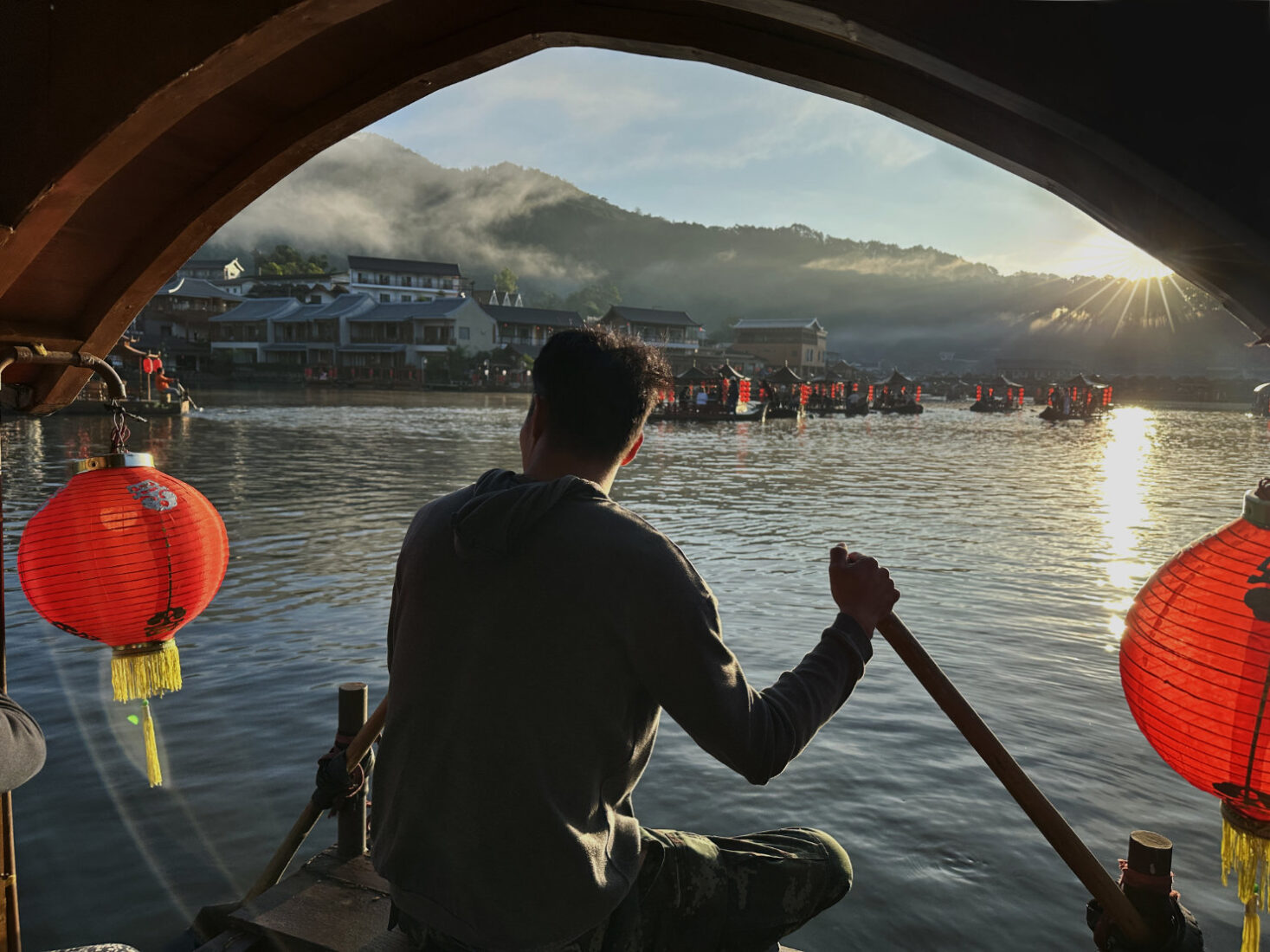
Even further north, thrust up against the mountains that separate Thailand from Myanmar, is Ban Rak Thai Chinese village. Also settled by descendants of the Nationalist Chinese soldiers who were made homeless during the Cultural Revolution, the town is a living museum of Chinese culture, history, and architecture. Ban Rak Thai has been discovered by tourists, though mostly by Chinese and Thais. But I included it on this list because it is truly unique. If you go, be sure to hire an oarsman to paddle around the lake at dawn. Google Maps.
When it’s time to head back, you’ll be relieved to learn that its not necessary to repeat the 1,800 curves of the Mae Hong Son Loop. Take the road through Pai to Route 107, which is a straight shot down a four-lane highway, all the way back to Chiang Mai.

What a treasure trove of ideas beyond the usual Chiang Mai circuit. I visited Pai a couple of years ago but chickened out of the Mae Hong Son loop, and your description of those 1,800 curves makes me want to hire a driver and do it properly this time. The Hanging Leg Noodle House and the sunrise at Yun Lai Viewpoint are now firmly on my list. Thanks for doing all this legwork, Barbara.
So great to see your post! I had wondered where you were & if all was well with you. Knees are important parts of us & need to be in top condition for this kind of travel. AND – thanks for this post! Marvellous photos and descriptions.
We met briefly on the Viking cruise from Amsterdam to Budapest quite a few years ago. My friend and I were travelling together from British Columbia – Canada.
Dear Barbara
You are incredible with your clear description and inviting tone that I need to return and take a month to do all you described so beautifully.
Thank you Barbara for being born an embraced your beautiful writings.
Blessings from the mountains of Turkey by the Aegean Sea.
Hi Rene! Oh yes, there’s so much more to do here than what you saw during y our previous brief visit. I could have added ten more paces to that list, but there’s a limit to what people will read these days.
I love how you’ve highlighted a side of Northern Thailand that many visitors never get to experience. Even as someone living in Chiang Mai, you’ve introduced me to a few places I’d love to explore myself. Your personal stories and beautiful details really bring each destination to life.
Thank you so much Sanya. It means a great deal to me that you subscribed to my blog and have taken the time to read some of my stories.
Barbara, it has been ten years, and your website, writing, and images continue to capture and inspire my aspirations for international travel. My ten years of full-time travel within the US, Canada, and Mexico continue as I slowly prepare for international travel. Travel safely, happily, and in good health.
Hi Marty: Thanks so much for your wonderful words. They mean a lot to me, especially if I am in any way responsible for encouraging you to travel internationally. You won’t be sorry. International travel is an eye-opening experience, and always for the better.
I’ve missed you. Hope all is well. Thank you.
Yes, I’ve been very lax with my writing. Mostly because I had to stop traveling for a while due to a knee failure. But now I’ve had a total knee replacement and it was so successful that I’m traveling again. So maybe I’ll be writing more often. Watch for a series from Greenland soon!
Sooo glad to see you writing again… Your descriptions are magic
Aww…thank you Constance. What a lovely thing to say.
Hi Barbara, I thoroughly enjoyed your article. Both the write up and images pull you right into each location. Thank you for sharing. Hope all is good with you!
Hi Carla. So happy to hear from you! I’m so happy you enjoyed my story. Everything is great with me. Still kicking. I hope the same is true for you.
This is the kind of northern Thailand I recognize, the part that doesn’t show up on anyone’s list. The photographs do real work here. They don’t decorate the story, they carry it, and by the end I felt like I’d ridden those roads with you. Thanks for writing it.
Thank you so much Erik. Coming from you, that means a whole lot. As a writer, the greatest compliment anyone can give me is to say they felt like they were right there with me when reading my words. High, high praise.
You’ve listed a plethora of places here, Barbara…some I’ve been to and some I haven’t. But even the ones I’ve been to, you have managed to post photos I haven’t seen there! Love reading about your adventures and unique places to visit. Great article and as always amazing photos! Will see you in January!
Hi Crystal. Thanks so much for your kind words, as always. I am SO happy to hear you are returning this year. Can’t wait to see you!
Hi Barbara,
It\’s great to see you posting again about Chiang Mai. There are some amazing ideas here, thank you! I want to go to your floating restaurant at Sri Lanna, and I love the idea of one of those hilltop resorts to see a meteor shower. Apparently the Germinids are going to be outstanding this year.
Last year I rented a mountain bike to go to Lamphun – it\’s a peaceful ride almost entirely along the banks of the Ping river, all flat. Plus a stop for coffee at the Terracotta Garden. I stayed overnight at a lovely farm stay overlooking rice fields that I found on Booking.com.
In Doi Inthanon NP, I thought the best waterfall was Mae Ya. A bit off the main road, but worth the extra effort.
Hi Mark! So great to hear from you. I also like Lamphun. In fact, last November I went there for Yee Peng rather than stay in Chiang Mai. I loved it. The festival is so much more local and less riotous than in Chiang Mai. An the Terracotta Garden is a great find. Their food is delicious. I’ll have to check out the Mae Ya Waterfall one of these days.
Great article. Thanks for sharing all the secret gems!
Hi Kelly. Thanks so much. I hope it helps people to discover more about Thailand.
Thank you for sharing. So interesting.
Thanks Mark. Glad you enjoyed it.