My life changed for the better when I deserted corporate America to pursue my true passions of travel, writing and photography but over the past few years I’ve often felt there was still a piece of the puzzle missing. There was something more I was meant to do; I just wasn’t sure what it was. And then I arrived in Nepal.
As my three week visit stretched to three months, I became acutely aware that behind the veneer of beauty lay excruciating poverty. Here was a place where I could do some good, I thought. I began researching NGO’s (non-governmental organizations) and learned it was quite simple to create and register one in Nepal. Combining an NGO with a 501(c)3 non-profit organization in the U.S., which would allow people to make tax deductible donations, seemed the perfect way to help Nepal and satisfy my desire to give back.
As I toured the country I broached the subject of NGO’s and volunteering with everyone I met. My first inkling that all was not as it seemed came from a guide in Chitwan National Park. Morally opposed to riding elephants, I instead opted for a walk through a nearby village to learn more about the local Tharu people. My guide, who lived in the village, warned, “Maybe 75% of orphanages are not real.”
He told me about a group of Polish tourists that had established an online relationship with an orphanage prior to traveling to Nepal. Upon arrival, they hired my guide to help purchase bulk food and supplies, in addition to a cash donation they planned to make. Although he warned of potential fraud, the Poles insisted that this particular orphanage was legitimate. Several weeks later, long after the donors had returned home, my guide stuffed his pockets with chocolates and returned to the orphanage. As the children clamored around him, fighting for candy, he quizzed them. What had they been given to eat over the past few weeks? Had they received new clothes? School supplies? None of the children had new clothes or supplies and they had been fed only dahl bhat (rice and lentil bean stew), as usual. He later learned that all the fresh foodstuffs and a good deal of the bulk non-perishables had been sold off, with the cash distributed among the orphanage owners.
My guide explained that many orphanages solicit funds through websites that feature photos of destitute children and inspiring stories of rescues made possible by donations. Yet in truth, many of these same orphanages are non-existent. In the rare instance that donors travel to Nepal to meet their sponsor children, the owners of the “orphanage” collect children and put them on display for a night or two in a local home.
At this point in our walking tour he pointed to a decrepit house next to a brand new three-story concrete building painted in a trio of turquoise hues. The sign on the chain link fence surrounding the two structures declared that a new orphanage would soon open.
“I assume that’s one of the good ones?” I asked.
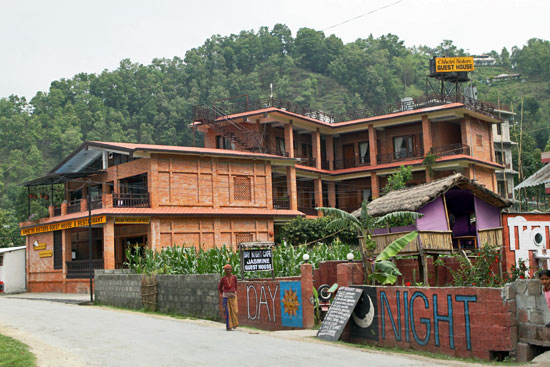
“No, the owner built the orphanage with money from donations but now that it is finished, he is turning it into a hotel.”
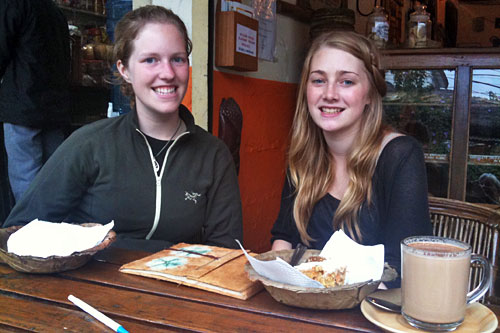
Two days later I boarded a bus with a slew of Brits who had come to Nepal to volunteer. After a weekend tour of Chitwan, they were headed back to Pokhara, where they were helping out at local orphanages and teaching English in government schools. After extensive research on the Internet, each of them had booked their trip through Personal Overseas Development (POD), a UK firm that facilitates volunteering opportunities around the world. Valerie Jamiason of Newcastle paid 750 British Pounds ($1087 U.S. dollars at the time) for an eight-week stint. Her package included pick-up at the Kathmandu airport ( I was picked up for free by my hotel), one night’s stay at a Kathmandu budget hotel (~$10), her bus ticket to Pokhara (~$6), and eight weeks stay at the Castle Guest House in Pokhara at what Val was told was POD’s special rate of $6 per night, for a total of $352.
POD does not require volunteers to have any prior teaching experience and they are given no orientation upon arrival. With no formal turnover process, fresh arrivals have no idea what the children have been taught previously and each new group is left to decide for themselves what to teach their classes. Tom, who had opted for a summer of volunteering prior to entering university as a pre-med student, focused on teaching his students how to tell time.
Two of my volunteer friends invited me to visit Annapurna Primary School with them one day. As I wedged into a miniature desk at the rear of the classroom, Val established a modicum of order among the raucous pack and began drilling the students. She placed a chalkboard eraser on the floor and in her thick Newcastle brogue instructed:
“Repeat after me. The duster (DOH stah) is next to the desk.”
“The duster is on the desk.”
“The duster is in the desk.”
“The duster is under the desk.”
Meanwhile, Michael reviewed homework assignments, explaining errors in his very proper Londoner accent.
Though the raggedly clad kids had level one English workbooks, the school administrator told me in broken English that they were lacking even the most essential supplies: pencils, erasers, and lined pads were all in short supply and since there were no funds for lunches, the students went hungry. As for assistance from POD, I was told that only the teachers were provided. With Continue reading


United Kingdom
France
Morocco
Czech Republic
Slovenia
Croatia
Hungary
Romania