
There’s no mystery about the fact that I’ve always had a penchant for unusual destinations. But ever since mid-2025, when I began contemplating a trip to Greenland, people keep asking me why I want to go there. Just last night, my neighbor said, “I don’t know anyone who’s ever been to Greenland. Do you just want to go because Trump has been threatening to take it over?”
If I’m honest, Trump’s incessant prattling is part of my motivation. I’ve been writing about the culture of the more than 110 countries and territories I’ve visited for more than 20 years. ‘Culture’ is a far-reaching term that encompasses many disparate issues: language, food, religion, music, dance, tradition…and of course politics. From a political standpoint, I’m insatiably curious about Greenlanders’ reaction to Trump’s blustering. I suspected that, like most Americans, they laughed it off as just another idle threat from our bully President. Of late, however, it’s become apparent that Greenlanders take this much more seriously than I had imagined. News articles seem to imply that they believe invasion is not out of the question, if not imminent.
Recently, I learned about Greenland Energy Company, a Texas hydrocarbon exploration firm that recently partnered with a British firm, 80 Mile. The partners are focused on developing Greenland’s hydrocarbon resources, with an emphasis on the Jameson Land Basin located on northeast coast of Greenland. This past April, Greenland Energy successfully concluded a $70 million public offering (IPO) to trade on the U.S. NASDAQ Stock Exchange. CEO Of the company, Robert Price, commented, “This financing fully funds the execution of our exploration. We are now positioned to deploy capital, secure mill capacity for long-lead materials, and mobilize the equipment, crews and logistics needed to advance our Jameson Land program towards our planned October 2026 drilling operations.“
Price seemingly ignores the fact that in 2021, based upon environmental concerns, Greenland passed a moratorium on any future oil and gas exploration on their land or in the seas surrounding the territory. During a meeting with residents of the small village of Ittoqqortoormiit, Price said, “We have the permit to put the equipment on the land…we’ve filed our permits – pending approval – to drill.”
Greenland’s resources ministry insisted that there were “no actually active permissions for any exploration activity or permissions for preparations for these activities.” Price was apparently referring to permits held by their partner, which were issued pre-moratorium and are not currently active. Yet despite lacking the necessary approvals, in July, Greenland Energy and 80 Mile delivered and offloaded containers and heavy machinery near the Nerlerit Inaat airport on Greenland’s eastern coast. This drew an instant rebuke from the Greenland government, which ordered that all gear must sit completely idle until formal permitting clears. Regulators further stated that the necessary permits will not be fully processed until winter 2027, at the earliest.
Oil and gas exploration are not the only issues attracting Americans to Greenland these days. Ronald Lauder, heir to the Estée Lauder fortune, has invested in a Greenlandic freshwater bottling company. Billionaires Jeff Bezos, Bill Gates, and Michael Bloomberg all briefly invested in Kobold Metals, a company that used AI to search for valuable rare earth minerals used in electronic devices. That effort, which was abandoned in 2022, also used licenses also owned by 80 Mile PLC. However, as the eighth largest repository of rare earth metals in the world, Greenland will undoubtedly continue to attract investment, exploitation, or even outright plunder of its wealth.
The Center for Strategic and International Studies (CSIS) calls the Arctic a “new security frontier.” In a recent article they elaborated:
“As Arctic ice caps melt, new emerging shipping routes through the region are creating new economic and geostrategic opportunities for global powers. The Northwest Passage is a series of maritime routes running through Canada’s Arctic Archipelago connecting the Pacific to the Atlantic Oceans. The passage is currently only navigable for short windows of time each year due to difficult conditions and shifting sea ice. But scientists project that with accelerated global warming and technological advancements the passage may soon be open for transit every summer, connecting East Asia to Western Europe with a route 7,000 km shorter than the current route through the Panama Canal.”
Trump has repeatedly insisted that the U.S. needs to ‘take’ Greenland for security reasons. If he had learned anything about history, he would know that the U.S. and Greenland have long worked together to provide security for the western world. In 1941, following the occupation of Denmark by the Nazis, the Danish ambassador to Washington, Henrik Kauffmann, negotiated a secret pact between Greenland and the U.S. The agreement granted the U.S. the right to defend Greenland and establish military installations. The U.S. built 17 military bases and deployed more than 5,800 troops, used Greenland’s weather stations to forecast conditions for Allied operations in Europe, and guarded the island’s cryolite mine, a mineral necessary for the production of aluminum, which was crucial for manufacturing military aircraft.
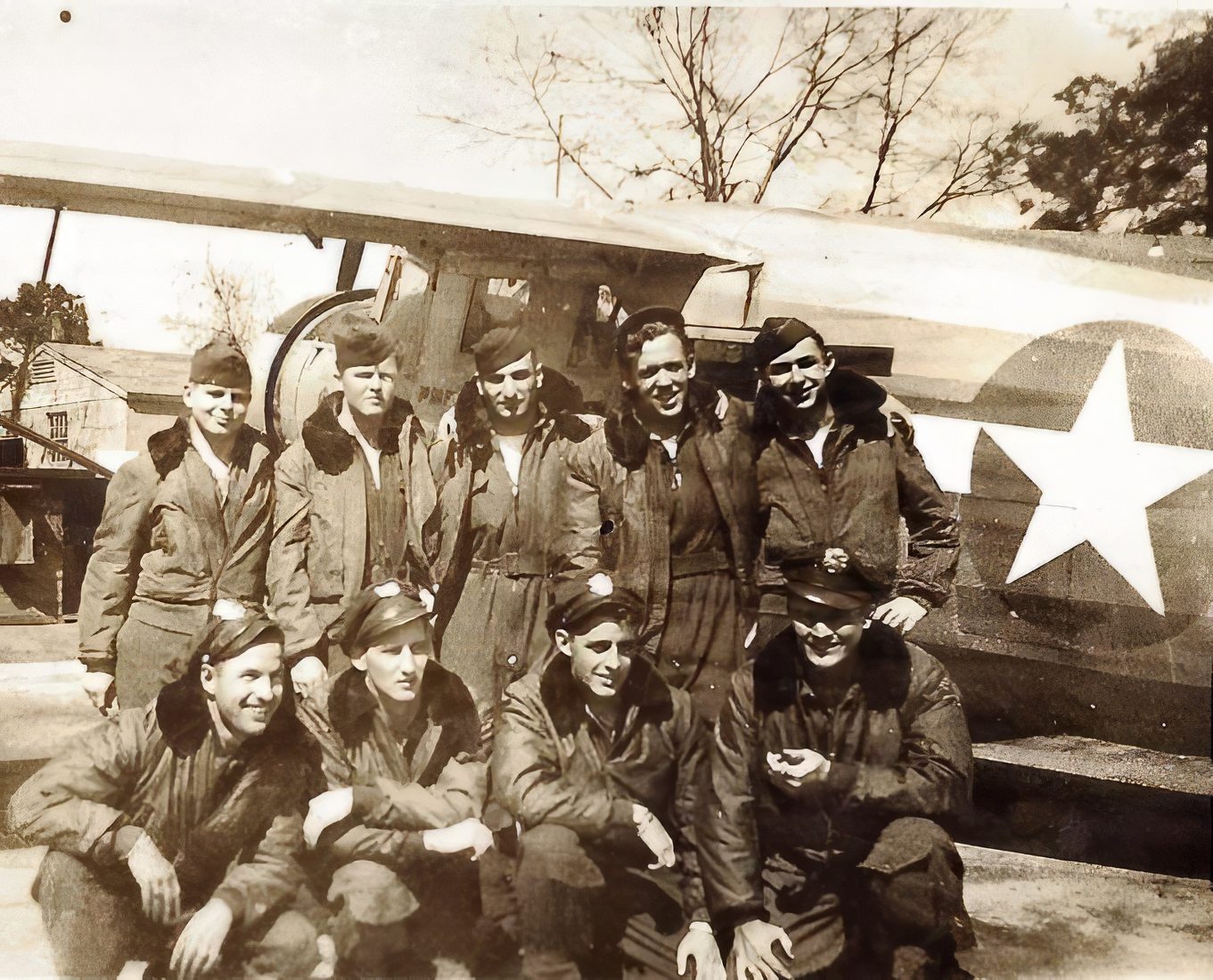
And therein lies the kernel of my long interest in Greenland. My father, William W. Weibel served in the U.S. Air Force during World War Two. He was a lower ball gunner in a B-17e Bomber that flew bombing missions over Germany from a no-longer existent base in the UK. How did he and his squadron get to England? They flew hops from their base in the U.S. to Canadian-built base at Goose Bay in Labrador, Canada; then on to Bluie West One Air Force Base at Narsarsuaq, located on the southern tip of Greenland (‘Bluie’ was the code name for Greenland during WWII); and finally to England.
My father has since passed, but I remember being entranced as he told me the story about their landing in Greenland. The airfield was not visible from the sea. The pilot had to sight Davis Strait, then drop down to a 1,000 foot altitude (or less) and fly 50 miles up the fjord between high mountain walls, until the wreckage of a ship was spotted. At that point, they turned 30-degrees to the right and looked for the landing field. The one and only runway sloped upward toward a glacier emanating from a hulking mountain. The mountain meant there were no go-arounds. Once on approach, the plane had no choice but to land. Bad weather on the day they arrived made it even more difficult. My father said takeoff the next morning was no less terrifying.
Perhaps it’s my age that makes me so nostalgic these days. I just want to set foot on the soil where my father began his heroic military service in WWII. And maybe, just maybe, I’ll have an opportunity to thank a few Greenlanders for their support and friendship over the decades and commiserate with them over the decline of my own country.
To read more about the current situation in Greenland, please refer to the following sources:
https://time.com/article/2026/08/13/us-oil-company-greenland-energy-drilling-project-delayed-warning

I’m sure it’ll be fascinating.
Such an interesting piece, Barbara. Would love to read a follow-up post-trip take. I hope the Glanders regal you with piping hot bowls of Suaasat. Cheers, my friend. xo
Well done Barbara. Very interesting!