PHOTO: Necropolis at Porta Nocera in Pompeii, Italy
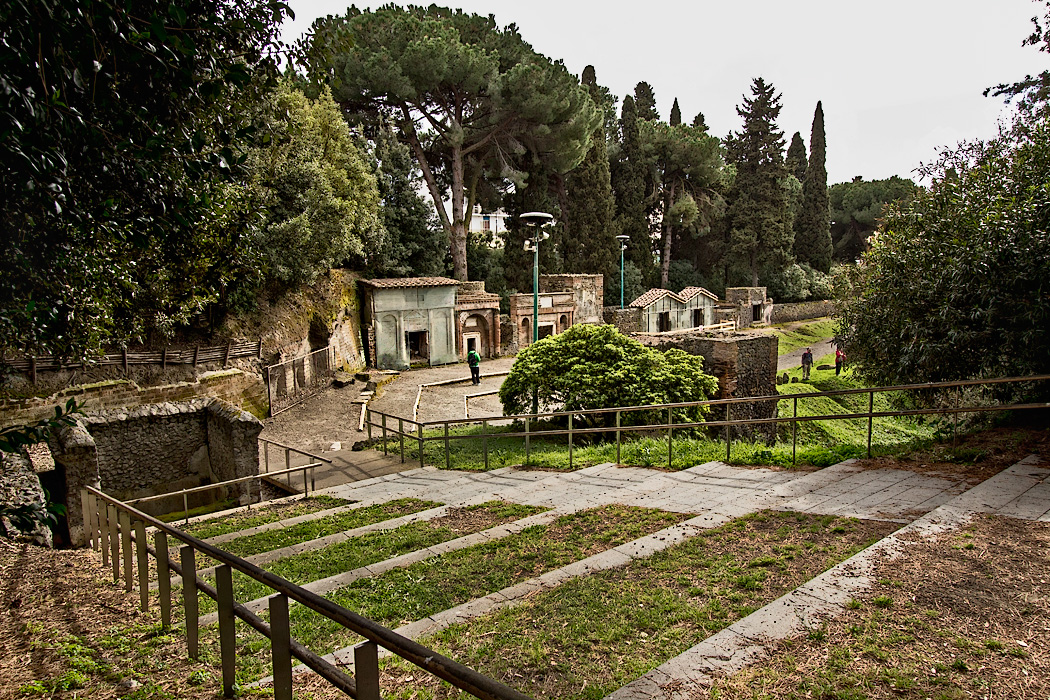
Tombs in the Necropolis at Porta Nocera in Pompeii, one of seven burial areas found in the town that was buried by the eruption of Mount Vesuvius in 79 AD.

Tombs in the Necropolis at Porta Nocera in Pompeii, one of seven burial areas found in the town that was buried by the eruption of Mount Vesuvius in 79 AD.
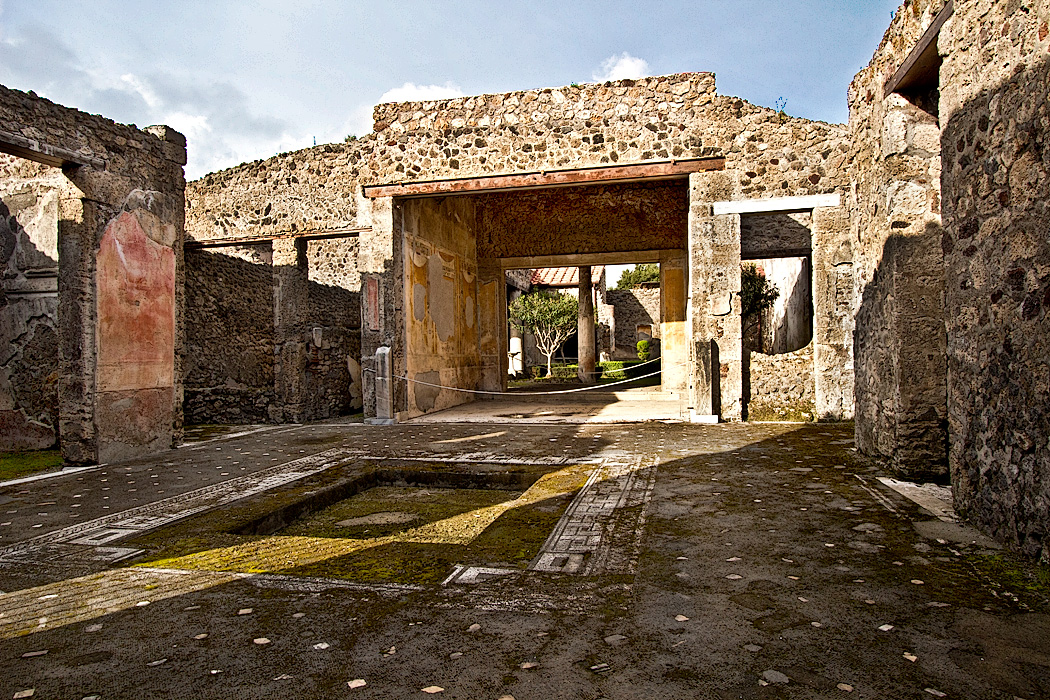
The House of Caecilius Jucundu at Pompeii, partially destroyed by the eruption of 79 AD, was owned by a banker. Bank bookkeeping records and receipts on wax tablets were found in the excavated ruins.
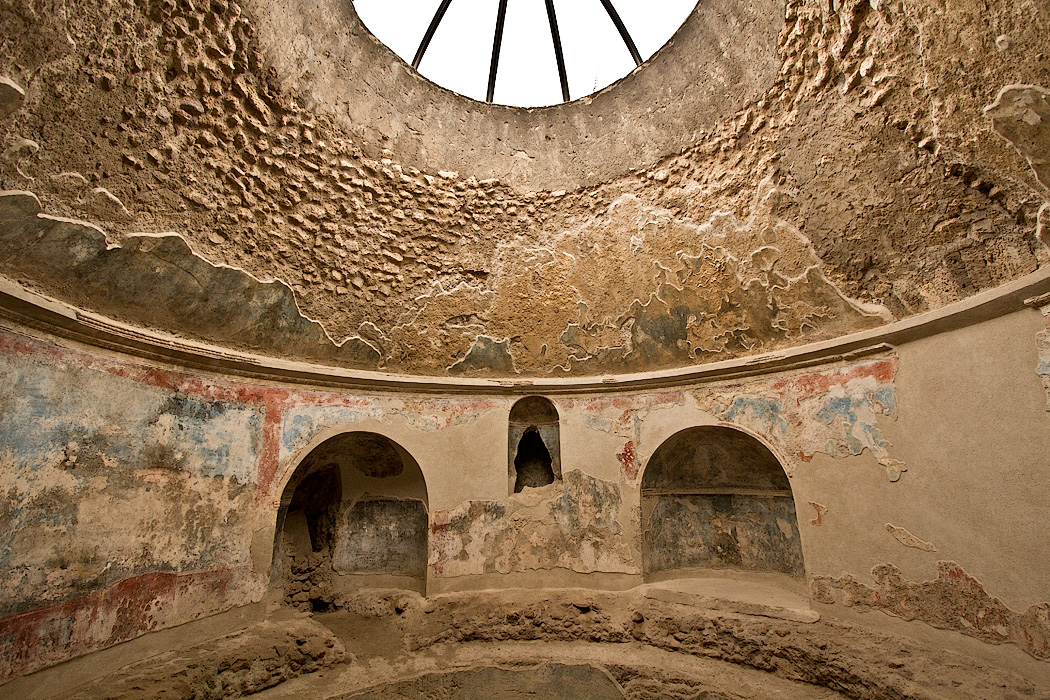
After using the hot and warm baths, visitors to the Stabian Baths in Pompeii finished with a dip in the cold pool in this Frigidarium. The room is circular with four semi-circular niches. The walls were decorated with garden scenes and the domed ceiling was painted blue to represent the sky. These were the oldest … Read more
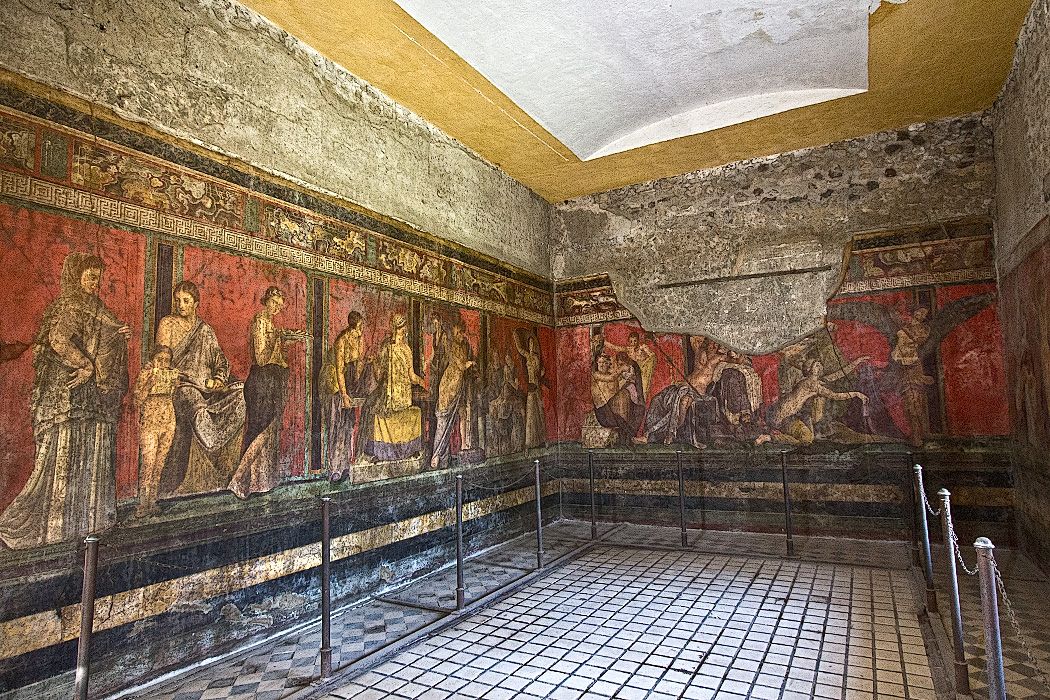
Frescoes in the Villa dei Misteri at Pompeii are among the most notable that survived the eruption of Mount Vesuvius in 79 AD. Though their purpose has been hotly debated, informational literature provided at Pompeii stated that they were likely used to instruct young women about to be married.
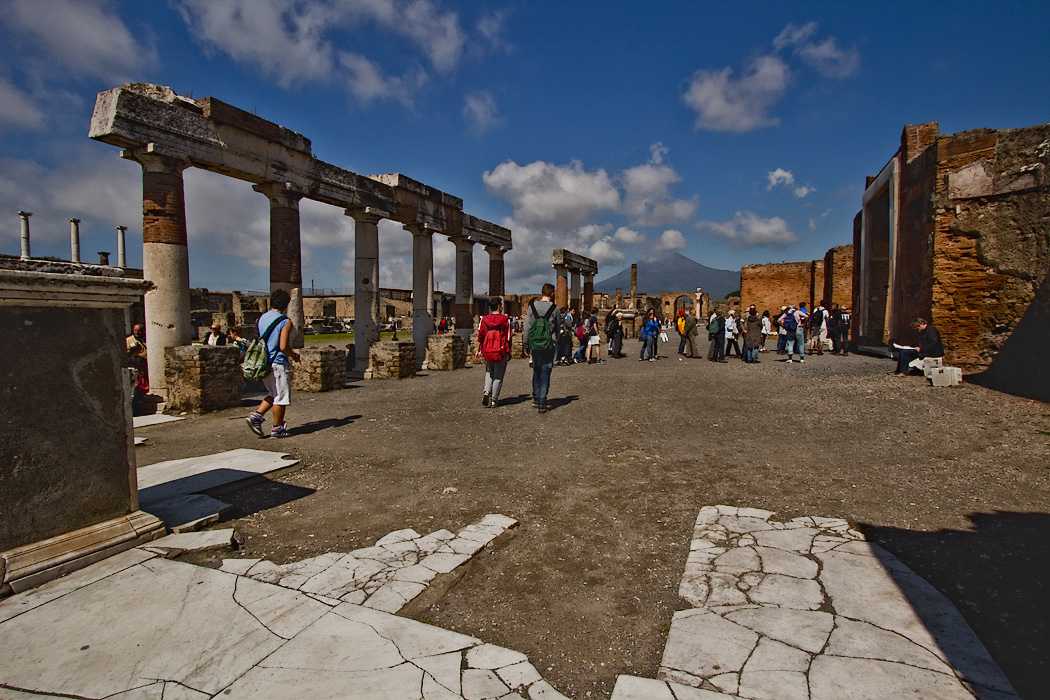
The Forum in Pompeii, Italy, was a large market area surrounded by the most important buildings in the town. Shown in the foreground are remains of the travertine paving that once covered the entire square. Mount Vesuvius, which erupted in 79 AD and buried Pompeii in ash, is seen looming in the background.
