About Barbara Weibel

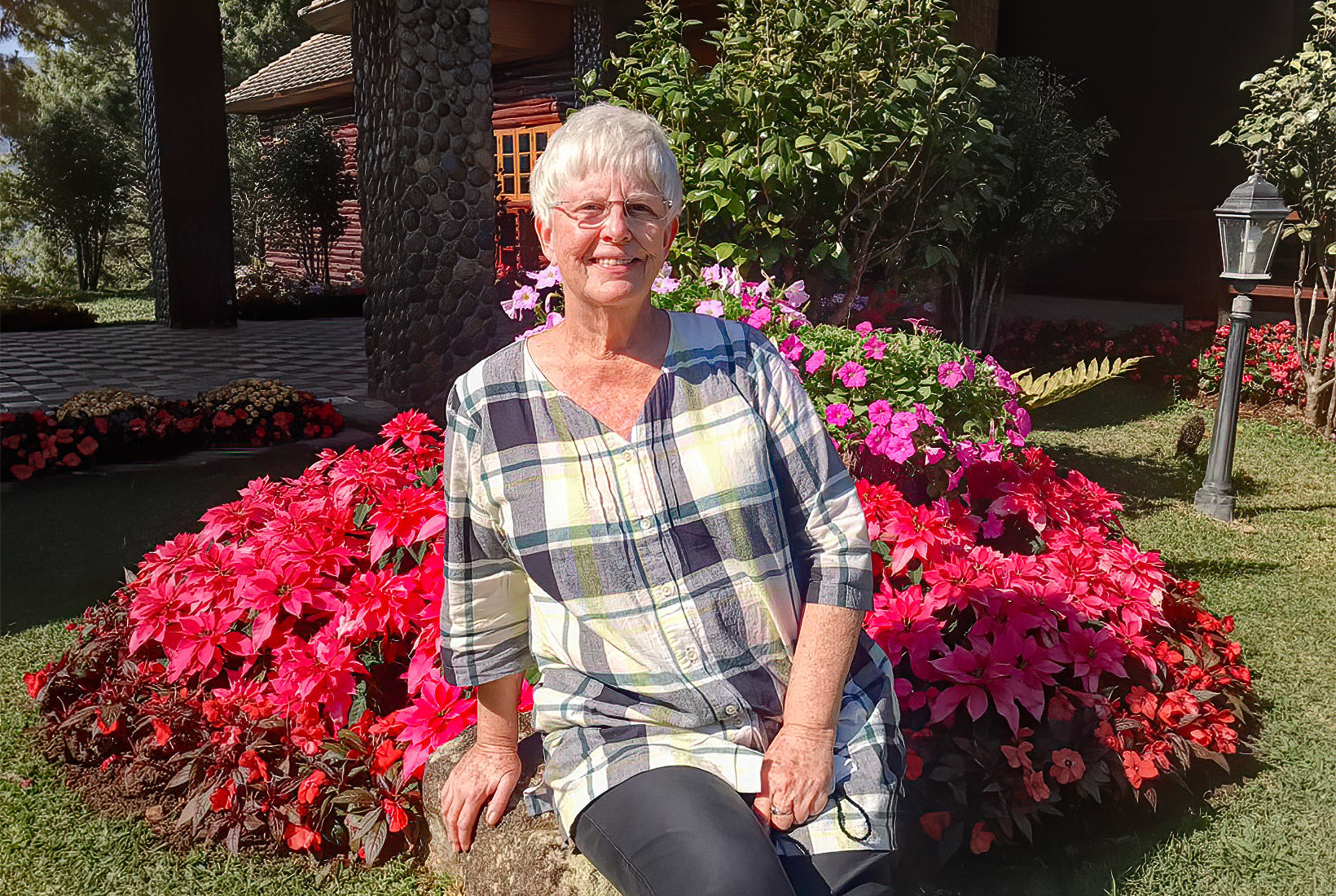
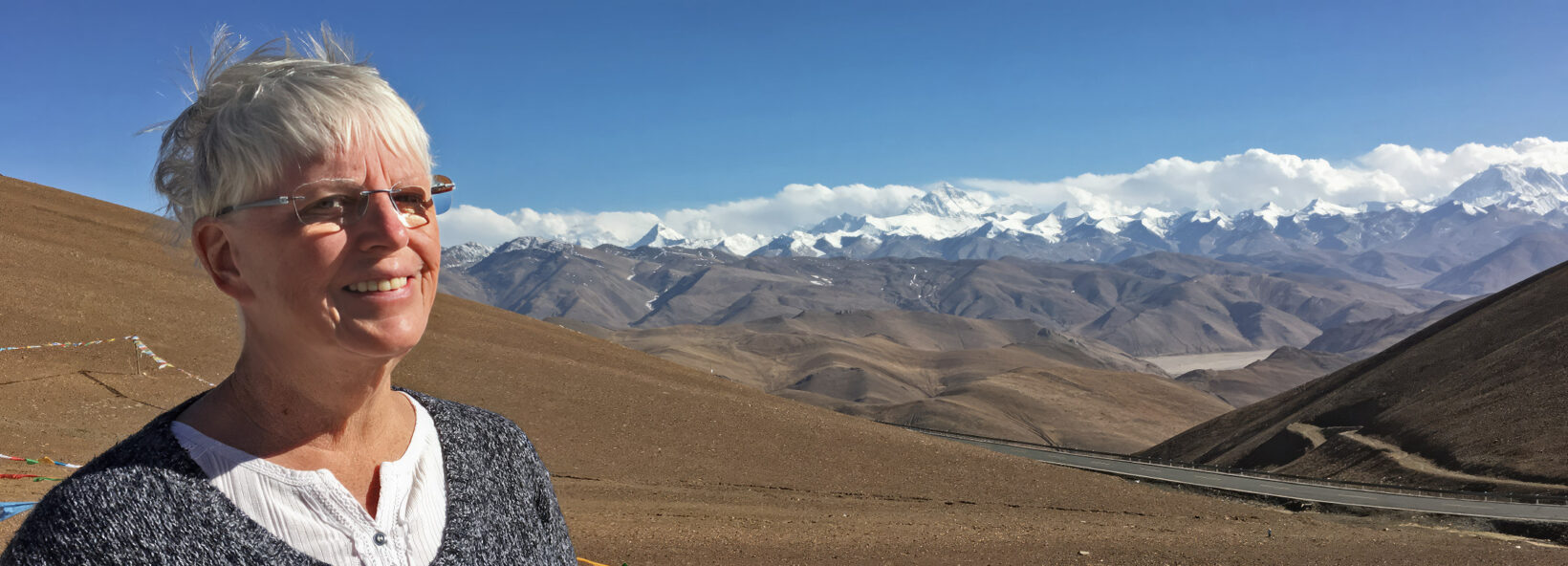
Barbara Weibel After years of working 70 hours a week at jobs I detested, I felt like the proverbial "hole in the donut" - solid on the outside, but empty on the inside. Searching for meaning in my life, I abandoned my successful but unsatisfying career and set out on a six-month solo backpacking trip around the world to pursue my true passions of travel, writing, and photography. My blog features stories about the destinations I visit, people I meet, the crazy things...Read more here....
  • Eiffel Tower, Paris, France
  • Angkor Wat Cambodia
    Angkor Wat, Siem Reap, Cambodia
  • Hill Tribe Chief Northern Thailand
    Hill Tribe Chief, Thailand
  • Machu Picchu Peru
    Machu Picchu, Peru
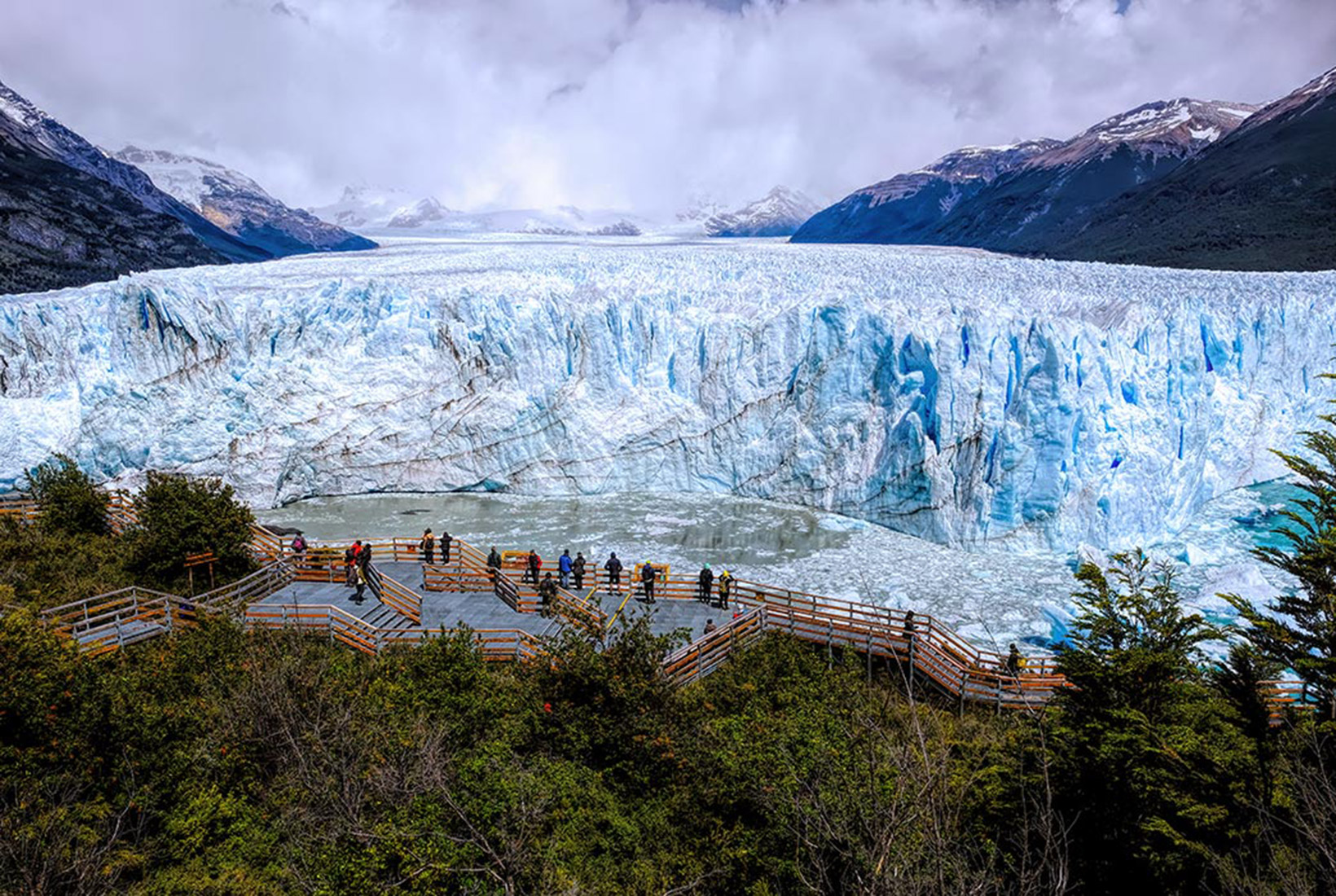
  • Franz Josef Glacier New Zealand
    Franz Josef Glacier, New Zealand
  • Olympic National Park Washington State
    Olympic Peninsula, Washington
  • Damnoen Saduak Floating Market Thailand
    Damnoen Saduak Floating Market, Thailand
  • Maasai Tribe Ngorongoro Tanzania
    Maasai Warriors, Ngorongoro, Tanzania
  • Lion Serengeti National Park Tanzania
    Serengeti National Park, Tanzania
  • Chichen Itza Yucatan Mexico
    Chichen Itza, Yucatan, Mexico
  • Wat Xieng Thong
    Wat Xieng Thong, Luang Prabang, Laos
  • Feast Central India
    Traditional Feast, Central India
  • China Shangahi Skyline Pudong
    Pudong Skyline, Shanghai, China
  • Honeymoon Beach Florida
    Honeymoon Beach, Florida
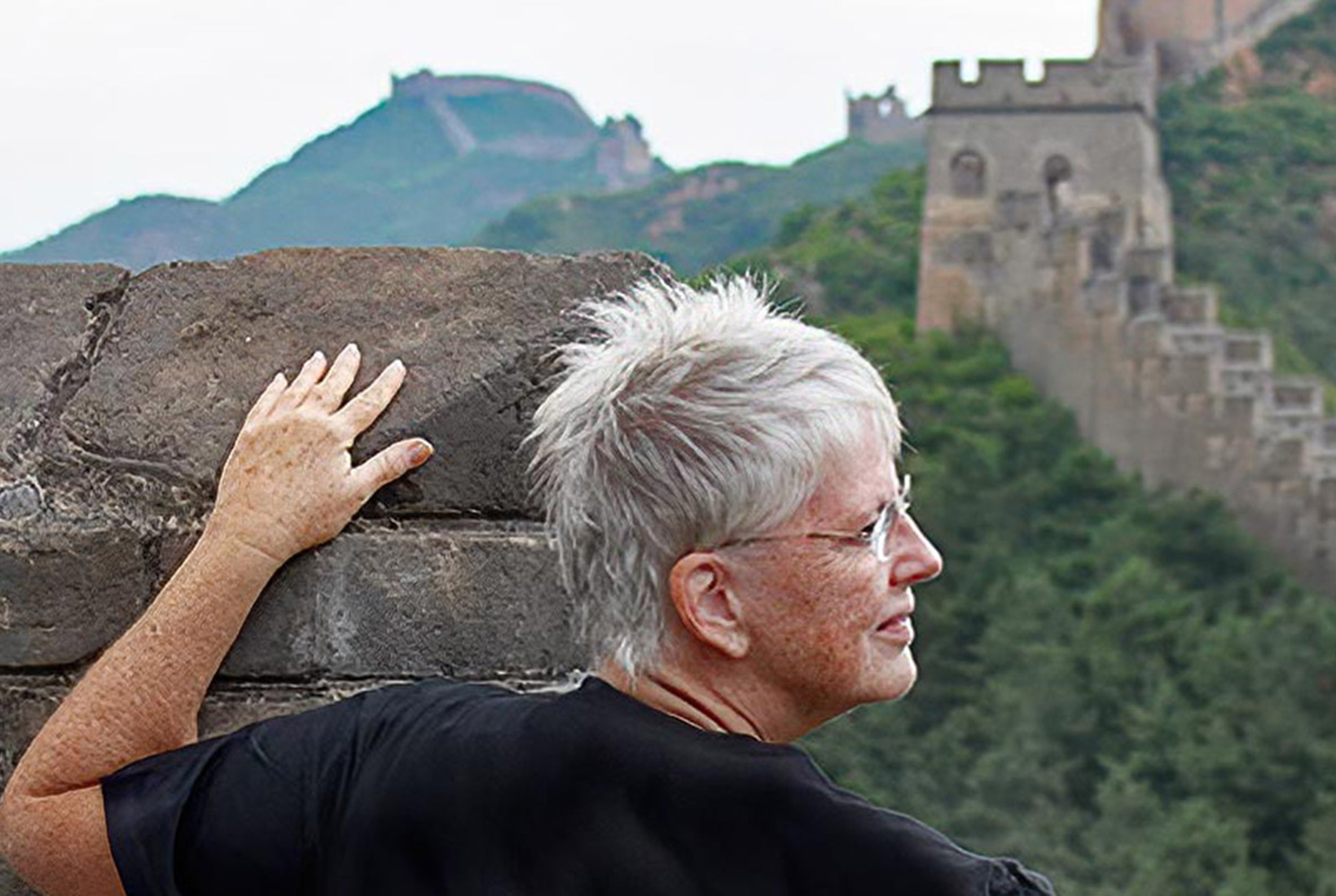
  • Great Wallof China Jinshanling Beijing
    Great Wall, Jinshanling, China
  • Lake Louise Banff National Park Canada
    Lake Louise, Banff National Park, Canada
  • pura ulun danu temple batur bali
    Lake Temple, Central Bali
  • Galapagos Islands Ecuador
    Galapagos Islands, Ecuador

This entry is part 1 of 3 in the series Paying to Volunteer - Scam or Legitimate Social Program?

The dangerously handsome man sitting at an adjacent table in the Pokhara coffee shop nodded as I wrapped up my interview with two young girls who’s had an abhorrent experience with a local volunteer operator. A jumble of dreadlocks peeked from beneath Hugo Caminero’s rainbow knitted skullcap as he leaned across the aisle and admitted that he’d been eavesdropping. Hugo was also working with children in Nepal, but he’d created his own program rather than pay a firm to arrange a volunteer opportunity. He flashed a seductive smile through his two-day stubble. Would I like to accompany him the following day to see for myself?

Hugo, drummer for the popular Spanish cover band RETO 999, was inspired by the philanthropic works of Carlinhos Brown, a Brazilian percussionist who was born in Candeal Pequeno, a small neighborhood in the Brotas area of Salvador de Bahia, Brazil. As a child, Brown played in dirt streets where human waste flowed; when it rained, excrement and mud washed into the homes. Yet it was the rhythm and percussion sounds from these same rough streets that brought him fame. Hoping to give back, Brown opened a music school in Candeal and formed the musical group Timbalada, recruiting more than 100 percussionists and singers called “timbaleiros,” the majority of them young kids from the streets of Candeal. Timbalada eventually recorded eight albums and toured various countries around the world. Today, largely through the efforts of Brown and Pracatum Social Action Association community action organization also set up by the drummer, the streets of Candeal are paved and free from sewage.

Can’t view the above video of teaching drumming to street children in Pokhara, Nepal? Click here.

Taking his cue from Brown, Hugo bought a dozen drums, flew to Pokhara, and began looking for an orphanage where he could put his skills to use. One day he knocked on the door of the Protection and Rehabilitation Centre for Street Children and soon he was tutoring kids for an hour or so each afternoon in simple rhythms they were sure to master. At a jam session in a local bar one night he met Kim Jinuk, a Korean guitarist, and Pablo Etayo, an amateur musician from Basque Spain who had studied music therapy. And then there were three.

The next afternoon, Hugo led me through a maze of Pokhara’s dirt back streets on a shortcut to the highway, where the inconspicuous centre concealed itself behind a low concrete wall. A door cracked open we were ushered inside, where raggedy urchins immediately latched onto our legs, our clothes, whatever they could grasp. They bickered and pummeled one another; one young boy performed backflips from a nearby bench hoping to win our attention. Utter chaos reigned until Hugo broke out the drums.

Forming an orderly circle in the center of the courtyard, the children focused on Hugo as he drilled them on their respective parts.

Ick, dui, tin, char!” One, two three, four.

Within minutes the undisciplined mob was transformed into a cohesive unit, automatically working together for the good of the group. It was quite remarkable to witness and it wouldn’t surprise me to see these kids performing in a major parade someday, featured as one of the world’s great rags to riches stories.

Pokhara Travel Tips on raveable

This entry is part 1 of 3 in the series Paying to Volunteer - Scam or Legitimate Social Program?

My life changed for the better when I deserted corporate America to pursue my true passions of travel, writing and photography but over the past few years I’ve often felt there was still a piece of the puzzle missing. There was something more I was meant to do; I just wasn’t sure what it was. And then I arrived in Nepal.

As my three week visit stretched to three months, I became acutely aware that behind the veneer of beauty lay excruciating poverty. Here was a place where I could do some good, I thought. I began researching NGO’s (non-governmental organizations) and learned it was quite simple to create and register one in Nepal. Combining an NGO with a 501(c)3 non-profit organization in the U.S., which would allow people to make tax deductible donations, seemed the perfect way to help Nepal and satisfy my desire to give back.

As I toured the country I broached the subject of NGO’s and volunteering with everyone I met. My first inkling that all was not as it seemed came from a guide in Chitwan National Park. Morally opposed to riding elephants, I instead opted for a walk through a nearby village to learn more about the local Tharu people. My guide, who lived in the village, warned, “Maybe 75% of orphanages are not real.”

He told me about a group of Polish tourists that had established an online relationship with an orphanage prior to traveling to Nepal. Upon arrival, they hired my guide to help purchase bulk food and supplies, in addition to a cash donation they planned to make. Although he warned of potential fraud, the Poles insisted that this particular orphanage was legitimate. Several weeks later, long after the donors had returned home, my guide stuffed his pockets with chocolates and returned to the orphanage. As the children clamored around him, fighting for candy, he quizzed them. What had they been given to eat over the past few weeks? Had they received new clothes? School supplies? None of the children had new clothes or supplies and they had been fed only dahl bhat (rice and lentil bean stew), as usual. He later learned that all the fresh foodstuffs and a good deal of the bulk non-perishables had been sold off, with the cash distributed among the orphanage owners.

My guide explained that many orphanages solicit funds through websites that feature photos of destitute children and inspiring stories of rescues made possible by donations. Yet in truth, many of these same orphanages are non-existent. In the rare instance that donors travel to Nepal to meet their sponsor children, the owners of the “orphanage” collect children and put them on display for a night or two in a local home.

At this point in our walking tour he pointed to a decrepit house next to a brand new three-story concrete building painted in a trio of turquoise hues. The sign on the chain link fence surrounding the two structures declared that a new orphanage would soon open.

“I assume that’s one of the good ones?” I asked.

“No, the owner built the orphanage with money from donations but now that it is finished, he is turning it into a hotel.”

Two days later I boarded a bus with a slew of Brits who had come to Nepal to volunteer. After a weekend tour of Chitwan, they were headed back to Pokhara, where they were helping out at local orphanages and teaching English in government schools. After extensive research on the Internet, each of them had booked their trip through Personal Overseas Development (POD), a UK firm that facilitates volunteering opportunities around the world. Valerie Jamiason of Newcastle paid 750 British Pounds ($1087 U.S. dollars at the time) for an eight-week stint. Her package included pick-up at the Kathmandu airport ( I was picked up for free by my hotel), one night’s stay at a Kathmandu budget hotel (~$10), her bus ticket to Pokhara (~$6), and eight weeks stay at the Castle Guest House in Pokhara at what Val was told was POD’s special rate of $6 per night, for a total of $352.

Reinforcing prepositions with the students

Val reinforcing prepositions with the students

Volunteer Michael Anfield reviews homework

Volunteer Michael Anfield reviews homework

POD does not require volunteers to have any prior teaching experience and they are given no orientation upon arrival. With no formal turnover process, fresh arrivals have no idea what the children have been taught previously and each new group is left to decide for themselves what to teach their classes. Tom, who had opted for a summer of volunteering prior to entering university as a pre-med student, focused on teaching his students how to tell time.

Kids study English manual at Annapurna School

Kids study English manual at Annapurna School

Can’t view the YouTube video of volunteers teaching English at the Annapurna Primary School in Pokhara, Nepal? Click here.

Annapurna Primary School in Pokhara

Annapurna Primary School in Pokhara

Two of my volunteer friends invited me to visit Annapurna Primary School with them one day. As I wedged into a miniature desk at the rear of the classroom, Val established a modicum of order among the raucous pack and began drilling the students. She placed a chalkboard eraser on the floor and in her thick Newcastle brogue instructed:

“Repeat after me. The duster (DOH stah) is next to the desk.”
“The duster is on the desk.”
“The duster is in the desk.”
“The duster is under the desk.”

Meanwhile, Michael reviewed homework assignments, explaining errors in his very proper Londoner accent.

Volunteer Val Jamiason drills English prepositions

Volunteer Val Jamiason drills English prepositions

Though the raggedly clad kids had level one English workbooks, the school administrator told me in broken English that they were lacking even the most essential supplies: pencils, erasers, and lined pads were all in short supply and since there were no funds for lunches, the students went hungry. As for assistance from POD, I was told that only the teachers were provided. With Continue reading

As I prepared to move on to Thailand, my brain started clicking through checklists. Still possible to get a 30-day visa on arrival? Check. iPhone unlocked and ready for a foreign SIM cards for cheap overseas calls? Check. Adapter that would allow me to charge my electronics in Thailand? Um, no. These days, it’s not the security checkpoints or bad airline food that causes stress, it’s staying on top of the technology needed to work overseas.

The Ultimate Tech Guide for Travelers, by Foxnomad

The Ultimate Tech Guide for Travelers, by Foxnomad

There is a great deal of confusion surrounding the use of personal electronic equipment in foreign countries. With the exception of large appliances like washing machines, in the U.S. electrical receptacles (plugs) are wired for 120V; most other countries in the world, however, run on 220-240V, so to use electronic goods manufactured in the U.S. overseas, the first necessity is a converter that steps down the current. Additionally, every country has adopted a different design for its receptacles (plugs), so an adapter is necessary to make U.S. style flat pin plugs compatible with two-hole round pin plugs used in Asia, for example.

Fortunately, this whole issue has been simplified for me. The only equipment I need to charge is my Macbook Pro laptop, iPhone, and Canon camera battery, and all three have built-in converters. Figuring out which adapters I need is also a breeze these days, courtesy of Wikipedia, which has a comprehensive article on the subject, complete with photos of all the different types of plugs.

However, the question of charging electrical equipment is just the tip of the iceberg, technologically speaking, when traveling. What’s the best international calling program? How do you protect your private passwords when using an Internet cafe? What’s the best way to handle finances and currency exchange when traveling? How do you back up your valuable photos so you don’t risk losing them in the event of equipment failure or theft? If I researched all these questions I’d never have time to travel.

Fortunately, I don’t have to. My friend, Anil Polat, who is owner and editor of the popular Foxnomad Travel Tech blog, recently wrote a book about this subject, The Ultimate Tech Guide For Travelers. Polat is eminently qualified to author this manual, as he was a full-time computer security consultant making and breaking systems for some of the biggest companies in the world prior to becoming a digital nomad like me. He guarantees that travelers Continue reading

UPDATED AS OF JUNE, 2012

This handbook is designed to help anyone who wants to visit the place on this planet that has most captured my heart, Pokhara, Nepal. Having spent three months in Nepal in late 2010, much of the time in Pokhara, and returning for long-term stays over the following two years, I came to know the town quite well and wanted to share with other Nepal-bound travelers my tips for everything from the best hotels and restaurants, to the not-to-be missed sights, and even the best place to get a haircut:

CELL/MOBILE PHONE SERVICE:

If you have an unlocked smart phone you can purchase a Nepal sim card for 300 Nepali Rupees (NRS), which is about $4 USD. This price includes 50 NRS of “talk time” which is charged at various prices, according to the type of phone you are calling (landline or cell). When you need more credit, simply buy a recharge card at any store that displays the purple NCell sign, scratch off the strip on the back of the card and follow the directions. A local number is invaluable, among other things, for calling an honest taxi driver with whom you’ve established a relationship or getting in touch with other travelers who also have local numbers to  team up for tours or trekking. I never travel for any length in a country without a local phone number, especially considering the cheap price. For three months in Nepal, my total cost will be about $5. If you have an iPhone, you may want to refer to my previous article: Traveling Internationally with an iPhone without Incurring High Cell Phone Bills. Nepal’s international country code is 977.

WALKING AROUND:

There is no such thing as a pedestrian right-of-way in Nepal; be alert at all times when walking in or crossing streets, however walking around Pokhara is much more pleasant than Kathmandu, as sidewalks are available in much of Lakeside and the traffic is much less. Additionally, the main street in Lakeside has recently been turned into a pedestrian mall every Saturday from 5 to 11 p.m.

TOILETS:

There are no public toilets in the Lakeside area of Pokhara, so you will have to rely on restaurants and hotels/guest houses. Many places now have western toilets, though in many places you will still find squat toilets. Hoard napkins, you will need them as toilet paper, but as in most places throughout Asia, if there is a trash bin in the stall it generally means you should deposit used paper in the bin rather than the toilet.

WATER:

Many hotels are now buying five-gallon bottles of purified water and allowing guests to refill their bottles either for free or for a price that is much less than buying a new bottle. This water is perfectly safe to drink and travelers should not hesitate to refill their bottles from it. You will also be doing your part to help save Pokhara’s lovely lake, which suffers from the plastic trash that is so ubiquitous around Asia. Continue reading

The Eleventh Annual Weblog Awards (“The Bloggies”) are upon us! For those of you who don’t know about The Bloggies, once each year they set out to discover the best blogs on the web in a variety of categories (sort of like the Academy Awards for bloggers). The Bloggies began in 2001 and have grown to be the longest-running and one of the largest awards for blogs.

The Eleventh Annual Weblog Awards (The Bloggies)

The Eleventh Annual Weblog Awards (The Bloggies)

Last week I learned that Hole In The Donut has been chosen as a finalist this year in the Best Travel Blog category. I am thrilled, not only to be chosen, but also because I am in the company of four other finalists who are masters of their craft: Gary Arndt’s Everything Everywhere; The Vacation Gals, written by Jennifer Miner, Beth Blair and Kara Williams; Kristin Luna’s Camels & Chocolate, and my good friend, Donna Hull, who writes the quintessential baby boomer travel blog, My Itchy Travel Feet.

Being selected as a finalist is certainly a validation of my hard work over the past four and a half years, but it’s especially nice that a lot of new readers will be exposed to my writing and photography through the awards. The Internet is a vast and complicated network – there’s a reason it’s called the web – and it’s not always easy to find gems amidst the mountains of trash in cyberspace. The Bloggies make it easy to find great new reads. For example, Ruth Pennebaker of The Fabulous Geezersisters has been a long-time favorite of mine, yet she never really got the notoriety she deserved. However Ruth has also been named a finalist this year in the Best Writing category, so she’ll begin to reach a much wider audience.

If, like me, you’re always on the lookout for quality, thought provoking writing, I encourage you to browse the list of finalists in all the categories for this year’s Bloggies Awards. Whether your interests lie with travel, sports, politics, fashion, science, religion, computer technology or even gossip, you’re sure to find some great new talent. And if you’re so inclined, you can also participate in choosing the winners in each category, as the general public is invited to vote for their favorite blogs between now and February 20th. Continue reading

The bus stopped at a dusty crossroad and the driver shouted “Lumbini, Lumbini, Lumbini.” Indeed, I was Lumbini bound, but I had been told this bus would carry me all the way; suddenly it seemed I would have to change buses. I unfolded my aching legs from the cramped space between seat rows, stood and stretched to get the blood flowing after seven hours of sitting. Slinging the backpack containing all my electronic equipment over my shoulder, I remembered a time when this situation would have alarmed me. Though I carried a map of Nepal and could guestimate my location, in truth I was in a small town in remote southern Nepal where I knew no one, was unable to read Nepali, and was hopelessly incapable of figuring out which of the dozen or so tin-cans lining the dirt shoulder would take me to my final destination.

Smiling, I invoked my secret travel mantra, “What’s the worst that can happen?” and put myself in the hands of the adolescent boy who’d hung out the open door of my bus for the past few hours, hawking tickets. He grabbed my second bag and led me from bus to bus until he found the one going to Lumbini. This is my second secret: I turn myself over and just do what I’m told, with faith that whoever is leading me knows the way. As a strong-willed, fiercely independent woman, these techniques would have been inconceivable in the corporate world, yet in the world of long-term travel they are the secrets to success. Staying present, being mindful, not stressing out. Enjoying the experience, whatever it brings.

The mini-bus groaned and leaned precariously to the left as I stepped up. Inside, every seat was taken except for one spot on a front row bench next to a Buddhist monk. Respectful of his vows, I stood in the center aisle, but he motioned for me to sit.

“Thank you,” I said, surprised. I was even more surprised when he struck up a conversation in perfect English.

“Are you traveling to Lumbini for the Sakya Monlam Prayer Festival?” he asked. I told him I’d come to see the Sacred Gardens and the birthplace of Buddha, but knew nothing about the festival. He explained that prayers for world peace are held once each year at the four major Buddhist pilgrimage sites: the birthplace of Buddha; the site where he attained enlightenment in Bodh Gaya, India; where he first preached at Benaras, India; and where he died and achieved nirvana at Kusinagara, India. Luckily, I was arriving a day before the Sakya Monlam festival would begin in Lumbini and he invited me to attend, with an assurance that everyone was welcome.

“You are Buddhist, then?” he probed. I replied that I had been Buddhist for many years.

“And what tradition do you follow?”

“Well, that is an interesting question. I’ve long been confused by the many different sects and traditions of Buddhism. I have investigated Chinese, Theravadan, and Zen Buddhism, and briefly attended classes at a temple in the U.S. that was associated with the New Kadampa tradition, until I discovered they did not follow the Dalai Lama. But I’d never quite found my place until I was introduced to Tibetan Buddhism. Here in Nepal, in just a few short weeks, I’ve learned more about Buddhism than in the previous ten years, and have finally found my spiritual home.”

He smiled knowingly. “It was the same for me. You have made a good choice. And have you found a guru yet?”

“Not yet. I am not looking but I am waiting.”

He adjusted his orange robes and pushed gold wire-rimmed glasses up higher on the bridge of his nose. “Just wait, he is coming.”

I finally asked the question that had been bothering me for the last half-hour as I tried to keep from sliding into him every time the bus bounced over a pothole. “I always thought that monks are not allowed to touch women. I’ve even been told that women must not hand anything directly to a monk; instead items must be put on the ground for the monk to pick up so that he is not contaminated by the touch of a woman.”

He laughed. “That is the old way. There are some sects that still follow those rules, but most do not. Our main purpose is to help and we cannot do this if we are unable to touch others.”

True to his purpose, as we disembarked from the bus in Lumbini he pulled a cell phone from the folds of his robe and offered to call my hotel for directions. When he learned he had instructed me to get off one stop too early, he accompanied me the mile to the hotel and deposited me at the front door, with a reminder that breakfast would be served at the monastery at 7 a.m. the following day.

Anxious not to miss the beginning of the festival, I set out for town before dawn the following day. Muted green plains stretched to infinity on both sides of the highway, the vast flatness relieved only by an occasional tree and a sleepy stream meandering between sinuous red dirt embankments. Smoke from burning rice stubble gnawed its way up and mingled with morning mist,  creating a gauzy curtain that turned the rising sun into a crimson candy apple. Slowly the town came to life. Rustic wooden carts loaded to overflowing with rice stalks rambled down the highway behind teams of white oxen. Buses spewing black smoke from long tailpipes groaned to life with the day’s first load of passengers. Focused on dodging cows and buffalo meandering along the road, I was caught off guard when a wild monkey passed me. Turning a menacing gaze upon me, he bared his teeth in a “what are you staring at” challenge. I looked away, telegraphing my acceptance that he was the alpha, and he continued on his way. As I neared the town, monks began emerging from tents set up alongside the road, rapidly becoming a tidal wave of saffron, crimson, and orange that surrounded and swept me into the front gates of the monastery.

Can’t see the above YouTube video of the Monlam Prayer Festival in Lumbini, Nepal? Click here.

Picking a spot at the rear of the courtyard, I sat cross-legged on a patch of grass, one of only three foreigners in a sea of Tibetan faces. Women in ankle-length gray dresses with golden nose ornaments and thick braids hanging down to their waist twirled Continue reading

Follow Hole in the Donut

Free Photography Ebook

Around the World with 40 Lonely Planet Bloggers
To download your free copy of "Around the World with 40 Lonely Planet Bloggers," subscribe to Hole In The Donut to receive emails about newly published articles and daily photos (three emails each week)
* = required field

Travel eBooks

Triposs.com

Triposs United States Popular Sights and Attractions

Visit Peru

My Travel Itinerary

I'm currently in Bristol/Bath/Stonehenge/Avebury, United Kingdom

EasyToBook.com

DUBAI HOLIDAYS

Dubai
Holidays

FAVORITE TRAVEL COMPANIES

if you'd like to see the Great Wall, Forbidden City or Yangtze River, contact Beijing Impression. We offer tours in Beijing and other China cities.

Thomson Discount Codes

Punta Cana Hotels

Who Likes Us on Facebook

PROFESSIONAL AFFILIATIONS

North American Travel Journalist Association

Professional Travel Bloggers Assn.

International Travel Writers Assn.

AWARDS AND HONORS

Top Blogs

Holeinthedonut.com named one of the top 50 travel bloggers


Alltop, all the cool kids (and me)