About Barbara Weibel

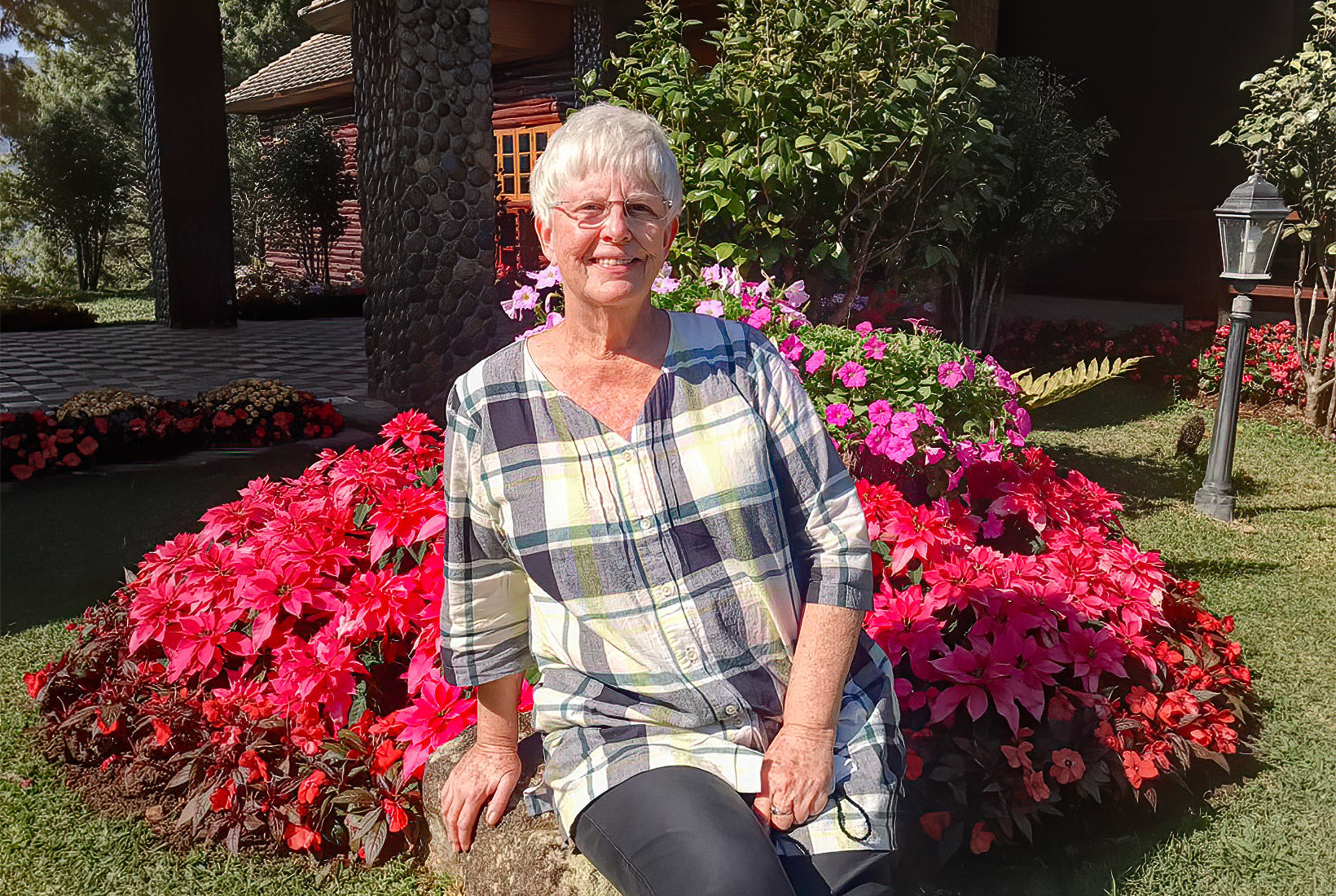
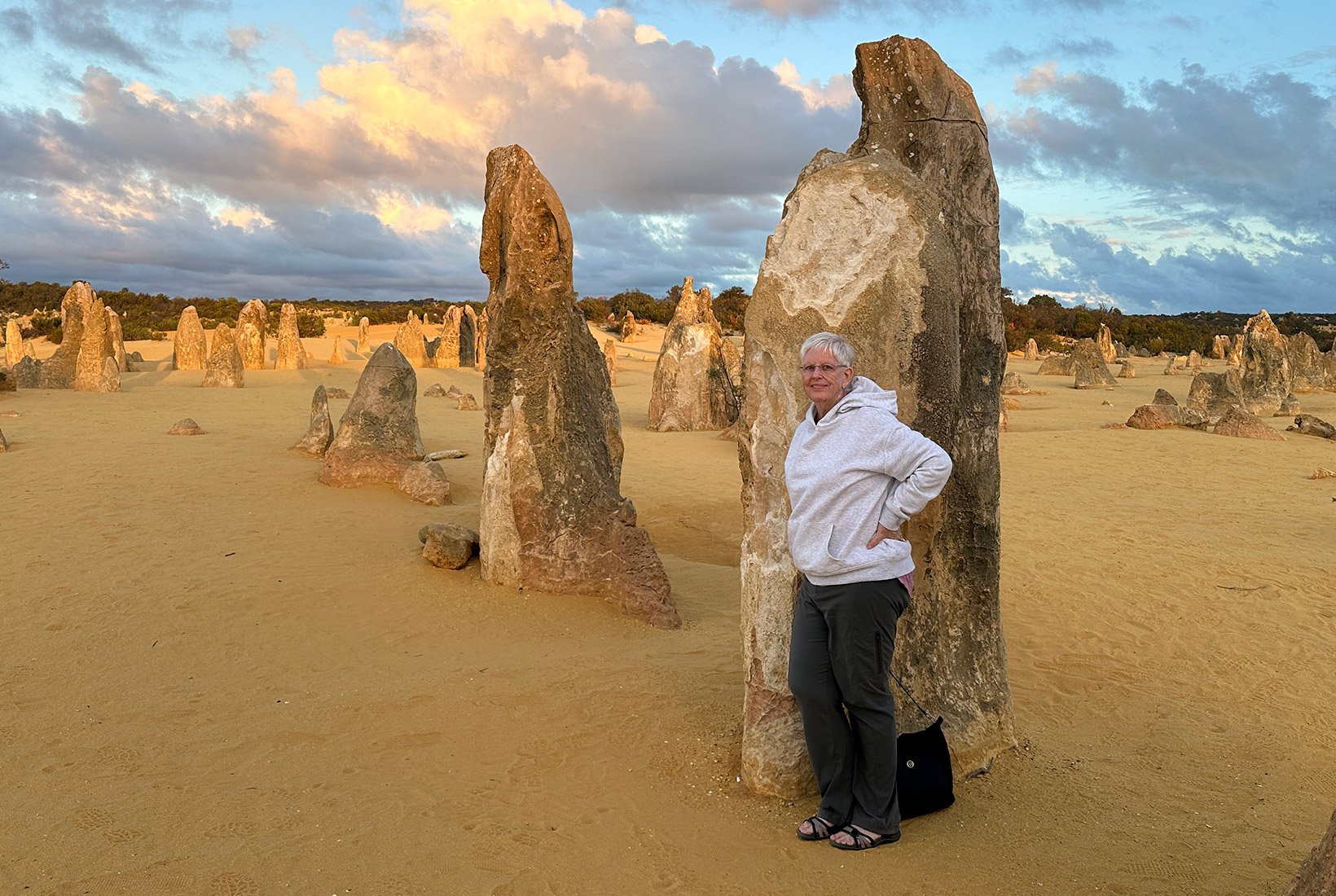
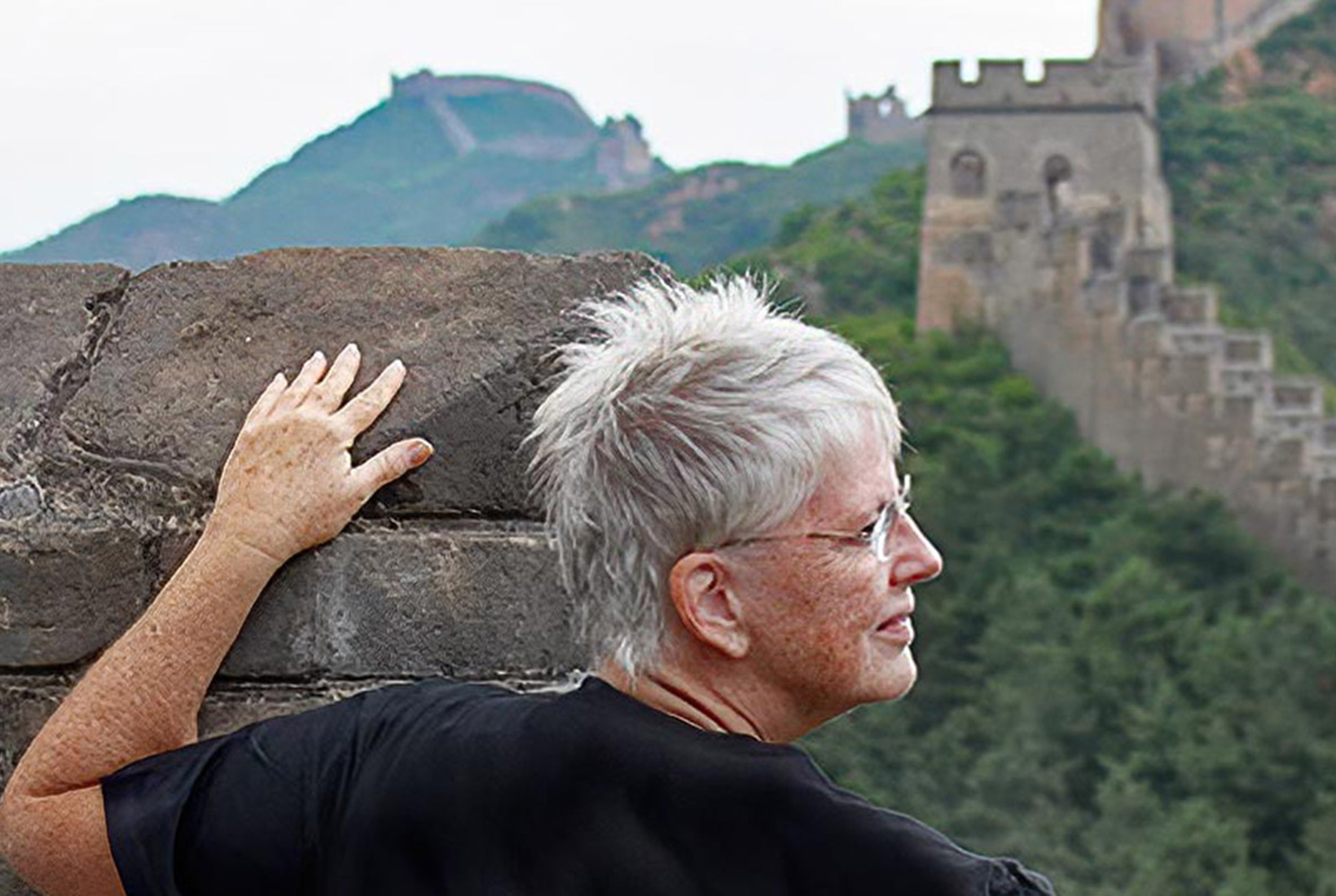
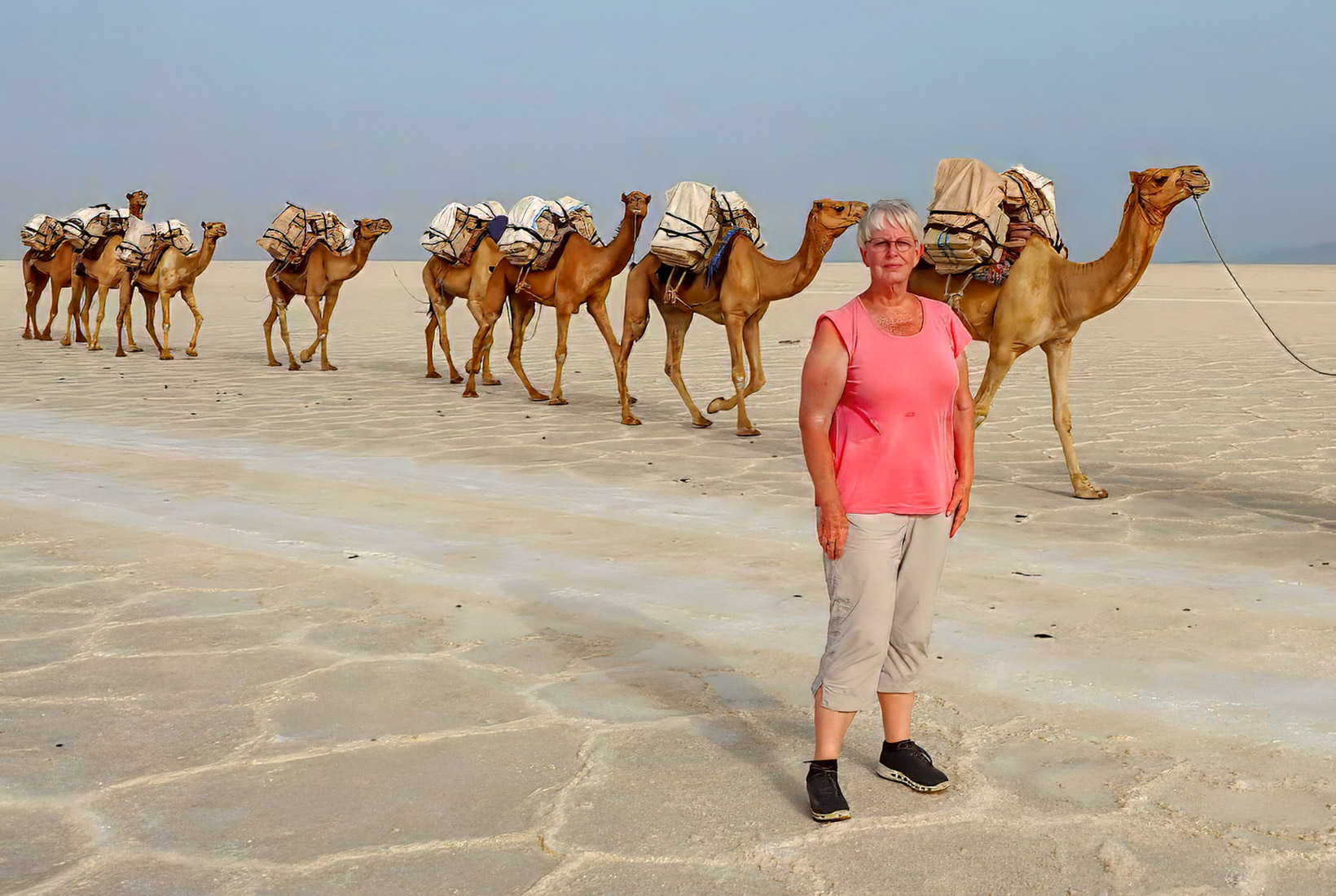
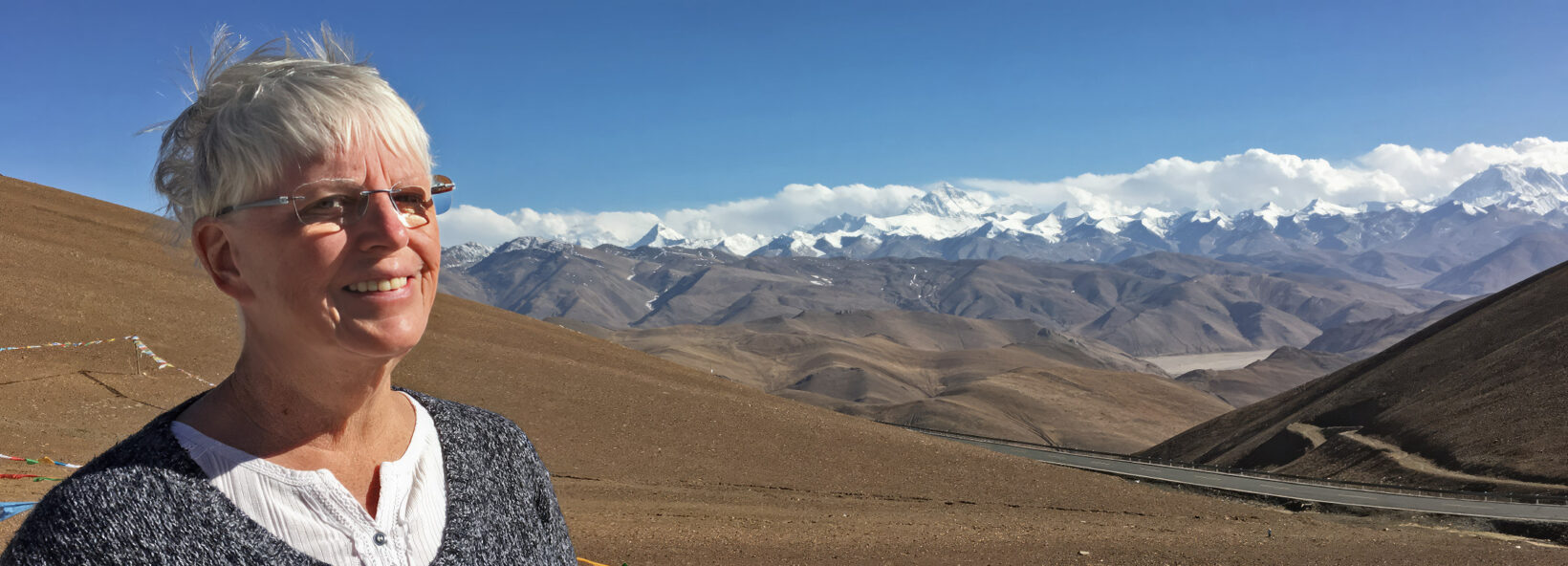
Barbara Weibel After years of working 70 hours a week at jobs I detested, I felt like the proverbial "hole in the donut" - solid on the outside, but empty on the inside. Searching for meaning in my life, I abandoned my successful but unsatisfying career and set out on a six-month solo backpacking trip around the world to pursue my true passions of travel, writing, and photography. My blog features stories about the destinations I visit, people I meet, the crazy things...Read more here....
  • Eiffel Tower, Paris, France
  • Angkor Wat Cambodia
    Angkor Wat, Siem Reap, Cambodia
  • Hill Tribe Chief Northern Thailand
    Hill Tribe Chief, Thailand
  • Machu Picchu Peru
    Machu Picchu, Peru
  • Franz Josef Glacier New Zealand
    Franz Josef Glacier, New Zealand
  • Olympic National Park Washington State
    Olympic Peninsula, Washington
  • Damnoen Saduak Floating Market Thailand
    Damnoen Saduak Floating Market, Thailand
  • Maasai Tribe Ngorongoro Tanzania
    Maasai Warriors, Ngorongoro, Tanzania
  • Lion Serengeti National Park Tanzania
    Serengeti National Park, Tanzania
  • Chichen Itza Yucatan Mexico
    Chichen Itza, Yucatan, Mexico
  • Wat Xieng Thong
    Wat Xieng Thong, Luang Prabang, Laos
  • Feast Central India
    Traditional Feast, Central India
  • China Shangahi Skyline Pudong
    Pudong Skyline, Shanghai, China
  • Honeymoon Beach Florida
    Honeymoon Beach, Florida
  • Great Wallof China Jinshanling Beijing
    Great Wall, Jinshanling, China
  • Lake Louise Banff National Park Canada
    Lake Louise, Banff National Park, Canada
  • pura ulun danu temple batur bali
    Lake Temple, Central Bali
  • Galapagos Islands Ecuador
    Galapagos Islands, Ecuador

As I waited to fill my plate during the International Human Rights Day celebration at Tashiling Tibetan refugee settlement in Pokhara, kids darted back and forth through the dinner line, playing tag. When one of them unexpectedly scooted in front of me, I reflexively took a step back and bumped into Tseten Chomphel. He laughed, diffusing my embarrassment, and introduced himself. By the time we made it to the head of the buffet line we were chatting like old friends. For the next hour I sat cross-legged on the concrete floor of the community center with Tseten, his wife, niece and mother-in-law as he related how he came to be an artist and art teacher in Nepal.

Tseten came to Nepal from Tibet at the age of six. Like his older brother and sister before him, Tseten’s parents sent him out of the country to receive a better education than he could hope for in Tibet, especially since he’d shown great artistic promise from the time he could pick up a pencil. At the Tibet-Nepal border his parents handed Tseten over to his older brother who, with help from the Tibetan Assistance Agency in Kathmandu, arranged for him to attend school in India. After graduation, Tseten returned to Nepal, where he reunited with his brother and began focusing on his art.

Tseten Chomphel, artist and art teacher at Tashiling Tibetan refugee settlement

Tseten Chomphel, artist and art teacher at Tashiling Tibetan refugee settlement

Tseten's niece and mother-in-law

Tseten's niece and mother-in-law

Although he is happy living in Nepal, the forced separation from his family is a difficult burden to bear. Since the day he left Tibet, Tseten has seen his parents only once and they have never even met his wife. In 2007 the Chinese government finally granted permission for his parents to travel to the Nepal-Tibet border to reunite with their son, but only for six hours. They huddled together in the bleak landscape that marks the border between the two countries, enduring the scrutiny of Chinese soldiers as they shed tears of joy and despair.

Fascinated by his story, I could hardly believe my good fortune when he asked if I would like to see his paintings. At the elementary school he pulled aside a floor-length tapestry covering the front door of his tiny apartment in the teachers’ residence area and stepped aside for me to enter. A huge oil painting of a leopard chasing prey dominated one wall of the front room and smaller paintings covered much of the remaining wall space. He served up tea and offered me Yak cheese and dried sheep yank that his mother-in-law had carried all the way from Tibet, then pulled out a large portfolio and began spreading piece after piece in front of me on the sofa table, most of which were produced in watercolor on art paper that Tseten makes by hand, since canvas and oil paints are expensive and rarely available.

Tseten and his wife share tiny teacher's quarters

Tseten and his wife share tiny teacher's quarters

Leopard mural dominates Tseten's small living room

Leopard mural dominates Tseten's small living room

Continue reading

Jampa Chodok is 83 years old but he remembers his days as freedom fighter in Tibet as if they happened last week. He joined our small tour group just as we were finishing lunch at the Jampaling Tibetan refugee settlement, located about 12 miles east of Pokhara, Nepal. He sat in the sun, as old men often do to warm their bones, and, squinting in the bright light, began telling us about a life sacrificed to years of war.

Hostilities began in 1949, when Mao Zedong proclaimed the People’s Republic of China and made it a top priority to incorporate Tibet into the PRC. The government of Tibet sent letters to the U.S. State Department, Great Britain and Chairman Mao, declaring its intent to defend itself against occupation “by all possible means.” China sought negotiations with Tibetan government officials but they refused to talk, instead stationing more than 8,000 ill-trained and nominally equipped Tibetan soldiers on their eastern border with China. Chinese troops invaded on October 7, 1950; 12 days later 5,000 Tibetan soldiers were dead and the army had surrendered.

Jampa Chodok, Tibetan freedom fighter now living in a refugee settlement near Pokhara, Nepal

Jampa Chodok, Tibetan freedom fighter now living in a refugee settlement near Pokhara, Nepal

Jampa was only 22 years old at the time and not involved in the fighting. Like other Tibetans, he watched helplessly as China amassed 20.000 forces on their eastern border, advanced to within 120 miles of the capital, Lhasa, and then stopped. Surprisingly, the Chinese government demanded Tibet send a delegation to Beijing to negotiate an agreement. Although they were given no authority to sign any such agreement, representatives put their seal to the Seventeen Point Agreement for the Peaceful Liberation of Tibet, giving China sovereignty over Tibet. It was signed and sealed in Beijing on May 23, 1951 and confirmed by the government in Tibet, which later repudiated the agreement, claiming it had been signed under duress and threat of attack.

China immediately began implementing land redistribution in the far eastern part of Tibet, where the indigenous Khampas and nomads of Amdo traditionally owned their own land. By 1956, fighting had broken out in both Amdo and eastern Kham and in 1958, when the Chinese ratcheted up their efforts to fully incorporate the still semi-autonomous area around Lhasa into the PRC, Jampa, now 33 years old, joined the resistance forces forming in the capital.

In March  of 1959, Chinese officials invited the Dalai Lama to attend a theatrical performance at the Chinese military headquarters outside Lhasa and insisted that he not be accompanied by his traditional armed escort. Thousands of citizens of Lhasa, alarmed by rumors that the Chinese army was mounting an attempt to kidnap the Dalai Lama, surrounded Norbulingka Palace, where the Dalai Lama was in residence, preventing him from attending the event. Within days, protesters were marching in the streets of Lhasa, proclaiming Tibet’s independence and infuriating the Chinese. As the Dalai Lama was preparing to flee the city, the Chinese army surrounded Norbulingka and began shelling the palace.

Miraculously, the Dalai Lama, accompanied by a lone security guard, made his way through the Chinese lines and escaped. Jampa and his fellow resistance fighters accompanied the Dalai Lama and his small group of followers for nearly a month as they trekked across the Himalayas on foot and on horseback, bound for northern India. When they had safely delivered their spiritual leader, Jampa and his fellow soldiers headed back to Tibet to fight, however the Chinese forces in Lhasa were so overwhelming that they soon had no choice but to return to India.

Can’t view this YouTube video of Tibetan refugees telling their stories of escaping from Tibet during the 1959 Chinese invasion? Click here.
Continue reading

On my first full day in Pokhara, Nepal, a petite woman strolled down the sidewalk and stopped in front of my table at the open-air restaurant where I was enjoying lunch. Her muted, horizontal striped apron was cinched around an ankle-length gray dress and long, glistening black braids wound around her head. A wide smile split her ruddy cheeks as she greeted me in Nepali fashion.

“Namaste. How are you?” My polite reply was enough encouragement; she sat down at my table.

“I am Tibetan,” she announced as she pulled pouches and bags out of her backpack. Soon, every spare inch of tabletop was covered with handmade earrings, necklaces, rings, and bracelets. She was the first Tibetan person I had ever met, but she would not be the last.

Typical modest home at Tashiling Tibetan refugee settlement in Pokhara

Typical modest home at Tashiling Tibetan refugee settlement in Pokhara

In 1959, thousands of Tibetans crossed the rugged Himalayas on foot, fleeing a brutal occupying Chinese army that destroyed monasteries and massacred thousands of monks as they advanced. Those who made it to Nepal were granted refugee status and allowed to settle on land donated by the Nepali government. Although many Tibetans have since emigrated to other countries, about 20,000 still reside in these original refugee camps, many of which are located in and around Pokhara.

Eventually, realizing I wasn’t interested in buying anything, my new Tibetan acquaintance stuffed the jewelry back in her bag but made no move to get up. Instead, she pulled off her thick black shoes and began rubbing her swollen feet. “All day walk, up and down, but no customers. Business very, very bad,” she sighed.

Tibetan chidren play during International Human Rights Day Celebration

Tibetan chidren play during International Human Rights Day Celebration

Men play dominos during International Human Rights Day Celebration at Tashilng Tibetan refugee settlement in Pokhara, Nepal

Men play dominos during International Human Rights Day Celebration at Tashilng Tibetan refugee settlement in Pokhara, Nepal

Shoving my plate into the center of the table, I encouraged her to share my lunch as she told me about her life. The jewelry she sells is handcrafted by her disabled husband in their home in the Tarshi Palkhiel Tibetan refugee settlement, located on the outskirts of Pokhara. Each day, though her doctor has advised her not to carry heavy weights, she slings the overloaded pack on her back, takes the bus to town and peddles her wares to tourists, hoping to earn enough money for daily living expenses and save a bit for her children’s college education. Too soon, she pushed back her chair, flashed me a beaming smile, and was on her way, leaving me to ponder how someone who lived with such hardship could seem so content and joyful.

In the weeks that followed this initial encounter I befriended many more Tibetans, who eagerly shared their stories with me. Those who arrived in Nepal prior to 1990 are recognized as refugees and have legal residence and religious freedom, however, their civil, political and economic rights are limited and many have no identity documents. Even Tibetans who have been born and raised in Nepal are denied citizenship due to political pressure from China, which insists that all Tibetans should be arrested, charged as criminals and repatriated to Tibet. Sandwiched between two superpowers – China and India – tiny little Nepal bows to pressure from both the north and south. Continue reading

Chime led me down a narrow grass pathway at Tashi Palkhiel, the Tibetan refugee settlement on the outskirts of Pokhara, Nepal where he’d grown up. Midway down the lane he stopped before a diminutive man with a long gray ponytail and gleaming onyx eyes. The elder Tibetan grasped my translator’s hands between his own as they bowed and touched foreheads in a respectful greeting. Pau Nyima Dhondup, the village shaman, or Lhapa, flashed a broad smile and considered me for a long moment, his eyes broadcasting delight and laughter, along with a  healthy dose of mischief. Shepherding us to his modest home, the shaman swept aside a floor-length cloth covering the front door and gestured for me to sit on a daybed pushed up against the near wall of his front room.

Pau Nyima, who practices a shamanic tradition passed down through his maternal bloodline, is one of only two known living Tibetan shamans remaining in the world today, according to the Foundation for Shamanic Studies in Mill Valley, California. He was chosen to continue his family’s healing tradition when he entered puberty and started having spiritual experiences that indicated his fate was to be a Lhapa. In addition to sucking illnesses out of a body, with actual objects being spit out to show the patient the source of their illness, shamanic treatments can also include a soul retrieval ceremony, a ceremony to release a deceased soul who is stuck into the afterlife, or a ritual to end misfortune that causes child after child in a family to die. The shaman drew up a chair in front of me and gave instructions to Chime.

“He wants you to support right elbow in palm of left hand and bend arm up in air.”

He felt the pulse at my wrist and motioned for me to switch arms in order to repeat the process on the other arm. Scooting back his chair to the middle of the room, he listened attentively as Chime described the pain in my left hip and knee and chortled when he demonstrated how I have to open my mouth wide to relieve the muscular tightness in my jaw, then asked questions.

“How old you are?” Chime inquired.

“Fifty-eight.”

“Ahhh!” the shaman exclaimed, as if learning my age had given him a major clue to my health.

“What country?”

“USA. But I don’t live there any more.”

Chime explained that I am a perpetual traveler with no permanent home, that I move from place to place around the world in search of travel stories. Satisfied that he had all the necessary information, Pau Nyima sat cross-legged on a second daybed on the other side of the small room. While donning a gold silk brocade apron and cape, he warned that we could take photos during part of the ceremony, but strongly recommended that we not use the camera once his body was taken over by the spirit because the deity often breaks things. He finished off his attire with an ornate green, blue and red headdress while his mediator, who runs the ceremony once the shaman is possessed, set up rice offerings, lit candles, and positioned photos of the shaman’s various deities on the altar.

Mediator prepares the altar prior to shamanic ceremony

Mediator prepares the altar prior to shamanic ceremony

“You must believe,” he warned gravely before beginning. His right hand held an hourglass-shaped, double-sided hand drum that represented two inverted skulls and symbolized the joining of female and male energies. Two clappers attached to strings hanging from the drum’s handle flew through the air as he rotated his wrist back and forth, striking the animal-hide drum in a four-beat rhythm, interspersed with chiming from a bell held in his left hand.

“You have two white stars in the east, a yellow one in the south, blue in the north and red in the west. You must pray only to Buddha – no other gods,” Chime translated for me. The shaman stopped briefly to add a second headdress that spread out behind him like rainbow angel wings and draped it with multi-colored silk scarves. Seconds later, while chanting intensely, a shudder passed through his body and a grimacing, contorted visage appeared superimposed on his face. He uttered a sharp yelp and threw a handful of silk scarves at me. Jumping off the daybed, he spread his arms wide and balanced on one foot, holding the other foot high in the air as if preparing to throw a karate kick. Nyenchen Thanglha, one of the strongest Tibetan deities, had taken control of his body.

Following a brief dance around the center of the room, Pau Nyima resumed his seat and motioned for me to sit directly in front of him on a low wicker stool. Almost immediately, he sprang forward from his sitting position and chomped the air above my upper left arm. The mediator poured a small amount of water into a tin dish and held it as the shaman spit out an inch-long slug that looked like a dark gray caterpillar; it squirmed around in the water, turned black and eventually stopped moving. Unexpectedly, the shaman lunged at me again, this time grazing my left left arm just above the elbow, and spit out a second, blacker slug. As I returned to my seat on the daybed, my arm turned ice cold and tingly.

Can’t view the above YouTube video of a Shamanic Healing Ceremony in Pokhara, Nepal? Click here.

Shaman removed two black slugs - negative spirits - from my left arm and shoulder

Shaman removed two black slugs – negative spirits – from my left arm and shoulder

Continue reading

Very few things in life frighten me, but by the time I arrived in Pokhara, I was scared. My left hip and knee had never fully healed from an injury sustained in Mexico earlier in the year and as a result even an easy trek to Nagarkot and day hikes around the mountain village of Puma had aggravated my knee so badly that I was in pain for days afterward. Panicked that my hiking days were over, my imagination went into overdrive with visions of wheelchairs and four-legged walkers.

Part of the problem was that I had stopped practicing Yoga. I love being a digital nomad but staying in hostels, especially when I am in dorms, has its drawbacks, the greatest of which is the lack of enough room to do Yoga. I could count on one hand the number of times I had attended a class over the past year and I knew it was time to get back to a dedicated practice.

Fortunately, Pokhara is rife with Yoga studios. After two lame classes with poorly trained teachers, I finally found the Annapurna Yoga Ashram and Guru Narayan Prasad Dhakal who custom designed a Yoga practice for me that completely realigned my hip and knee and restored my structural integrity. Over the next six weeks I became such a fixture in his home that, to my delight, Guru and his family invited me to be a part of Bhai Tika, the brother/sister tika ceremony held on the final day of the five-day long Nepali festival of Tihar.

Candles burn on the stoops of stores and homes during Tihar, also known as the Festival of Lights

Candles burn on the stoops of stores and homes during Tihar, also known as the Festival of Lights

One of the most dazzling of all Hindu festivals, Tihar is also known as the Festival of Lights. As the dates for the celebration approached I began noticing changes around town. Flickering candles and oil lamps began appearing on the stoops or were hung from the walls and ceilings of homes, stores and businesses. This custom reenacts the ancient Hindu legend about a king whose astrologer told him that a serpent would come to take his life away. When the king asked if there was any way to escape death, the astrologer advised him to sleep with lit oil lamps all around his bed and decorate the palace with oil lamps on the day when the goddess Laxmi was to be worshiped. In return for being so honored, Laxmi persuaded the serpent to spare the king’s life but Yama Raj, the god of the underworld, still had to be convinced that it was not yet the king’s time to die. Yama opened his ledger to where the king’s remaining age was written as zero but the serpent cleverly put a seven before the zero and the king lived for seventy more years. As a result, during Tihar Nepalis worship both the underworld and the goddess Laxmi.

Early in the morning on the first day of the festival, known as crow’s day or Kag Tihar, the Dhakal family placed birdseed and dahl bhat (rice and lentils) on the roof of their house for crows, believed to be the messenger of Yama Raj, the lord of death. On day two, dog’s day or Kukur Tihar, prayers were offered to the dog that guarded the gate to the underworld, as this is thought to divert destruction away from worshiper’s homes. Following these prayers, every family honors a dog by placing a tika (a mark, usually red, made by applying powdered pigment) on its forehead, hanging a floral garland around its neck and feeding it a meal of dahl bhat. Like most Nepalis, the Dhakals have no pets, so they hunted down one of the hundreds of skeletal strays that roam the streets of Pokhara and temporarily adopted it. On this one day of the year, all the strays in town wandered about in a daze, sporting bright red tikas, flower leis, and bloated bellies.

On the morning of the third, most important day of the festival, cows were worshiped. As the national animal of Nepal and the most sacred animal for Hindus, a cow symbolizes wealth and is considered to be the mother of the universe due to its milk producing ability. As with the dog, one of the cows that meander through the streets of town unmolested for most of the year was captured long enough to apply a tika to its forehead, place a garland around its neck and feed it a meal. Those performing a cow puja (a religious ritual) may also place her manure in different parts of the home, drink a drop of the cow’s urine and even dip a blade of grass into the urine and sprinkle it on each others body.

That same evening, pictures and icons of Laxmi, the goddess of wealth, were displayed in an area of the house dedicated to worshiping gods and a puja was performed at dusk using flowers, incense, fruit, and silver coins. Outside, the initial trickle of candles and oil lamps had swelled to thousands, turning Pokhara into a flickering, glittering jewel. Troupes of girls wandered from home-to-home and business-to-business long into the night, chanting and singing a special song known as Bhailo or Bhailini, played only on this one day during the year. They performed traditional dances in the dusty street, forcing traffic to wind around them and the crowds that gathered to watch the shows, passing a tray for donations after each performance.

Dancers perform in the streets of Pokhara for donations on the third evening of the Tihar Festival

Dancers perform in the streets of Pokhara for donations on the third evening of the Tihar Festival

Can’t view the YouTube video of the Bhailo Song and Dance during Nepal’s Tihar Festival? Click here.

Nepali girl with red tika on her forehead enjoys Bhailo dancers in the streets of Pokhara on day three of the Tihar festival

Nepali girl with red tika on her forehead enjoys Bhailo dancers in the streets of Pokhara on day three of the Tihar festival

Continue reading

Traditional Folk Instrument of Nepal, the Sarangi

Traditional Folk Instrument of Nepal, the Sarangi

Standing on street corners amidst clamorous horns and revving engines in Kathmandu and Pokhara, young musicians play sarangis, a traditional handmade wooden Nepali folk instrument that resembles a small fiddle. Although the sarangi is today used by many, it was traditionally played only by people of Gandarva, or Gaine caste, as they are commonly known. The most famous of sarangi musicians, Jhalakman Gandarva, in 1962 produced the song, “Amale Sodlin, Khoi, Chhora Bhanlin (My Mother Will Ask Where Her Boy Is),” a narrative folk song about a Gurkha soldier’s final words of remembrance to his family as he lies dying of a wound to his head in World War II. Jhalakman is the first singer to record Gaine song and bring the voice of his indigenous people to the masses.

Today, Gaine caste members like brothers-in-law Sandu Kancha Gandarva and Bukun Gandarva are are working to preserve the culture of the sarangi. Hailing from Tanahun, the two were born and raised in a family where the sarangi was a way of life. Sanu Kancha, who is a founding member of the Gandarva Culture and Art Organization, left his village at the age of 12 and came to Kathmandu to seek his fortune. He made and played sarangi on the streets in those early days, selling the instruments to tourists for three and four times what it cost to make them. Fifteen years ago, Bukun came to Kathmandu to begin working with his brother-in-law ; today he performs nightly at Bhojan Griha Restaurant in Thamel, the backpacker area of the city, and gives sarangi lessons during the day. Continue reading

Follow Hole in the Donut

Free Photography Ebook

Around the World with 40 Lonely Planet Bloggers
To download your free copy of "Around the World with 40 Lonely Planet Bloggers," subscribe to Hole In The Donut to receive emails about newly published articles and daily photos (three emails each week)
* = required field

Travel eBooks

Triposs.com

Triposs United States Popular Sights and Attractions

Visit Peru

My Travel Itinerary

I'm currently in Bristol/Bath/Stonehenge/Avebury, United Kingdom

EasyToBook.com

DUBAI HOLIDAYS

Dubai
Holidays

FAVORITE TRAVEL COMPANIES

if you'd like to see the Great Wall, Forbidden City or Yangtze River, contact Beijing Impression. We offer tours in Beijing and other China cities.

Thomson Discount Codes

Punta Cana Hotels

Who Likes Us on Facebook

PROFESSIONAL AFFILIATIONS

North American Travel Journalist Association

Professional Travel Bloggers Assn.

International Travel Writers Assn.

AWARDS AND HONORS

Top Blogs

Holeinthedonut.com named one of the top 50 travel bloggers


Alltop, all the cool kids (and me)