
In the ‘Daily Photos’ area of my blog I recently published a portrait of a woman attending a Nepali puja for a relative who had died one year earlier.
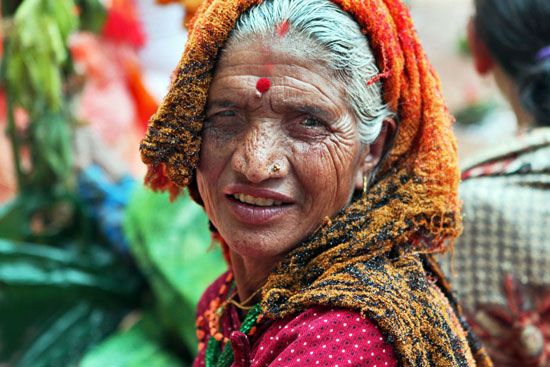
One of my readers commented:
“Its an absolutely gorgeous photo, I’ll admit. And I would have taken it, but somewhere a voice inside my head says, ‘Is it right to photograph people in mourning?’ I come across this dilemma often. There’s a great shot waiting to be taken, but shouldn’t there be common restrictions about recording people if they’re in mourning for a family member? It’s a lack of respect, isn’t it? Could you imagine a funeral of a loved one with someone on the sidelines taking photos of the whole process?”
In my response to her I explained that the puja was for a relative of my adopted family in Nepal, that I had permission to take photos throughout the day, and that when I took close-ups, I asked individual permission. In fact, I shot so many hours of video at the event that it has taken me more than a year to get around to editing it into a short feature that was small enough to upload to YouTube, and my family gently reminded me they were waiting for me to do so on several occasions.
Unlike the somber tradition of visitation and funerals practiced in the United States, a puja that commemorates the passing of a soul in Nepal (or any Hindu country) is a celebration, a fact that I hope is clearly illustrated in the video that I finally completed:
Traditions surrounding death in Hindu culture are significantly different from those found in the West. For 13 days following the passing of a relative, close family members go into mourning. They dress in white and eat rice once a day that can contain fruit but must not be cooked with salt (since salt is used liberally in Nepali cooking this is a considerable hardship). The men in the family go down to the river wearing only a white linen towel and shave off all hair, including body hair, eyebrows, and underarms. Returning to the house, the men stay in a separate room until the end of the 13 day period, during which time they are permitted to touch no one, and no one is allowed to touch them. This tradition used to be followed for a year but was changed because it was too difficult on the economy of the country. Prayers for the deceased are said 15 days, 45 days, six months, and a year after the passing, then subsequently on the annual anniversary of the death.
The mourning period officially ends on the one year anniversary of the loved one’s death, at which time the family conducts the Bhagawat Puran Puja, a 24-hour long food and prayer-filled ceremony that celebrates the life of the deceased. Late in the afternoon a tray of cotton wicks is set aflame, which releases the soul from the earth-bound plane where it has wandered for the previous year. In a final ritual, a sacred cow is adorned with flower petals and water is poured over its tail. The moment the official ceremony is complete, attendees erupt into jubilant dance and song, with many playing drums and other instruments. The revelry continues through the night, with many guests entering a trance-like state where the gods enter and possess their body.
Everyone who attended the puja loved the fact that I took pictures all day to document the event and are delighted that I uploaded a video to YouTube for posterity.
