
In the very center of the Australian continent is a vast and featureless desert of red sand and scrub vegetation that stretches in all directions as far as the eye can see. Only two features relieve this otherwise monotonous landscape – the giant red sandstone monolith known as Ayers Rock and the lesser-known conglomerate hills commonly referred to as The Olgas. The indigenous Anangu Aborigines who are the stewards of this ancient land refer to these features by their traditional names – Uluru and Kata Tjuta, respectively.
To say that the UNESCO World Heritage Uluru-Kata Tjuta National Park is remote would be an understatement. Located more than 500 miles from the nearest town, the only way to reach the park is to drive for days through a harsh, unforgiving land, or to fly in with Qantas, the sole operator serving the tiny airport. Once at Uluru, the only accommodations available are at one of five hotels in the Voyages resort complex.
The Voyages operation is a monopoly in every sense of the word. Not only do they own all five hotels, they also own the grocery store, the tour company, the gift stores, the restaurants, the shuttle services, etc. The result is twofold. First, because they have no competition, their prices are exorbitant. I am in the least expensive hotel room they offer – $154 per night. The salad I had for lunch yesterday set me back $20. Company-owned shuttle buses carry tourists from the resort to the National Park at a cost of $40 for the five-mile ride.
The facilities are in poor condition – with winter temperatures approaching zero at night, I repeatedly heard guests complain that the heat did not work in their room and the resort’s only answer was to deliver more blankets. The employees are surly at best and in most cases downright rude, acting as if guests are an imposition on their time. The signage is poor and it is difficult to find your way around the resort. There is limited information made available about how, when and where the shuttles operate.
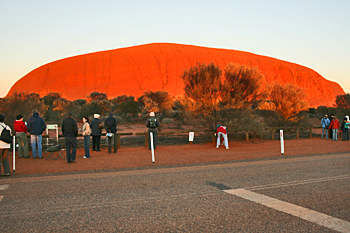
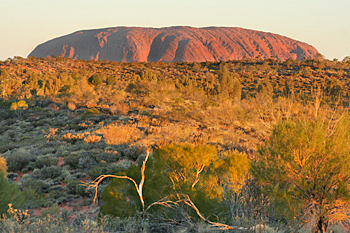
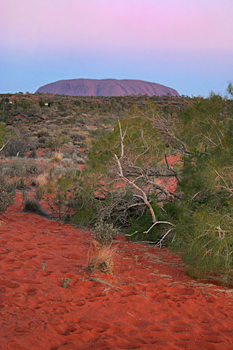
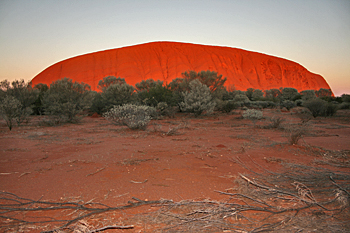
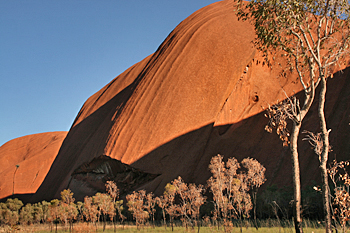
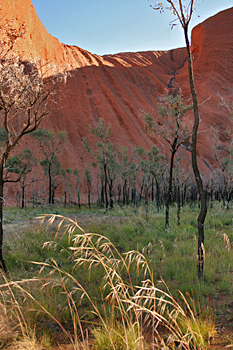
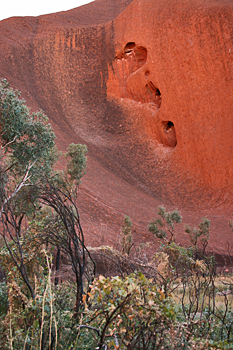
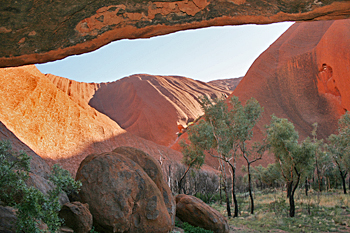
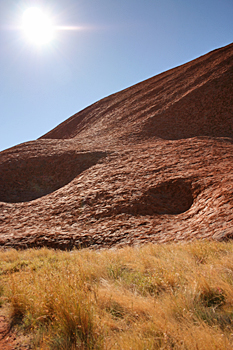
Despite all of the above, the Uluru-Kata Tjuta National Park is not to be missed. On the evening I arrived I climbed to an observation point and watched Ayers Rock change from red to purple in the rays of the setting sun. The following morning I rose before dawn and caught a shuttle to the sunrise viewing site. In near-zero temperatures I watched Ayers Rock emerge from the inky night, slowly turning from black to purple to deep red and finally to a flaming orange-red. For the next five hours I walked clockwise around the base of this astonishing hunk of sandstone, taking occasional side paths to visit waterholes tucked away in rock crevices and to view caves with ancient Aboriginal designs carved into their walls and ceilings.
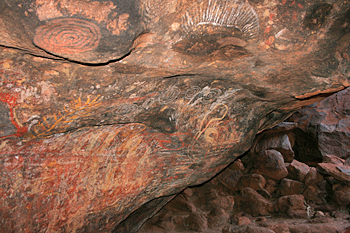
At one point, as I stood in front of a fenced-off area that is a sacred women’s site, I looked up at the smooth top of the monolith. A brilliant emerald light glowed where the red rock met the cloudless azure sky. I put my hands together in front of my heart and instantly an intense, hot energy shot up through my body and into the center of my palms. As I held this burning ball of energy between my hands, my entire body heated up and I ceased to feel the cold. For the rest of the day I had only to look back at that green glow to stay warm. I have read that Ayers Rock sits on a ley line, one of the invisible magnetic lines that criss-cross the earth and are used by birds when they migrate. Whatever the explanation, there is something very powerful going on here – it is indeed one of the great spiritual destinations on this planet.
I ended the day at the sunset viewing point, entranced by the play of light that the sun cast on the Rock and the clouds that seemed to emanate from it. Turning around I discovered yet more beauty as the sun dipped below the horizon.
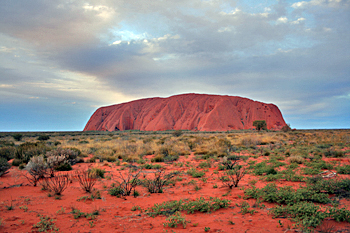
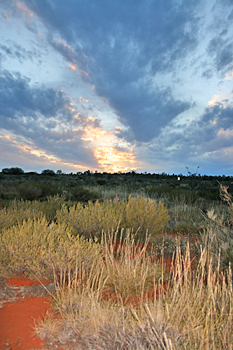
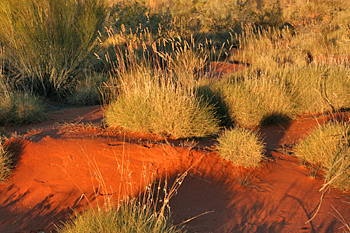
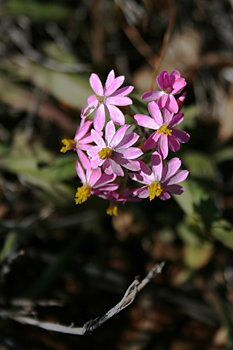
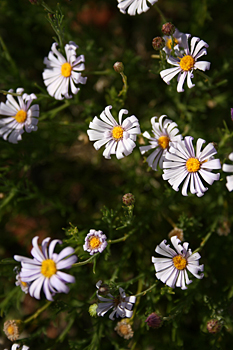
So, rather than attempt to describe Ayers Rock with words that cannot possibly be adequate, I decided to dedicate the rest of this post to photos of Ayers Rock. Enjoy.
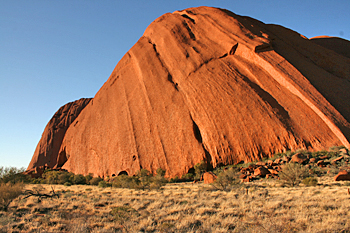
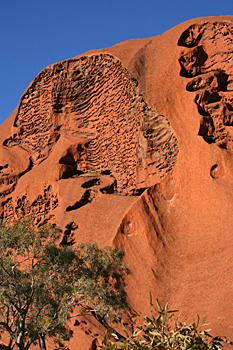
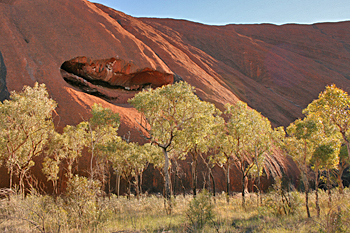
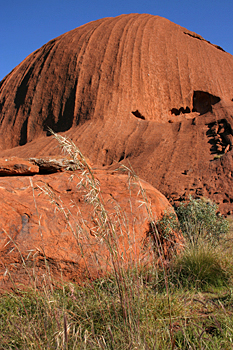

Also in 2007, the resort was Australian-owned by the GPT, not American-owned as quoted.
It is now owned by the federal government and they are working with Accor to raise standards 🙂
Nice site Barbara 🙂
Just a small correction in this story, Qantas doesn’t have U in it. It’s an acronym for its original name which was the Queensland and Northern Territory Air Service.
Hi Luke: Thanks so much for the corrections. I’ve edited the name of Qantas and the ownership of the resort. Appreciate it!
I think you’ll find things have changed since your visit; while the service at the hotel when we visited last year wasn’t outstanding, we found nothing to complain about. And, we found a reasonably-priced cafeteria for meals (can’t remember the name.)
I agree, though, that Uluru and Kata Tjuta, to paraphrase Bill Bryson ‘ …. outstanding, and I urge you to go at once!’
Good to know, Keith. It has been a few years since I was there – 2007 to be precise. It’s such a remarkable place that I’m glad to know it’s been made more affordable, and thus more accessible for all.
This is amazing, and inspiring. I have recently come across your site after doing some research on lay lines, and I see that you take a particular interest in them. This and Ed Leedskalnin’s Coral Castle are all I have seen so far on your site, but I intend to see more. My great grandmother was a highly spiritual woman, and left all these books behind from the 30’s and 20’s with extensive knowledge in them. It is only recently that I have felt drawn to this knowledge, and for the same reason you created this site. So I must say thank you for sharing this information and these images. I will try to do a bit of traveling myself when I am ready, and this site has opened my mind to the possibilities of those future adventures. Thank you again.
nuevo vidente: Yes, I am fascinated by ley lines – by how the birds can
apparently see them but we cannot. Wishing you all the best in your research
– please let me know if you find out anything interesting.
Just discovered your site and am randomly following links at bottom of your various posts. Have visited your travels in San Miguel de Allende (sic) and Bernal de la Pena and now this gorgeous entree to Uluru. Thank you.
Hi Musingegret: Thanks so much for browsing around my site and so glad you like it. It’s comments like yours that keep me on the road, looking for more people and places to write about.
I guess this post is two years old but I never tire of seeing photos of this remarkably beautiful, wild and spiritual place.
Wow! Thanks for the photos. Stay safe and healthy.
L&L
Absolutely breathtaking!
Beautiful!!!!!
Yay!!!!